


WA Landcarers’ Hall of Fame artwork courtesy of Emily Jackson Art and Design
WA Landcarers' Hall of Fame
Celebrating our landcare champions
In 2023 aligned with the 40 Years of Landcare in WA celebrations the WA Landcarers’ Hall of Fame was established, a repository of portraits, biographies, and timelines of this rich history to provide inspiration and education for generations to come.
The WA Landcarers’ Hall of Fame recognises those individuals who have contributed a lifetime of dedication through action, leadership, research, advocacy, policy, publication, and persistent hard work.
Thank you to the State Natural Resource Management Program WA and National Landcare Network for funding support to make the WA Landcarers Hall of Fame possible.
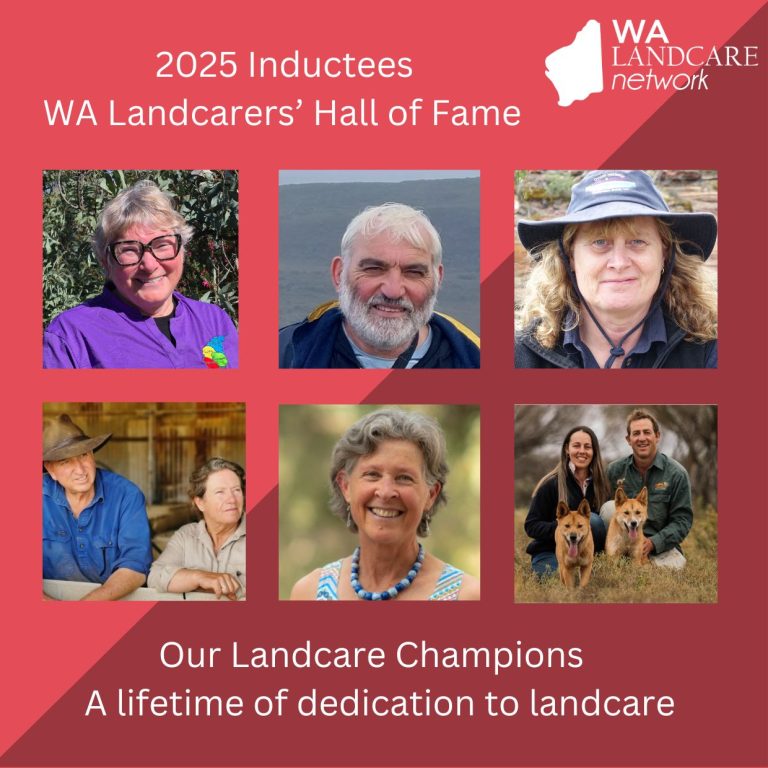
2025 WA Landcarers’ Hall of Fame Inductees
This year, eight landcare champions were recognised and celebrated as the 2025 inductees of the WA Landcarers Hall of Fame, including:
- Helen Watkins
- Basil Schur
- Heather Adams
- Di and Ian Haggerty
- Louise Duxbury
- Frances and David Pollock
Hall of Fame Photo Gallery 2025
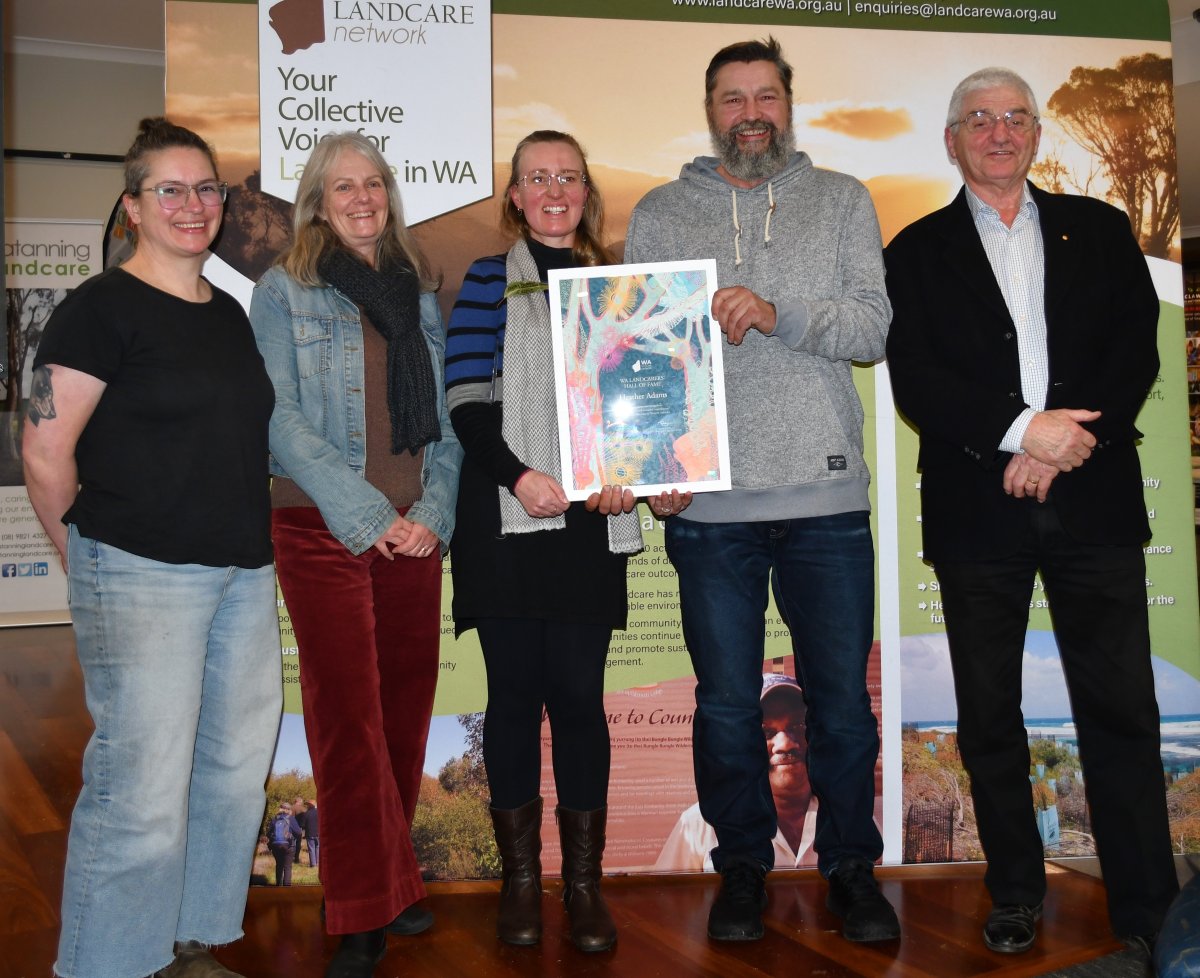
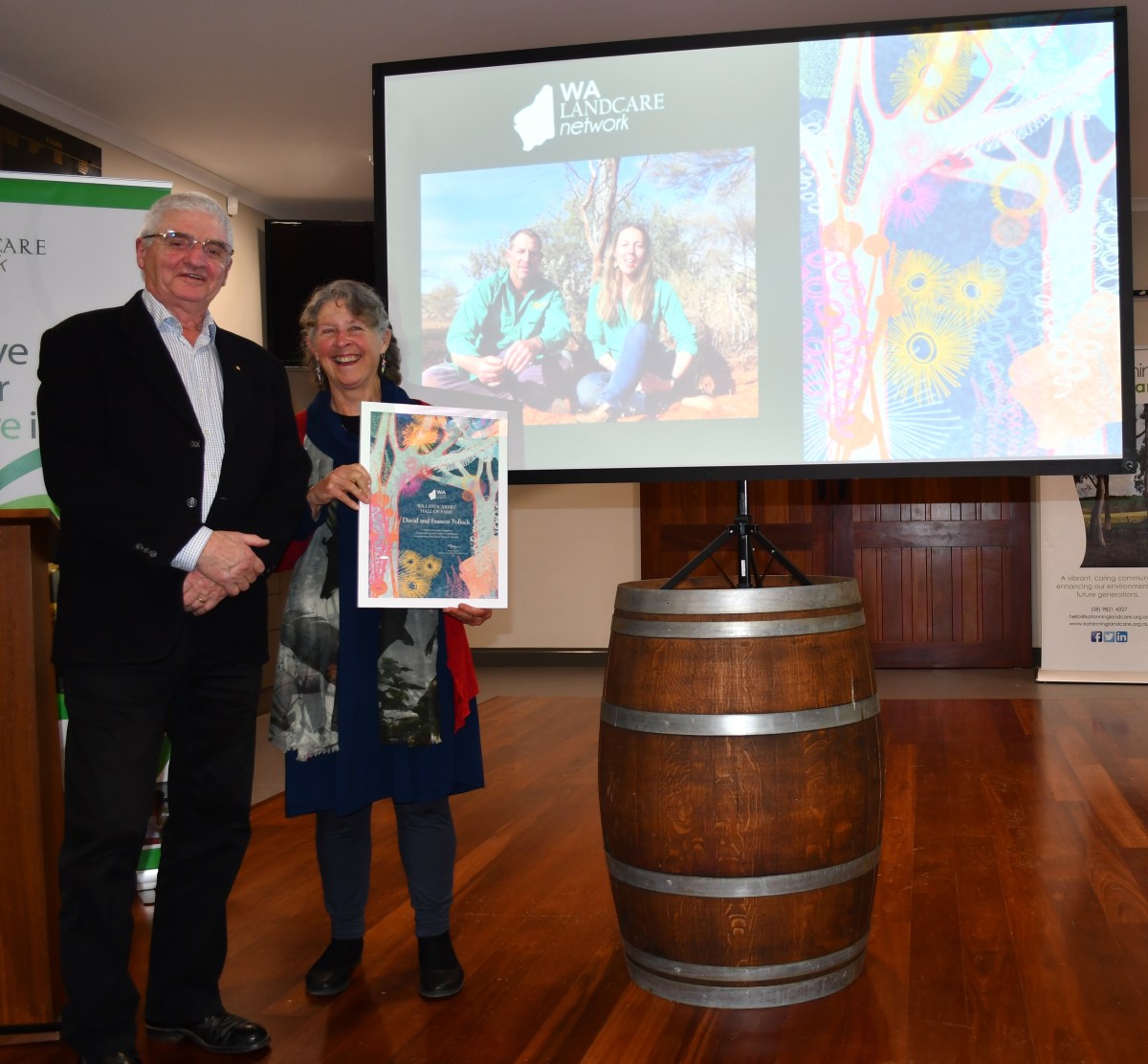
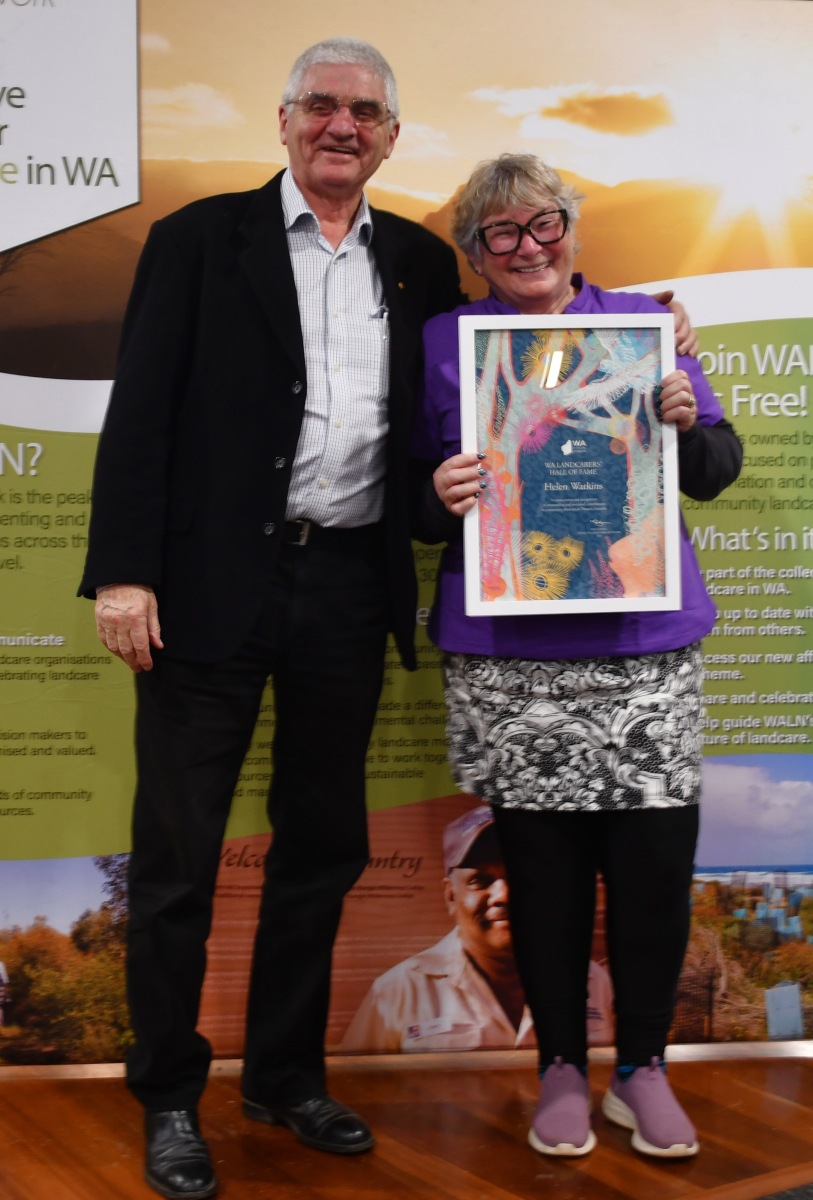
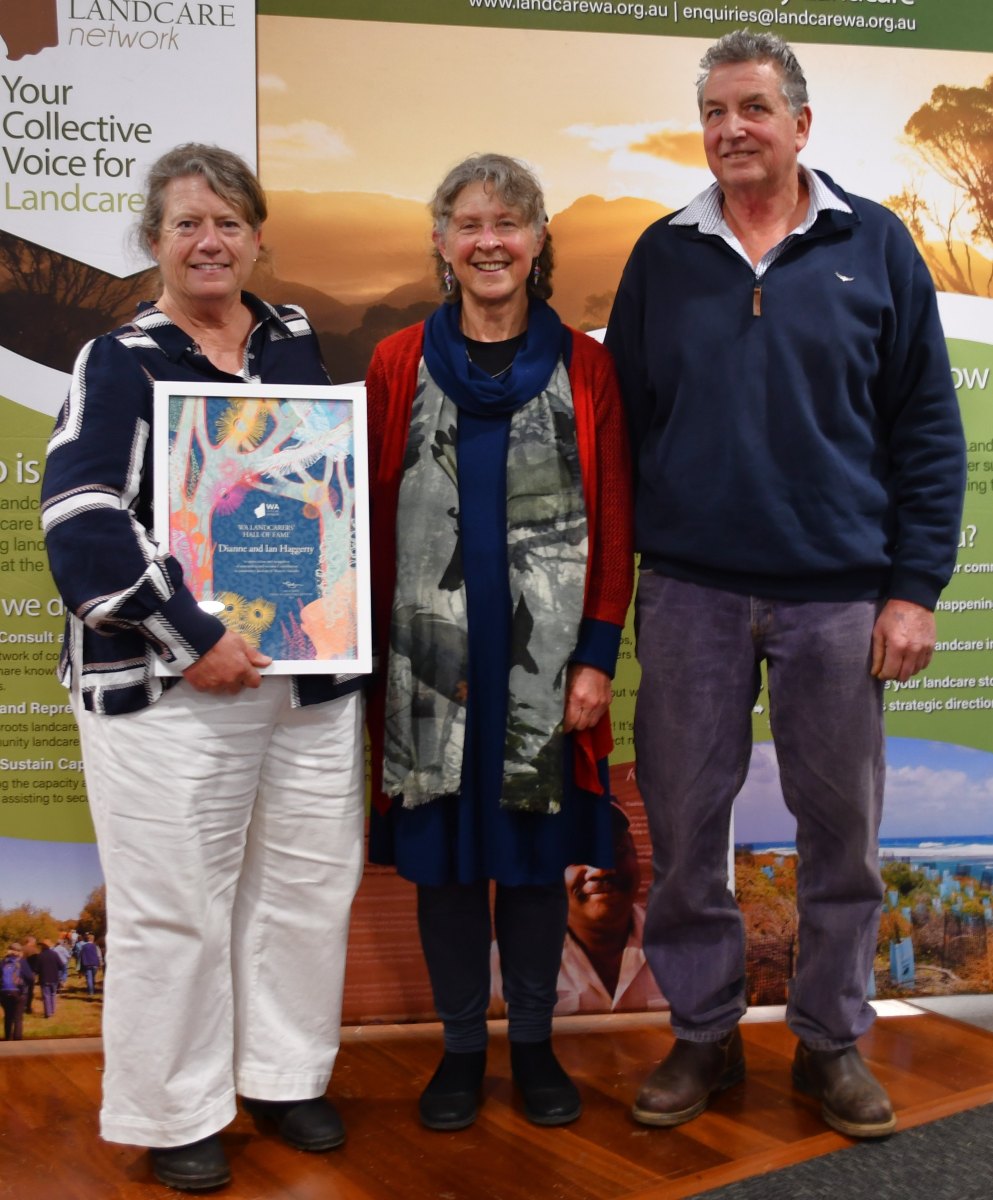
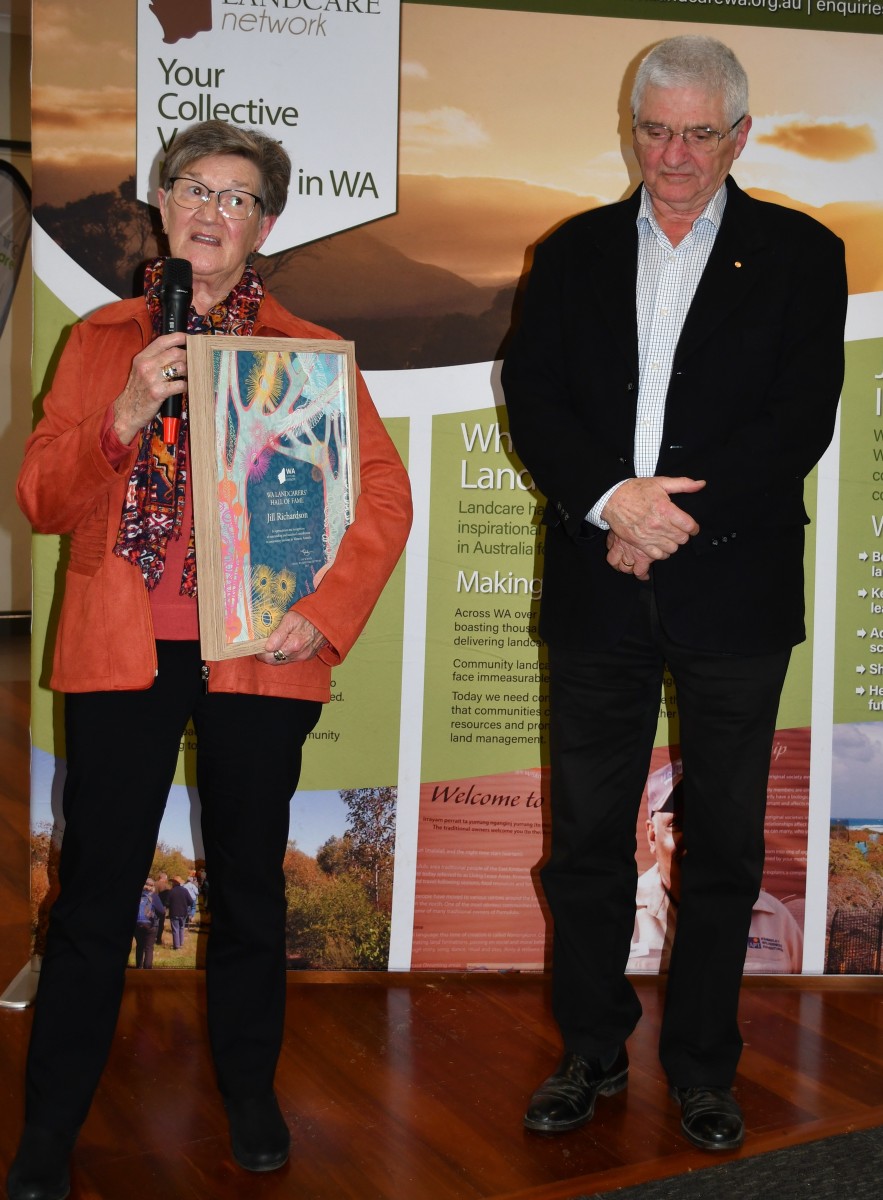
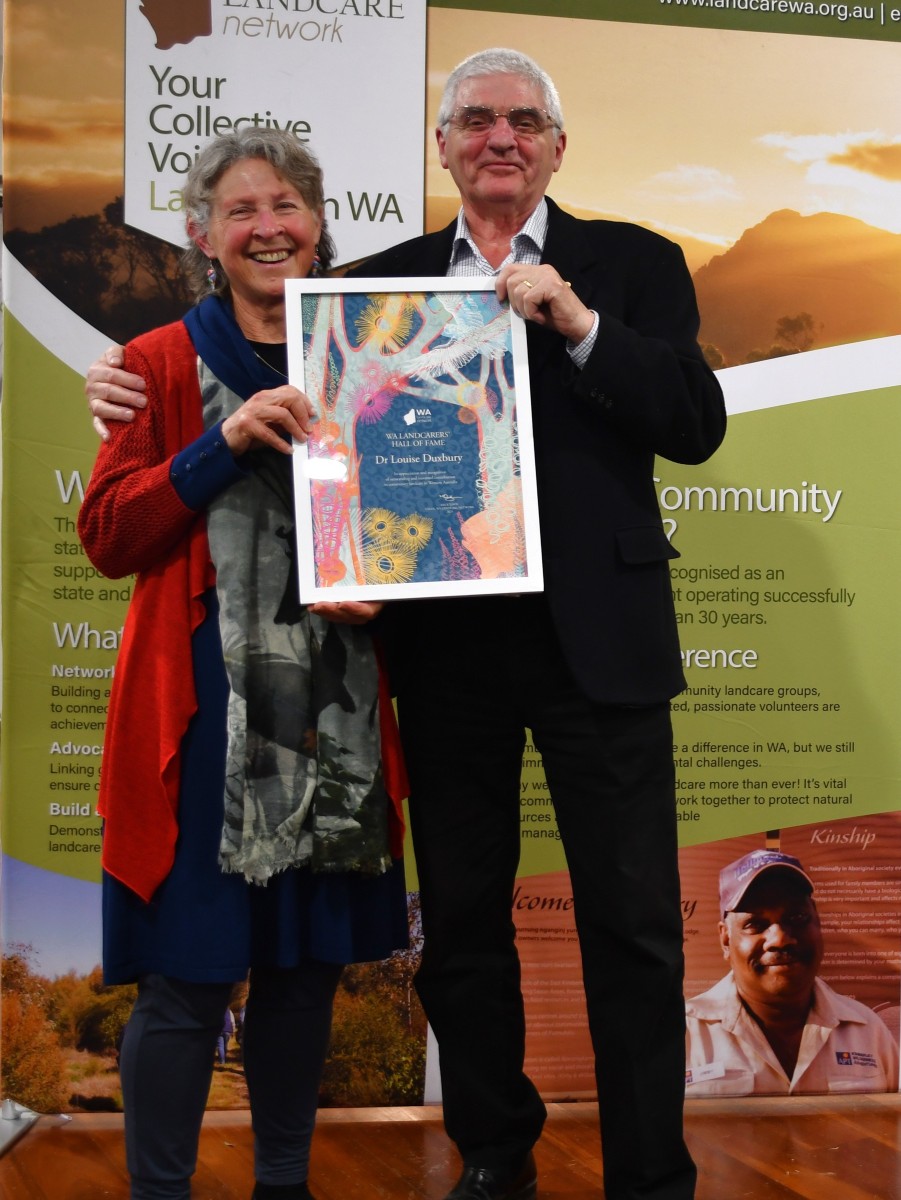
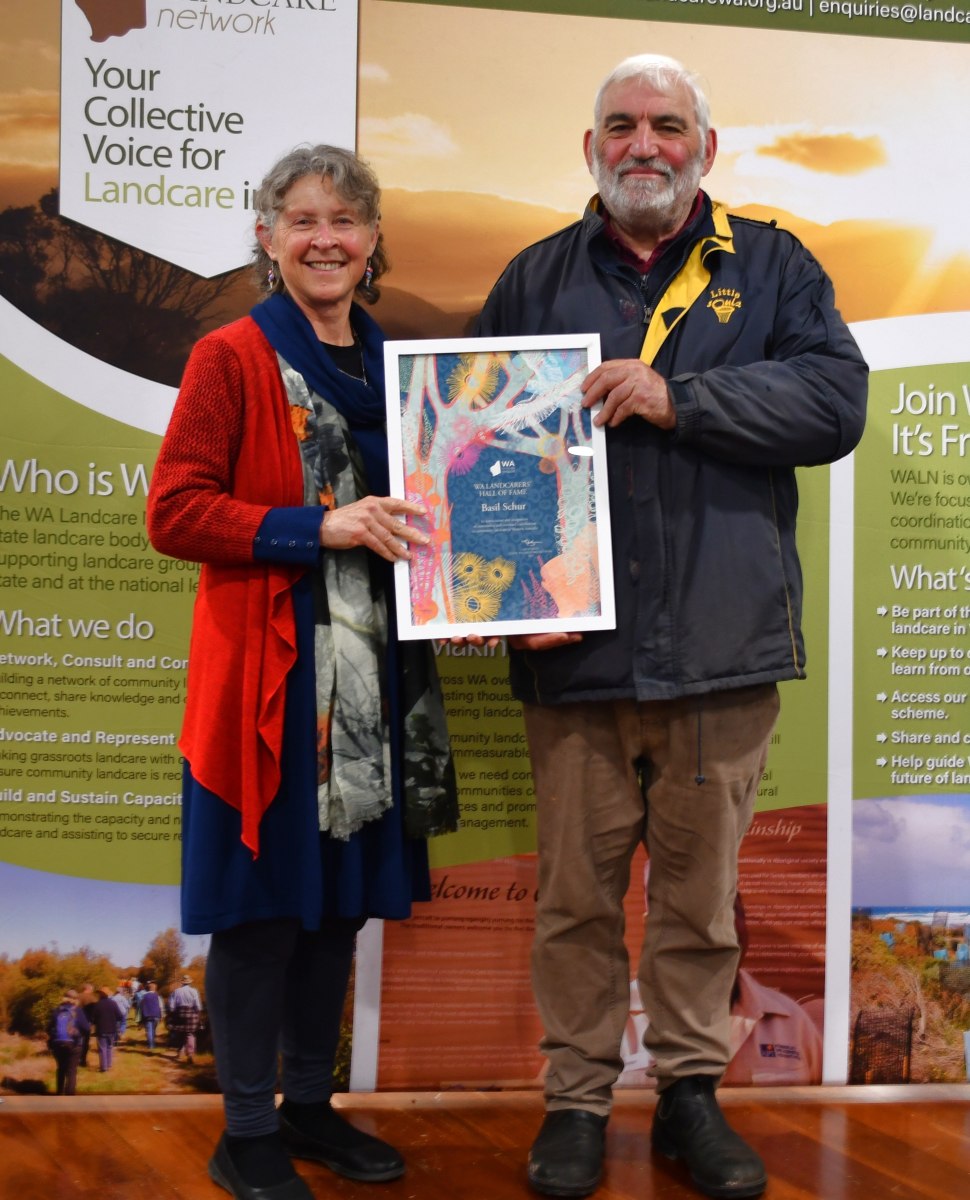
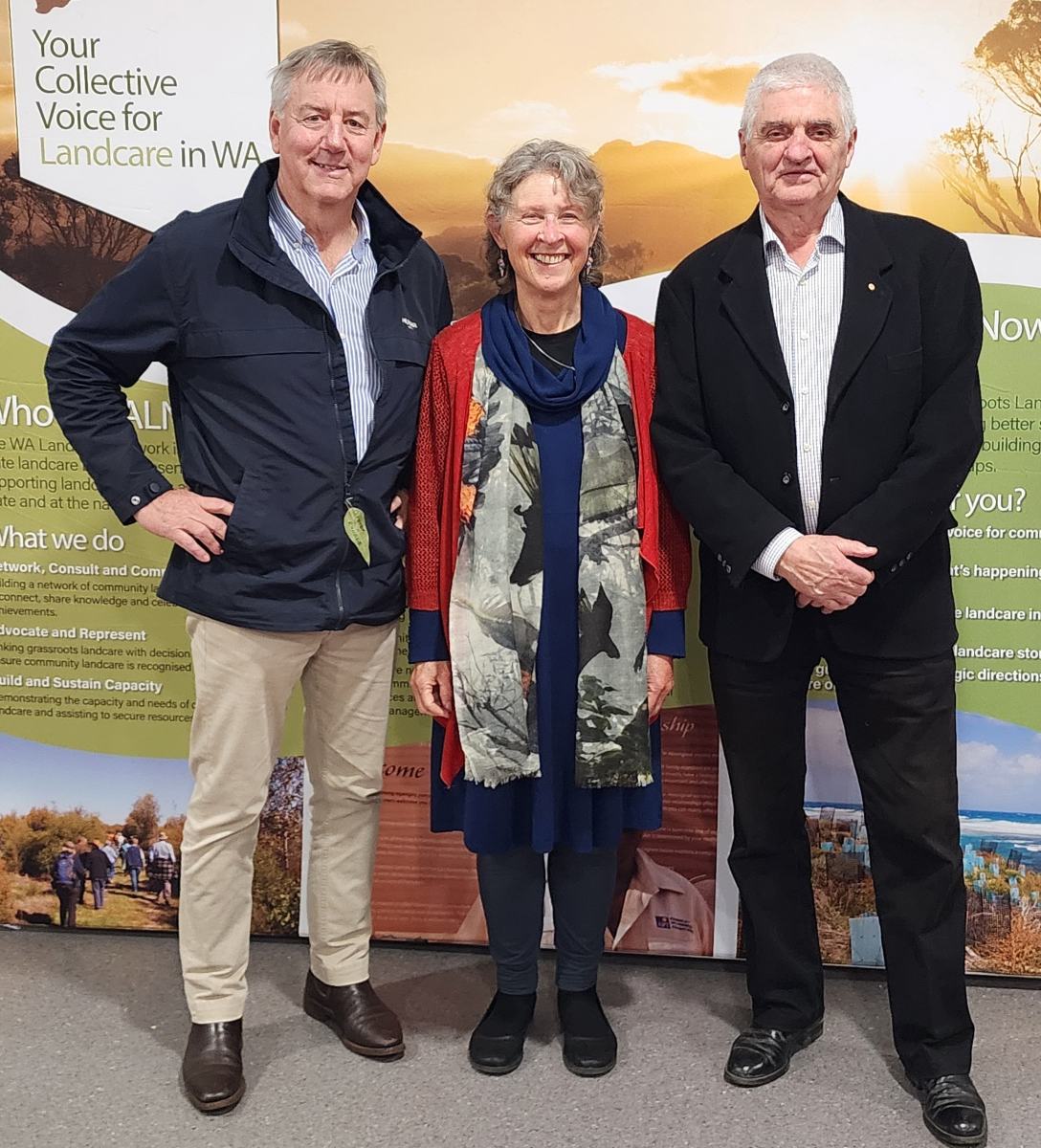
Hall of Fame 2025 - Inductees
Read about the achievements of the 2025 WA Landcarer’s Hall of Fame Inductees below.
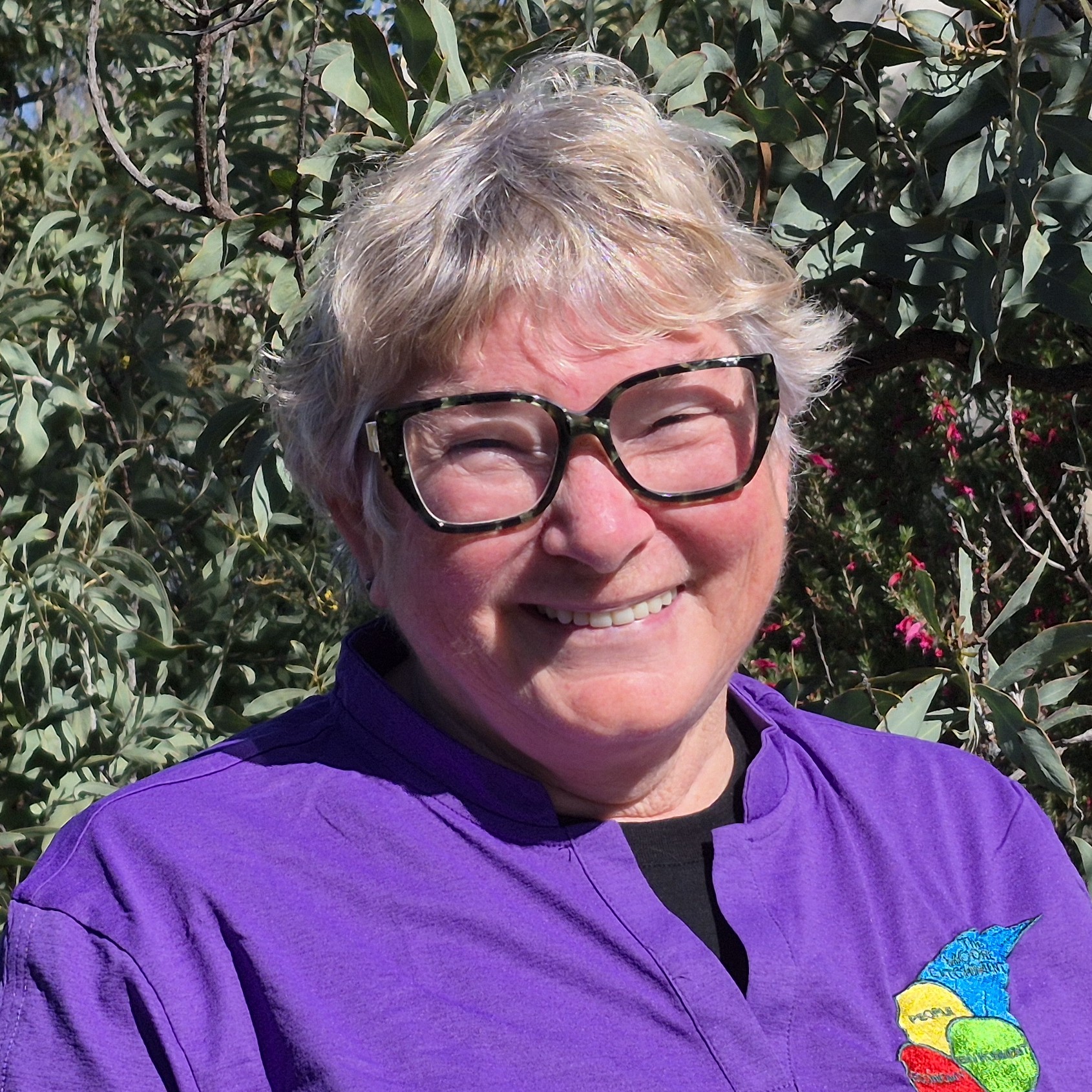
Helen Watkins
Helen Watkins is a dedicated environmental professional based in Western Australia, renowned for her extensive involvement in community-driven landcare initiatives. She has significantly contributed to the state's environmental conservation efforts through various roles and organizations
Originally from Ongerup, Helen has been involved in Landcare activities since the early 1970’s, starting on the family farm.
After moving to Dandaragan, she became involved in the Dandaragan LCDC in 1992 and subsequently became the secretary for several years.
When the West Midlands NRM group formed in the early 2000’s, she joined the committee and became employed with the group, working on different projects, until 2008. The group then morphed more towards a grower group focus, due to the reduction in the capacity and services of the Agricultural Department.
In 2008, Helen followed her passion and accepted the Executive Officer Role at the Moore Catchment Council, supporting the region with administering the essentials for the running and communications of the Council, 17 years down the track she is still there!
Under Helen's leadership, MCC won the prestigious Fairfax Community Landcare Group Award at the 2017 WA Landcare Awards. This accolade recognized their outstanding contributions to environmental conservation and community engagement. In 2021 the group also won the Australian Government Partnerships award for WA Landcare in Partnership with the Yued Community.
Helen has been instrumental in the development, management and support of many of the landcare projects delivered in the region including support of community stewardship, and conservation of Carnaby’s Black Cockatoos through revegetation, nest monitoring and habitat protection.
In 2014 Helen was a founding member and key driving force in the establishment of the WA Landcare Network. She took on the role of joint Secretary and Treasurer for the organisation and provided considerable strategic guidance to the organisation. Whilst with the WA Landcare Network Helen served at the national level on the National Landcare Network (NLN) Members Council, chairing the Council between 2019 and 2021. She was involved with the 2021 NLN conference in Brisbane and the 2022 conference in Sydney. In addition to this, Helen research and implemented the Landcare Insurance scheme that was badly needed by the landcare groups of WA. Helen left the WA Landcare Network in 2022 and has been sorely missed.
Helen has actively participated in national forums, such as the 2016 National Landcare Conference in Melbourne, where she engaged with like-minded individuals and shared insights on community-driven landcare initiatives.
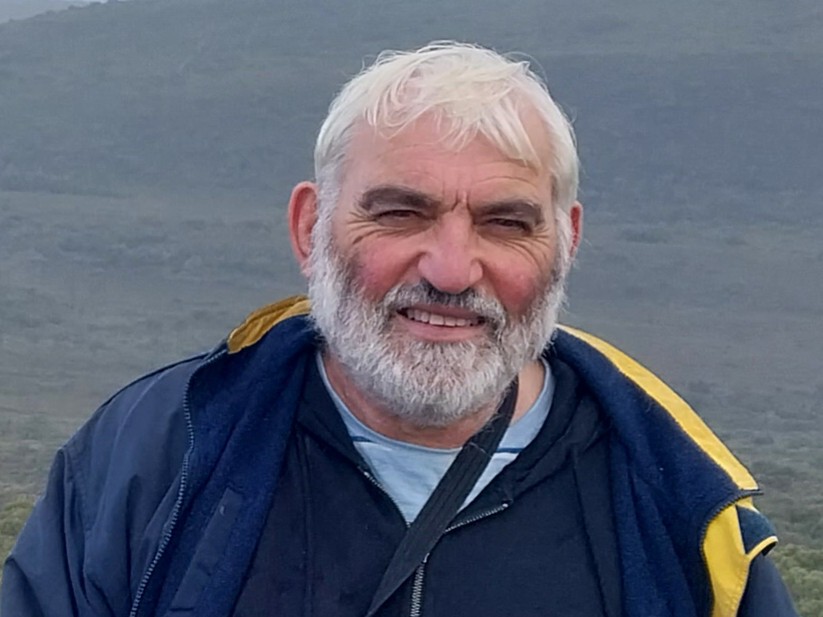
Basil Schur
Basil Schur is a tireless, dedicated and passionate worker and advocate for his local environment in the Denmark region and further afield. He grew up on a cattle farm in Zimbabwe and his family immigrated to Perth in 1981 where he began university studies.
As a young adult, he fell in love with the iconic, unique and precious Aussie environment and was involved in early forest activist campaigns that led to the expansion of conservation estate in old growth Karri, Jarrah, Wandoo and Tuart forests, remnant bushland conservation on private land.
He has worked with Green Skills in Denmark since 1989 and seen a large span of projects in the areas of ecological restoration and community development come to fruition. In the 1990s, he completed post graduate studies at Murdoch with a thesis titled 'Masculinity and Landcare in Rural WA'.
He has been a key ambassador for Gondwana link and a driving force in the creation of a feral predator enclosure eco-sanctuary and associated citizen science program at Balijup farm near Tenterden. He also has managed a south coast wetland conservation program that over 3 decades has seen multiple wetland fencing and rehabilitation projects completed on farms, including the Denmark Wetlands Centre.
In recognition of his 30+ years of environmental service on the ground he was awarded the West Australian Individual Landcarer Award in 2019 and then went on to also receive the National Individual Landcarer Award in 2021, as a testament to individuals who show significant commitment to caring for the land and are a leader in their community.
Basil often expresses the sense of privilege he experiences in working alongside fellow conservationists, farmers and Noongar elders across the Great Southern. His success with environmental projects is attributed to the support provided by his colleagues, particularly in Green Skills and his long-term collaborations with the community, citizen science, farmers and Noongar elders and Rangers.
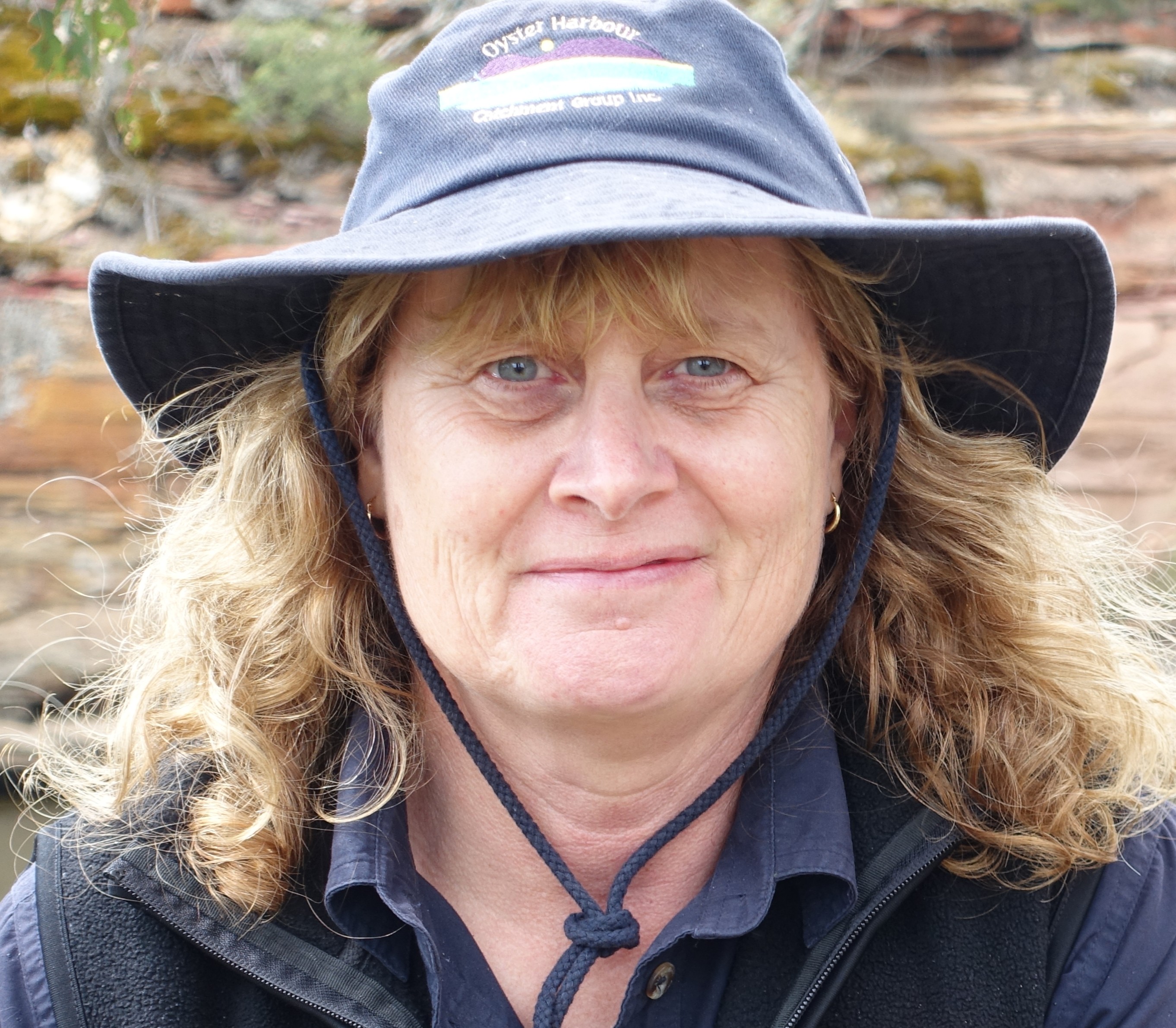
Heather Adams
Heather Adams is a dedicated landcarer, farmer, and committed community member who farms between the Porongurup and Stirling Ranges, north of Albany. For more than three decades, she has been at the forefront of a wide range of landcare initiatives, working tirelessly to protect the region's natural landscapes and build more sustainable farming systems.
As long-standing Chair of the Oyster Harbour Catchment Group, Heather has played a pivotal role in their long-term projects, which has seen much of the Kalgan river fenced, with an array of active revegetation restoring and expanding the riparian vegetation along with a range of initiatives which reduce harmful run-off from farmlands. This work has protected much of the river and its tributaries while also resulting in the globally significant return of good water quality and the original seagrass cover to Oyster Harbour. Heather has had a key role in the coordination of the community-led Ranges Link initiative, working with Friends of Porongurup Range to restore and manage bushland links across the Kalgan Valley and between the two ranges. A particular focus for Heather is ‘getting that bushland fenced’ and she has been pivotal in securing funding for and rolling out over 450kms of protective fencing.
In addition, Heather has had a key role in mentoring a range of landcare coordinators who have worked for the group and have gone onto to even bigger roles.
Heather and her husband, Mark, manage a mixed farming enterprise on 6,910 hectares of Menang Country at Woogenellup. Their farm has a strong focus on sustainable cropping practices and large areas are under agro-forestry tree belts. Their commitment to community led stewardship is also evident in their involvement with WA Farmers Federation and their role in the development of Stirling’s to Coast Farmers, an organisation supporting agricultural research and outcomes relevant to the local area
Beyond her farming and leadership roles, Heather has been instrumental in much wider range of community initiatives, including various roles with the Mt Barker Community College and administration of the Mt Barker Bulls Football Club. Heather holds a Plantagenet Shire Citizen of the Year Award and her efforts have also been recognised in various case studies and publications which showcase her dedication to environmental conservation and community engagement. Under her leadership the Oyster Harbour Catchment Group won the National Landcare Community Group Award in 2008.
Heather's unwavering commitment to landcare and sustainable agriculture continues to inspire and lead the way for future generations in Western Australia.
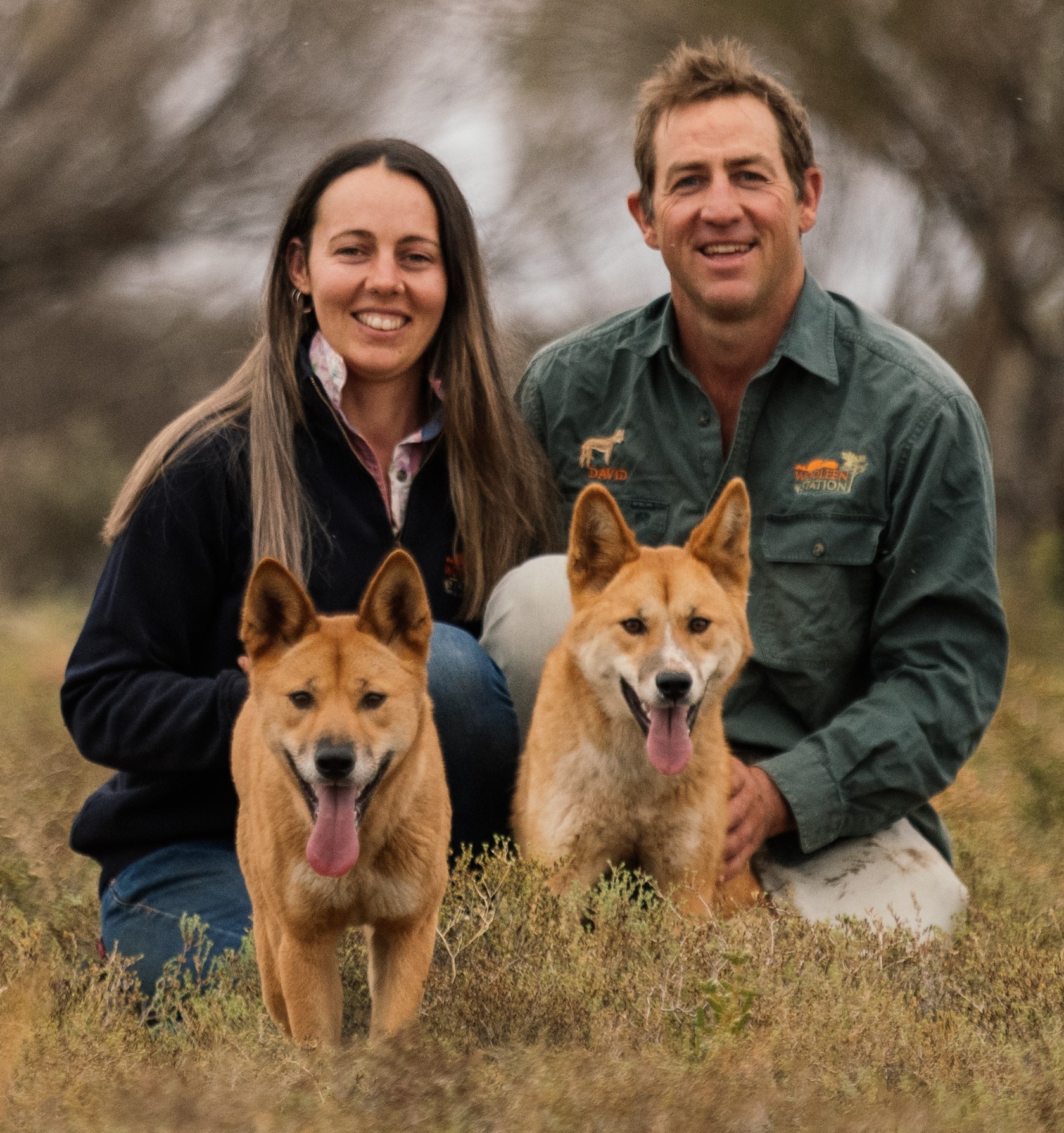
Frances and David Pollock
Wooleen Station stands as a beacon of heritage and ecological resilience in the heart of the Australian outback. Spanning vast landscapes imbued with raw beauty, it exemplifies the symbiotic relationship between nature and human stewardship. The station's story is one of challenge and triumph, a testament to the vision and effort of those who dared to dream of harmony between grazing and conservation.
The Pollock family has owned and operated Wooleen Station since 1990, with Helen and Brett Pollock establishing a reputation for friendly, traditional Australian outback hospitality. Their vision was to make accessible an experience where anyone could begin to understand the pastoral way of life.
David Pollock and Frances Pollock continued this legacy, balancing pastoralism, conservation, and regenerative tourism to ensure Wooleen remains a thriving ecosystem for future generations.
David has dedicated his life to restoring and protecting Wooleen’s fragile landscape. His passion for land conservation led him to study Environmental Science at Edith Cowan University and travel within Australia and overseas to observe pastoral management techniques used in other arid regions.
His work focuses on reversing decades of overgrazing, through both destocking to allow the landscape to heal itself, and by pioneering techniques for broad scale landscape rehabilitation and pastoral land management. He has served as; President of the Murchison Land Care Committee; On the Board of Rangelands NRM; And on the WA assessment panel for Caring for Country funds. He wrote a memoir focusing on pastoral history and management in the Southern Rangelands, helped develop a cultural awareness program for schools visiting Wooleen; and has taken thousands of people on tour since 2003.
He has been particularly dedicated to dispelling the myths surrounding dingoes, advocating for their recognition as a keystone species vital to the health of arid landscapes. David sees dingoes not as pests, but as ecological allies—natural top-order predators that help restore balance by keeping populations of herbivores and invasive species in check. His work aims to shift public perception and policy, so dingoes can be embraced as an essential tool for landscape management and the regeneration of degraded rangelands.
Frances Pollock is a passionate advocate for regenerative tourism and land stewardship, combining a strong background in ecotourism, marketing, and storytelling to create immersive visitor experiences at Wooleen Station in Western Australia’s Murchison region. With a Diploma in Social Media Marketing, Frances ensures that guests connect deeply with place, leaving not only with a memory but with a renewed sense of responsibility for the land.
Frances believes that tourism is a powerful tool for education and transformation. By inviting visitors to experience landscapes under pressure, and to witness firsthand the challenges and possibilities of land restoration, she creates a deeper understanding of ecological systems, cultural histories, and the role individuals can play in conservation. Through this lens, tourism becomes more than hospitality, it becomes a catalyst for change.
She has played a pivotal role in shaping regional tourism, having served as Chair of Gascoyne Murchison Tourism Inc. and represented the Gascoyne-Murchison sub-region on the Board of Australia’s Golden Outback. She currently contributes her expertise as a Board Member of TrailsWA and the Mid West Food Industries Alliance, Station Stays WA and championing sustainable tourism and regional innovation. At the heart of Frances’s work is a belief that meaningful experiences on-country can shift perspectives, inspire stewardship, and contribute to the future of landcare in Australia.
David’s and Frances pioneering approach to regenerative pastoralism has been widely recognised, including a Lancare Award for work in the Roderick River catchment, multiple features on ABC’s Australian Story (2012, 2014, and 2017) and Landline (2024). In 2023 and 2024 they were awarded Bronze for eco-tourism at the state tourism awards
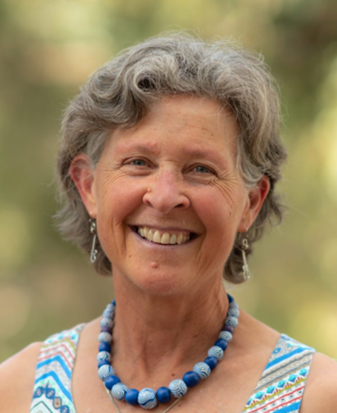
Dr Louise Duxbury
Louise is a distinguished sustainability practitioner, facilitator, and community landcare leader who has made outstanding contributions to the WA landcare community. She has more than 35 years of experience contributing to environmental initiatives, leadership development, and community resilience across the Great Southern region and beyond.
Lou holds a PhD in Sustainability and Technology Policy from Murdoch University. Her academic foundation is complemented by a Bachelor of Arts in English and Psychology, with Special Honours in Energy Policy.
In 1989, Lou founded Green Skills Inc., a not-for-profit organisation who promotes and demonstrates sustainability in action through the creation of employment opportunities and the provision of training, research and on-ground projects. Under Lou’s leadership, Green Skills has become a cornerstone of community-based environmental action and education.
Lou was awarded the Great Southern Development Commission Medal for Excellence in Natural Resource Management for her work with Green Skills in 2006, and with prize money took a study tour of sustainable communities around the world in 2007. She returned and shared positive examples of what has been done in other inspiring places to become a carbon neutral and socially sustainable communities. Lou is also a leader in working collaboratively and respectfully with First Nations Peoples.
Beyond her role at Green Skills, Lou has served as a Director of Gondwana Link Limited for 15 years, assisting with collaborative ecological restoration efforts across the Great Southern, and stepping up to take the Chair role last January.
Lou held the role of Executive Officer at WA Landcare Network from 2016 to 2021, and then the role of Chair of the National Landcare Network Board from 2022 - 2024, where she advocated for community-led landcare initiatives at the national level.
Since 2016 Lou has been a lead facilitator with Women’s Environmental Leadership Australia (WELA) where she is passionate about facilitating programs that empower women as leaders in environmental and community development, aiming to create systemic change and build personal confidence among participants.
As a founding resident of the Wolery Ecological Community on the South Coast, where Lou and her husband Simon live, Lou lives her commitment to sustainable living. Lou loves her garden and inspiring others through her practical application of sustainability principles every single day.
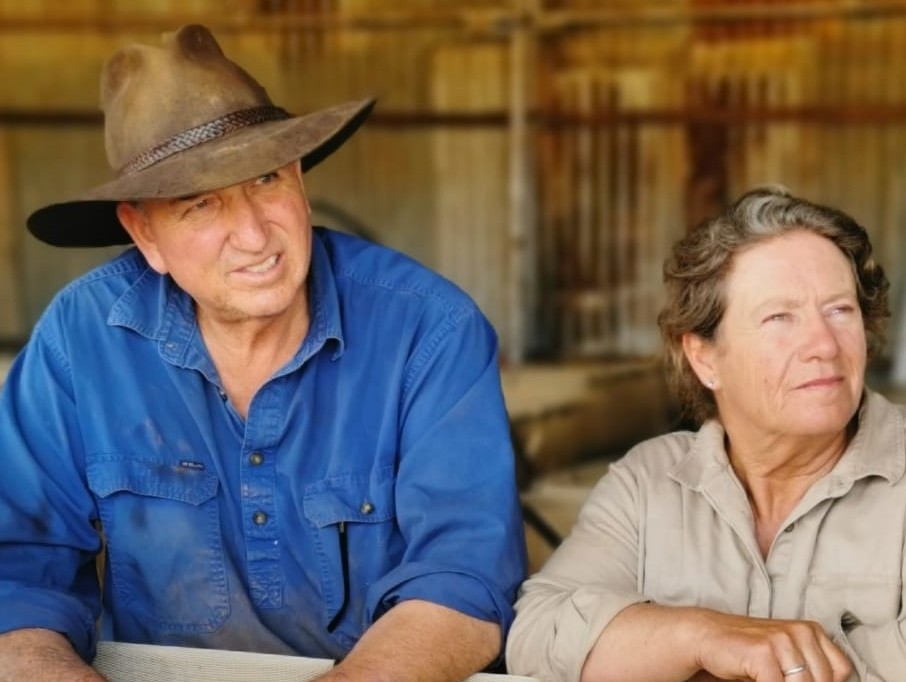
Di and Ian Haggerty
The Haggerty’s story is a testament to their unwavering passion for farming and their dedication to sustainable and regenerative practices.
Ian and Dianne Haggerty are pioneers in sustainable farming and the co-founders of Natural Intelligence Farming ™. Originally hailing from Western Australia, their dedication to agriculture stems from deep familial roots and a shared ambition to revolutionize farming practices.
Now the grateful stewards of over 27,000 hectares of farmland in Western Australia, their passion for farming dates back to their childhood, growing up on family farms. Unfortunately, they didn’t have the opportunity to take over their respective family farms and despite this setback, their love for horses brought them together in the Swan Valley, and they soon married. In 1991, with their three-month-old son, they purchased a BP franchise in Derby and made the move up north. During their time in the Kimberly, Ian and Di formed strong connections with the local Indigenous elders, who taught them about the importance of connecting with the land. When a neighbouring 660-hectare property to Di’s parents became available for sale in 1993, Ian and Di saw it as a chance to return to the wheatbelt and try their hand at farming.
In the early years, they faced challenges as they started with limited resources. They borrowed machinery from Di’s father and bought 300 merino sheep. However, their first meeting with a farm advisor was discouraging, as they were told that their farm was too small to succeed. Despite this setback, they pressed on.
They have overcome obstacles and embraced new knowledge to create a successful farming operation that not only produces high-quality crops but also nurtures the land for future generations.
The foundation of the Haggerty’s Natural Intelligence Farming methods lies in their deep commitment to regenerating the fertility of the marginal soils in their area. They achieve this through the use of biological fertilisers, zero tillage, and cultivating healthy cereal plants that yield high tonnages of premium grain per hectare. The healthy ground cover of their crops and pastures plays a vital role in maintaining soil moisture and controlling weeds.
In addition to their crop farming, Ian and Dianne have also developed their own Merino stud and a working sheep flock. They have carefully bred their flock using local and South Australian bloodlines, ensuring that their sheep are perfectly acclimatised to the land they farm.
Di and Ian were recently recognised as 2025 WA Australian of the Year Agricultural Pioneers.
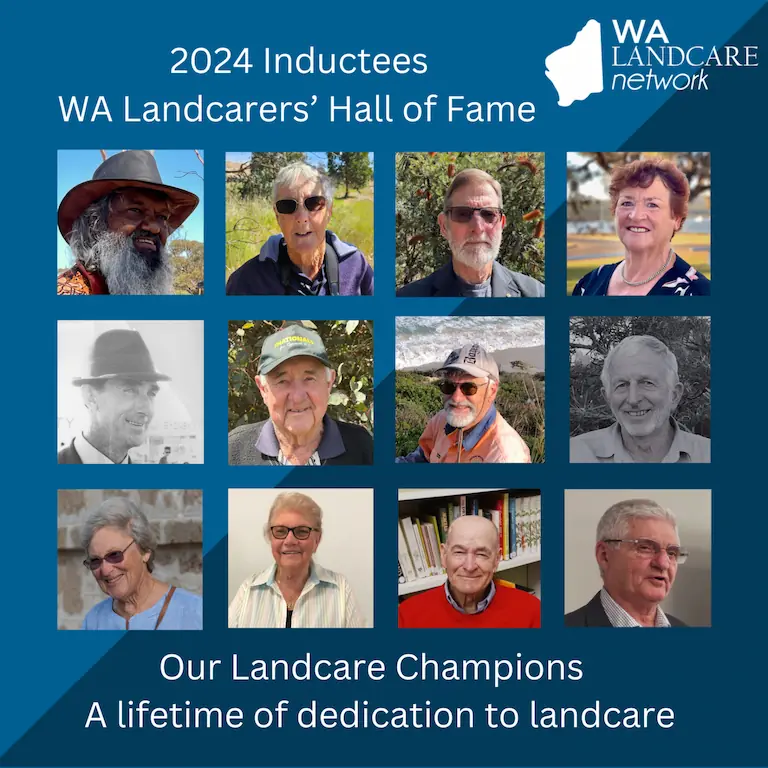
2024 WA Landcarers’ Hall of Fame Inductees
On 1 November twelve wonderful individuals were recognised and celebrated as the 2024 inductees into the WA Landcarers Hall of Fame at a presentation ceremony at the Cockburn Wetlands Centre.
The 2024 inductees include:
- Les Schultz
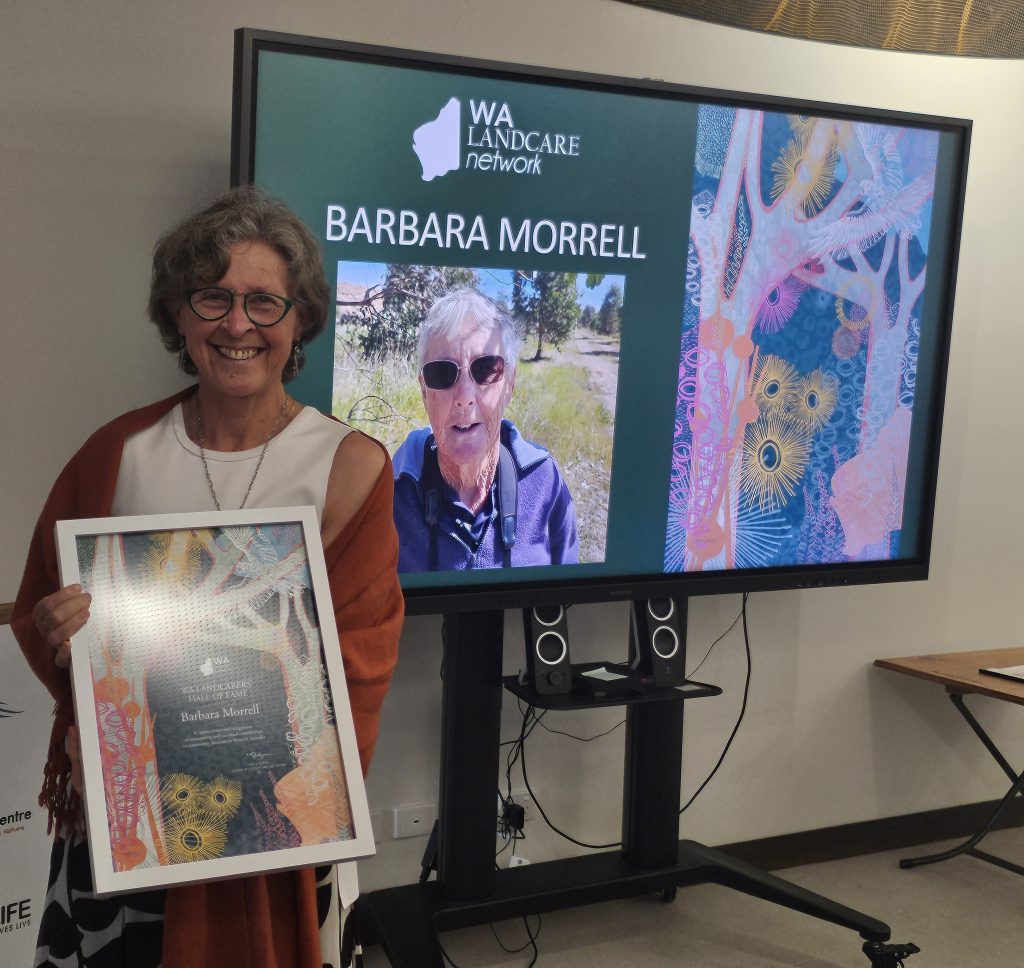
- Barbara Morrell
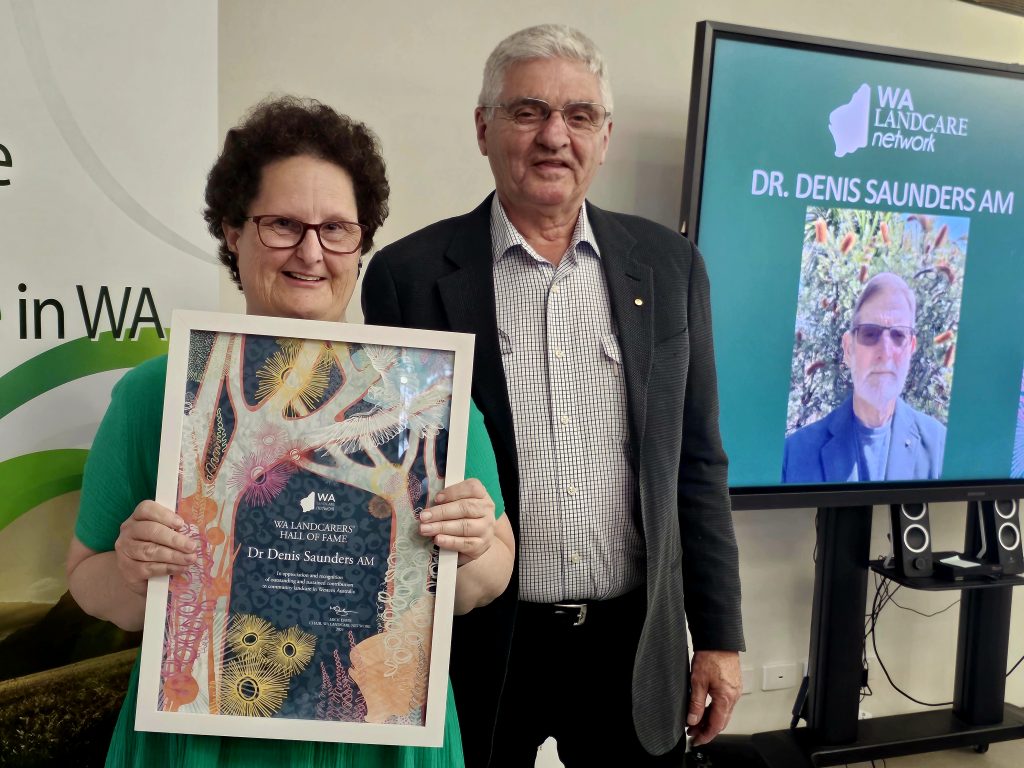
- Dr Denis Saunders AM
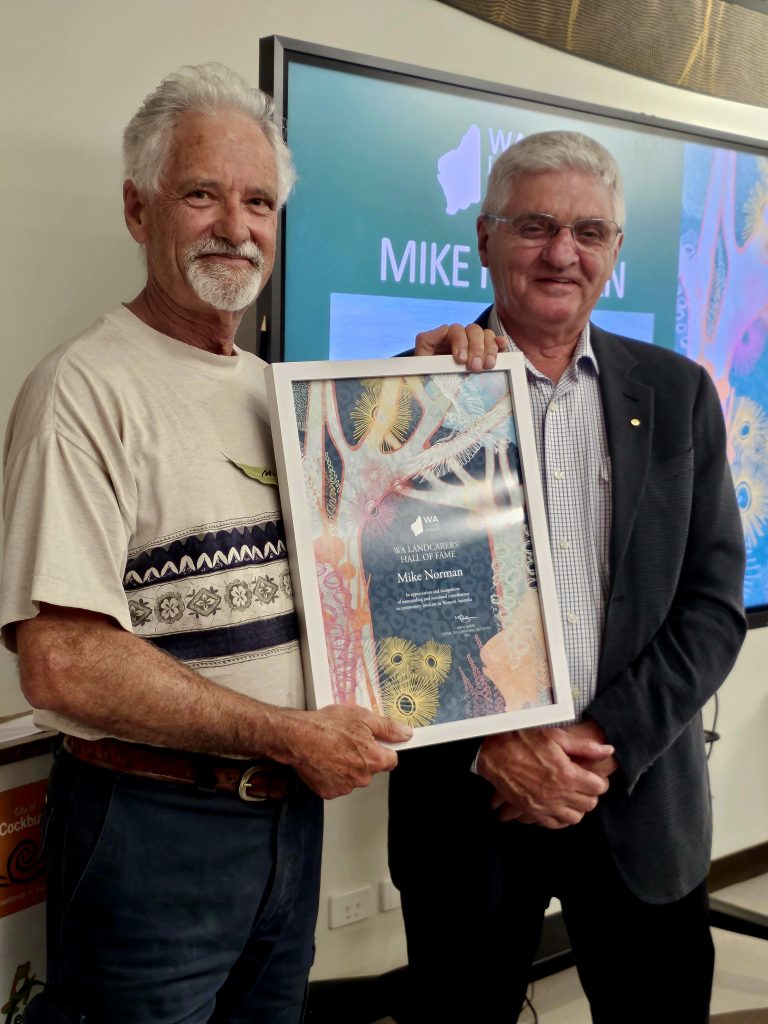
- Mike Norman
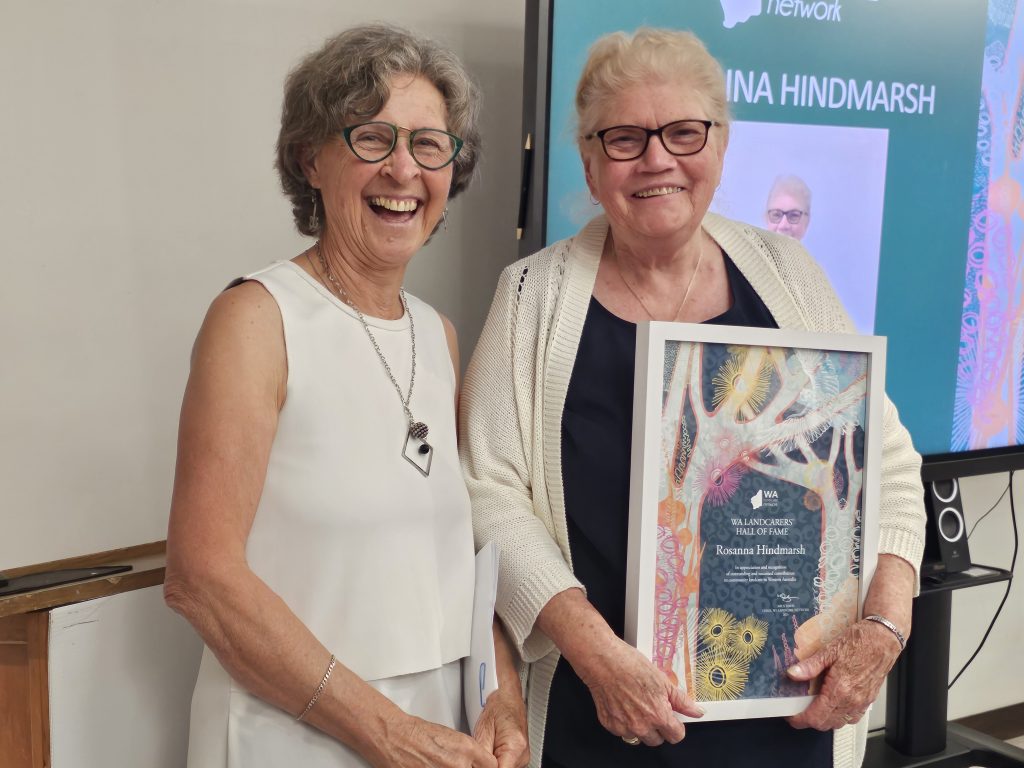
- Rosanna Hindmarsh
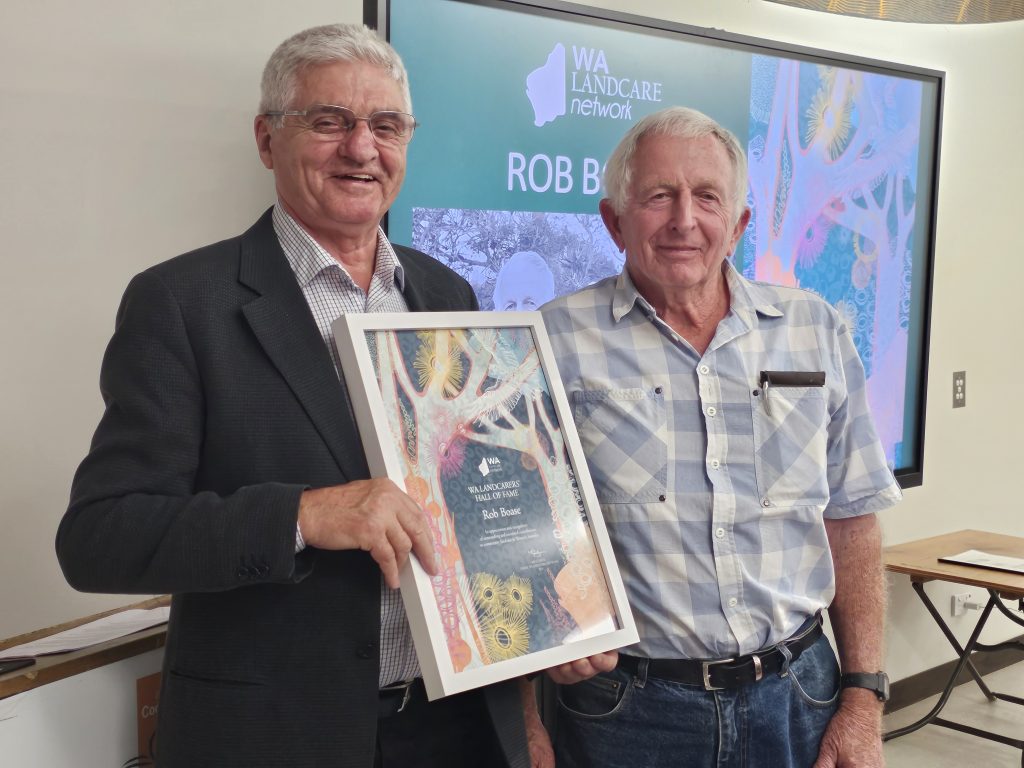
- Rob Boase
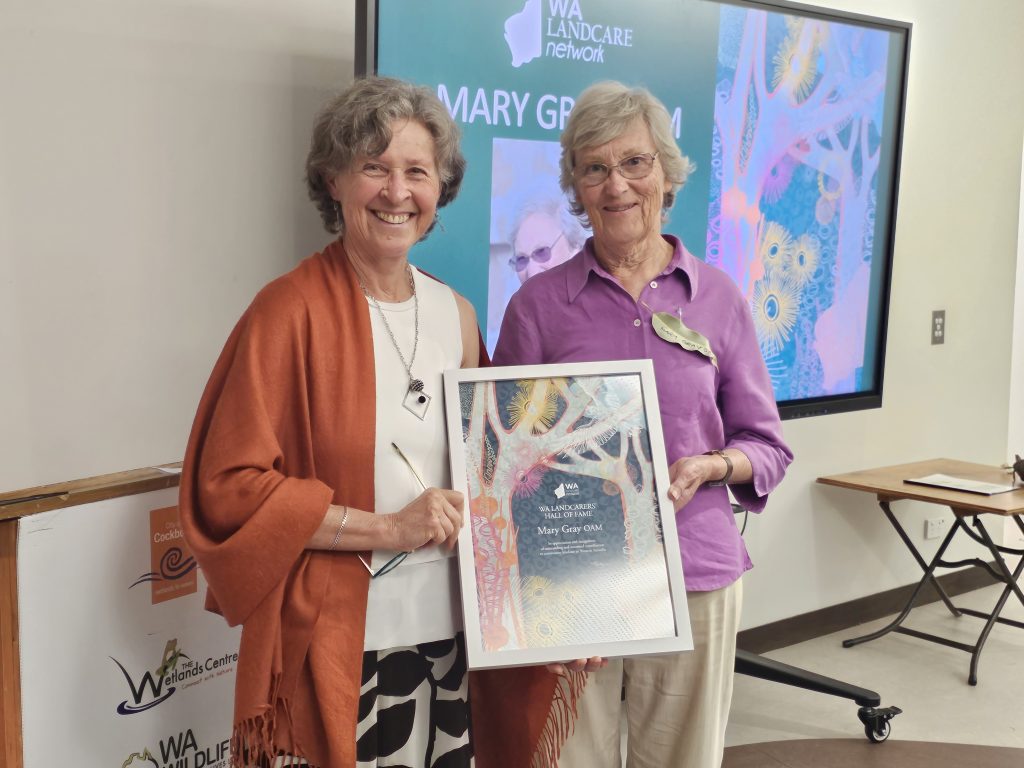
- Mary Gray OAM
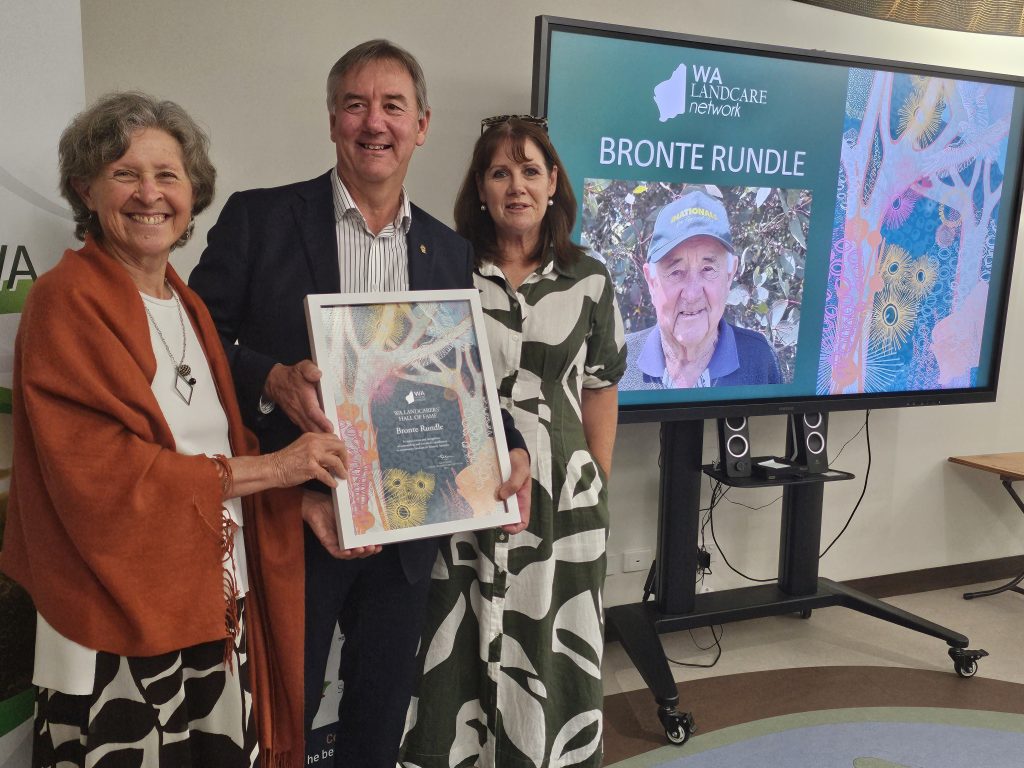
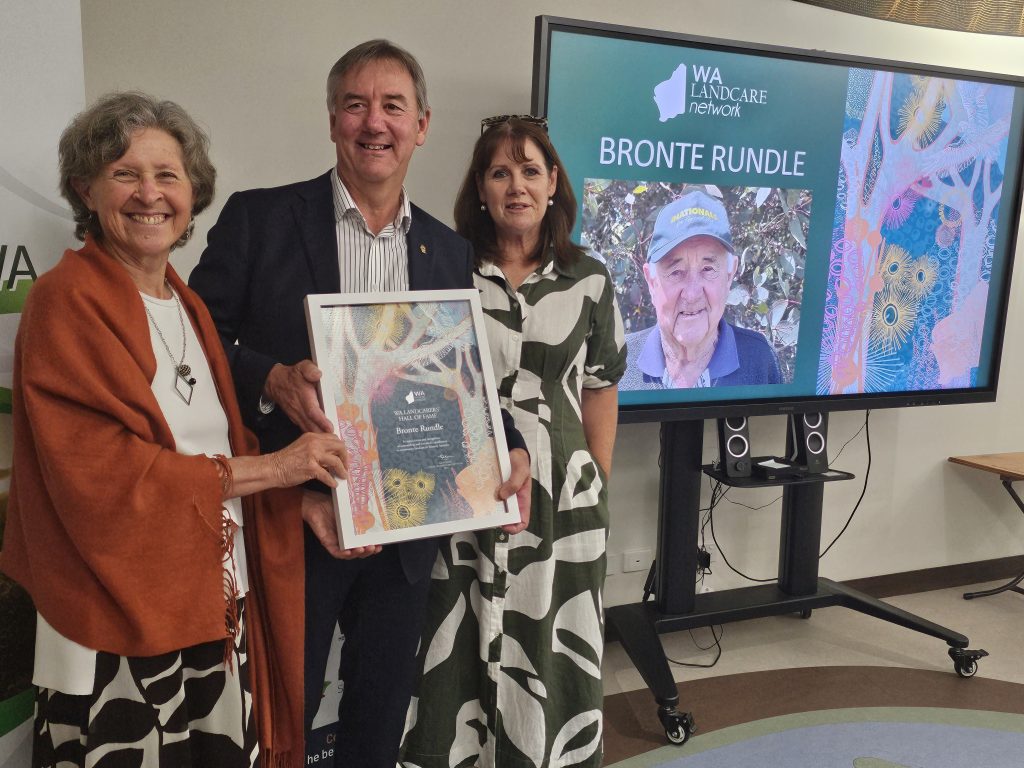
- Bronte Rundle
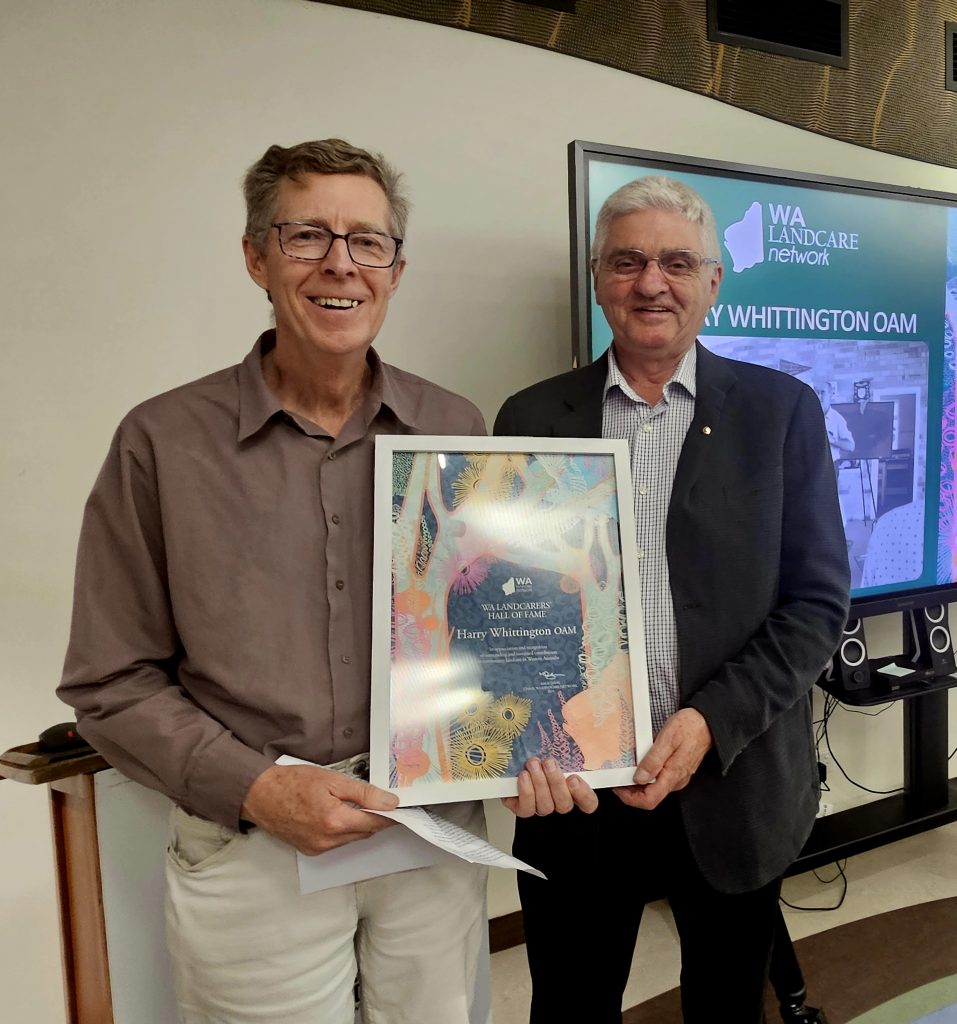
- Harry Whittington OAM (Posthumous)
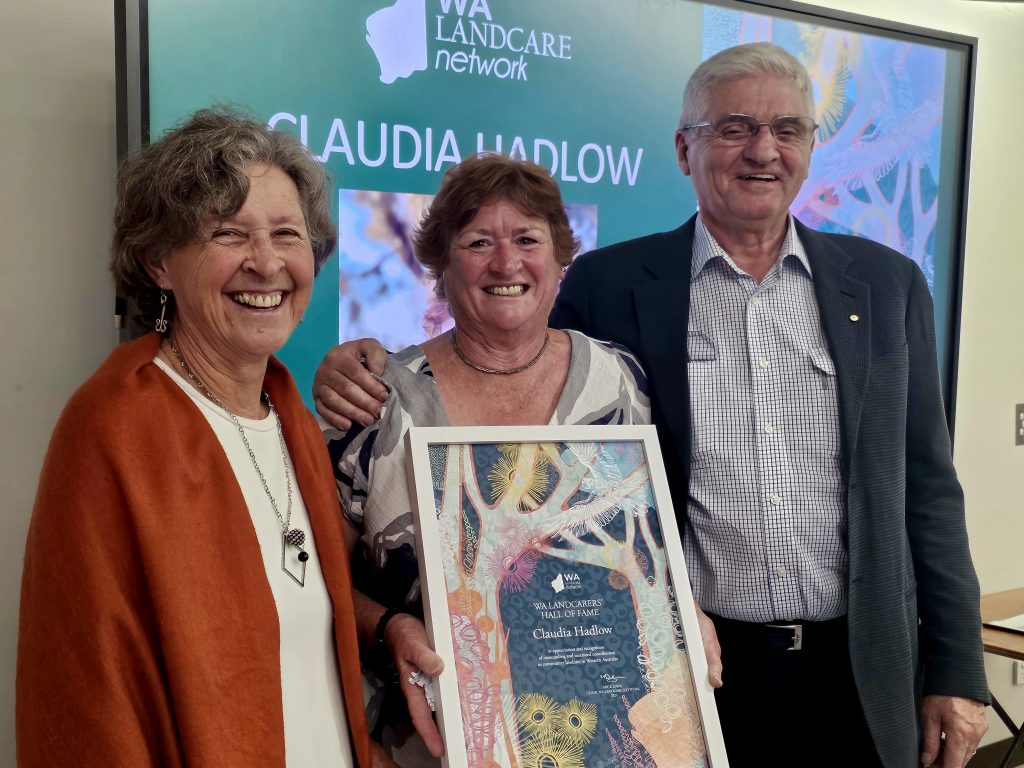
- Claudia Hadlow
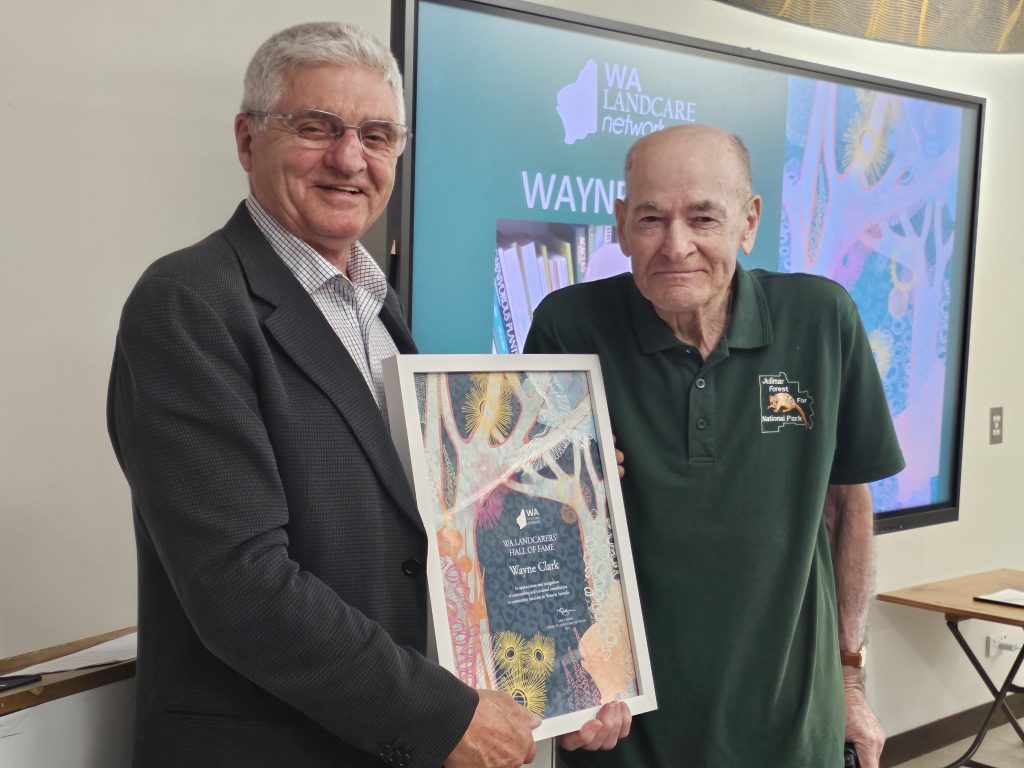
- Wayne Clarke
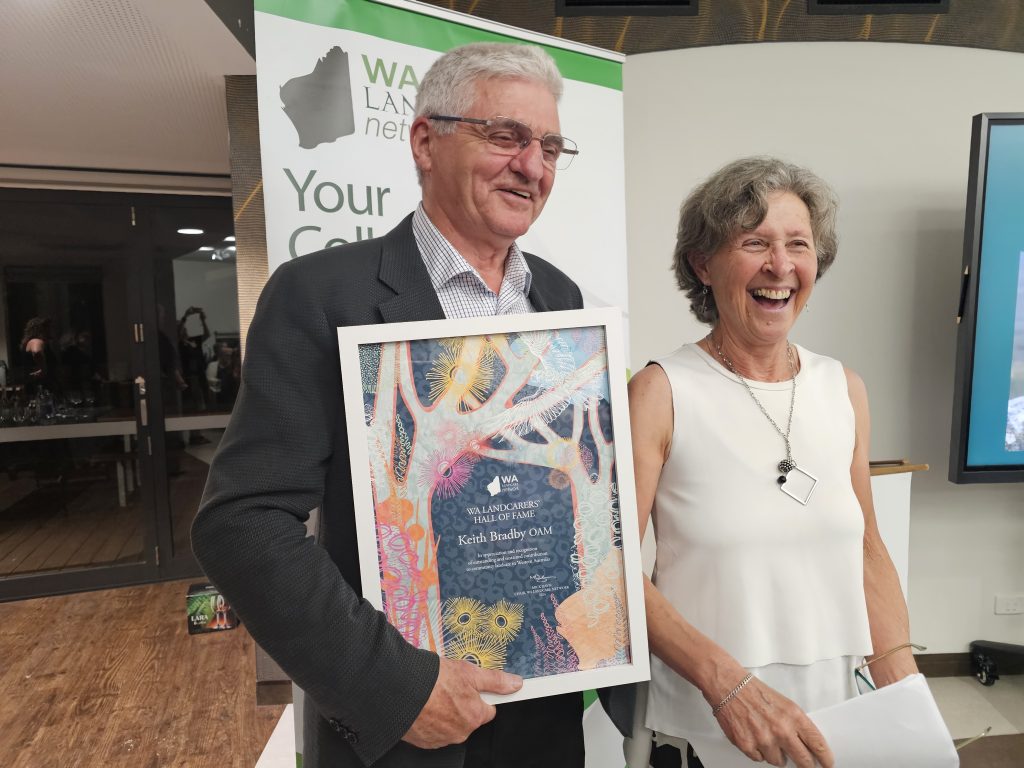
- Keith Bradby OAM
Photo Gallery: 2024 WA Landcarers’ Hall of Fame Presentations
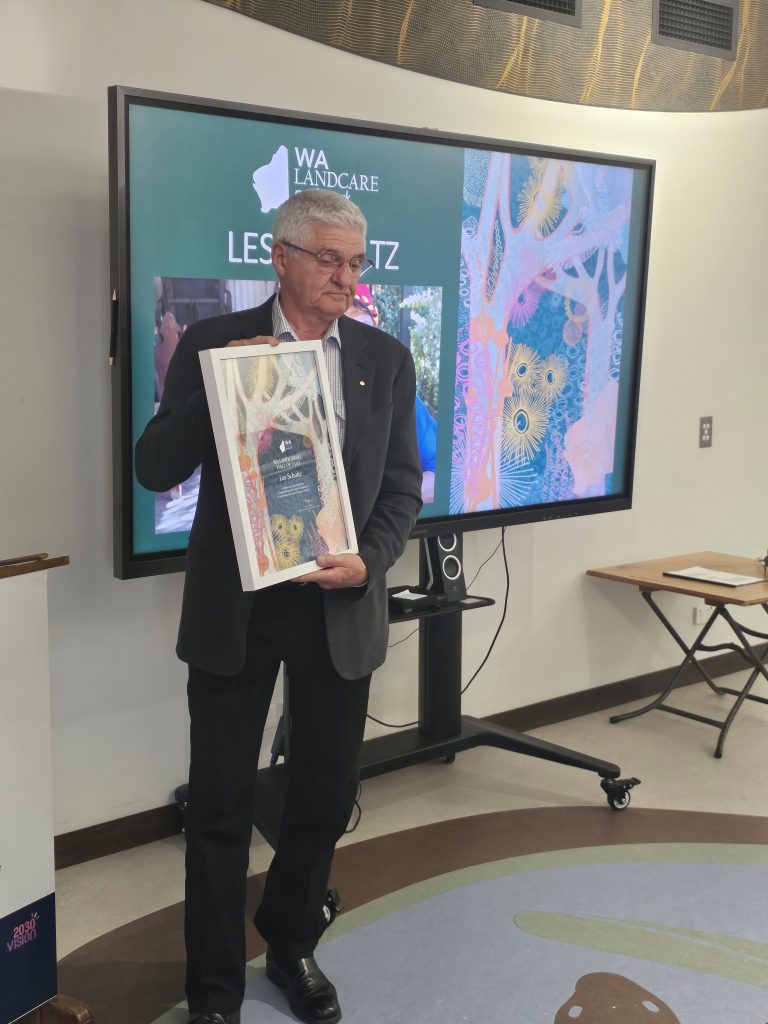
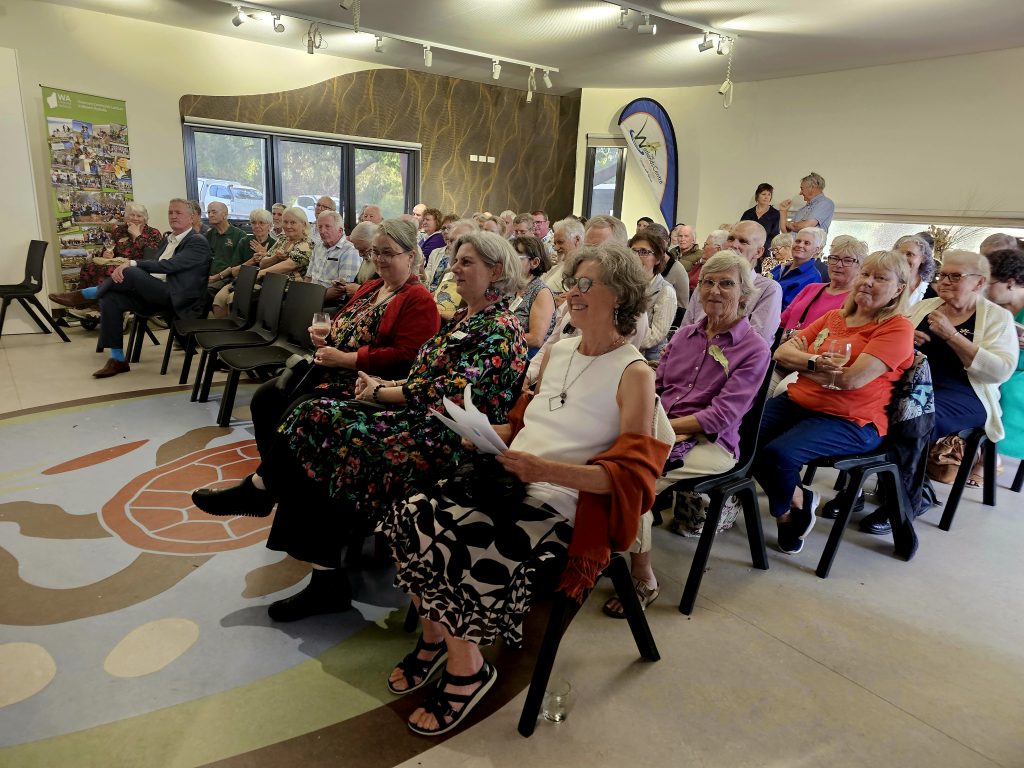
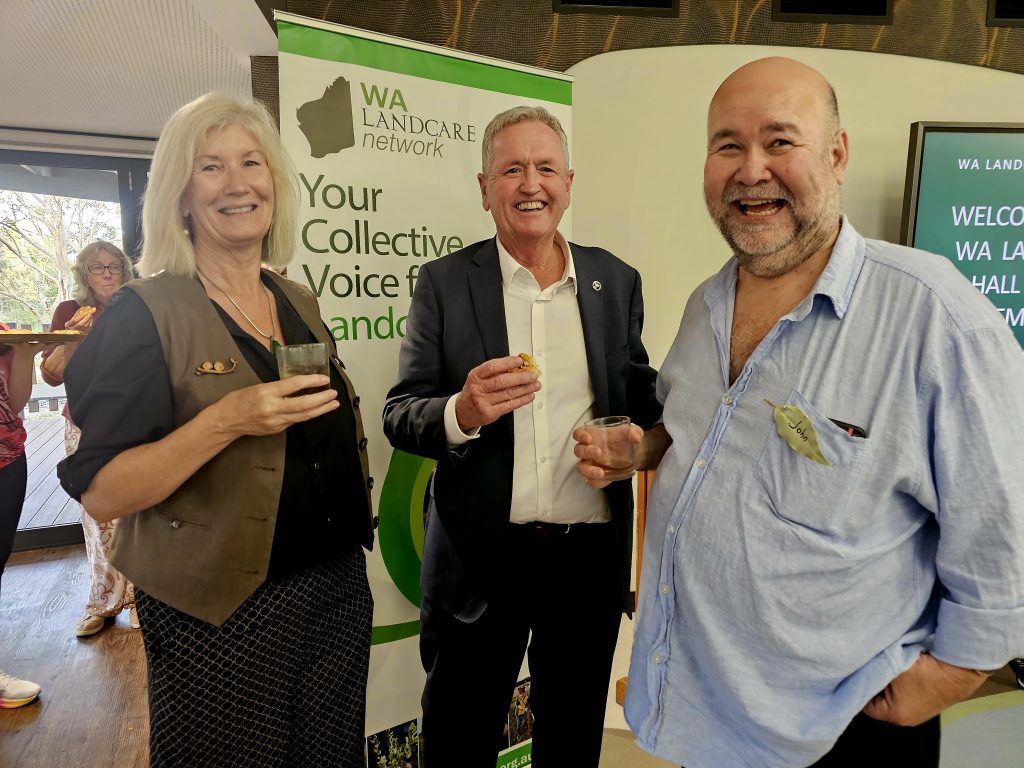
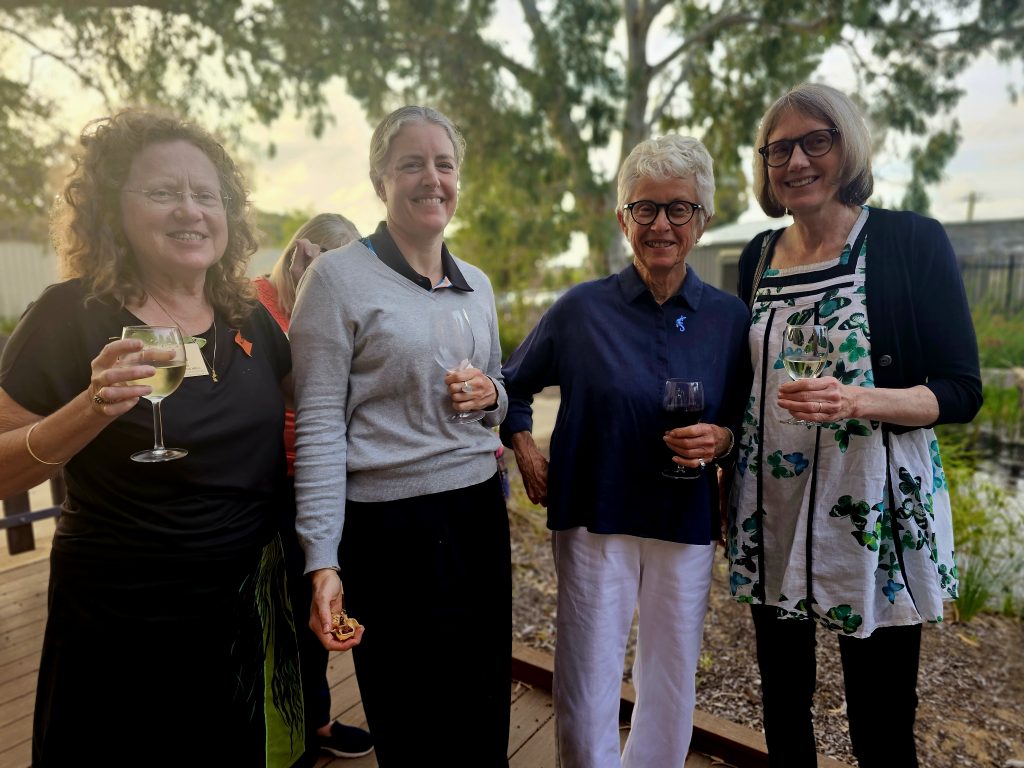
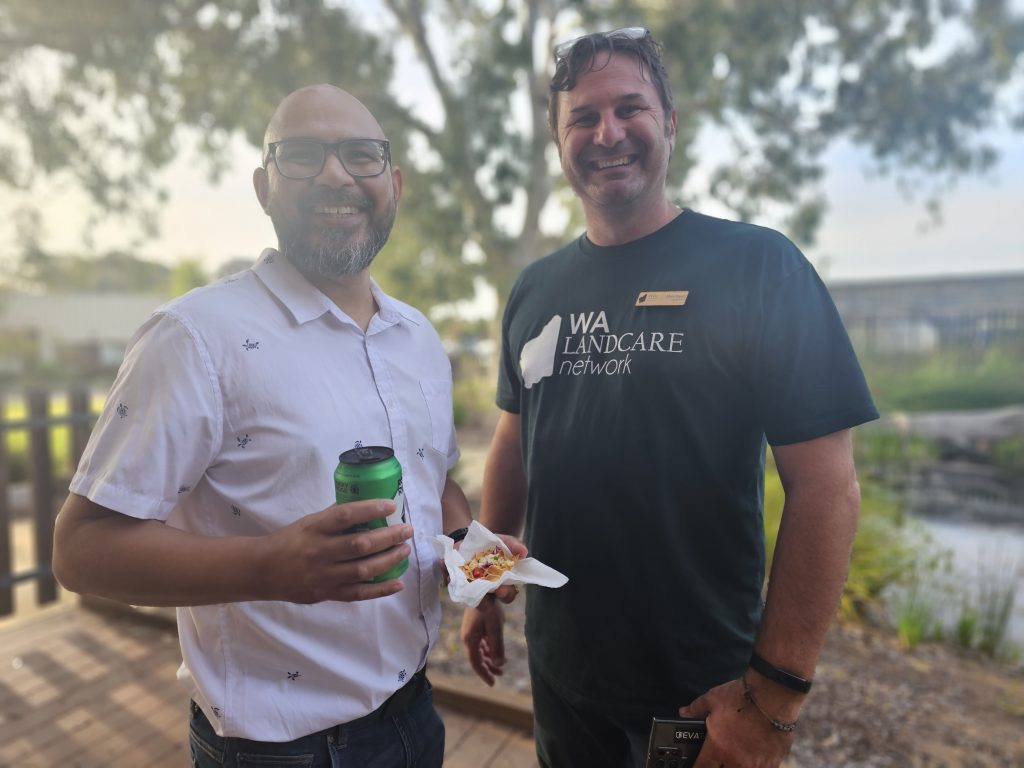
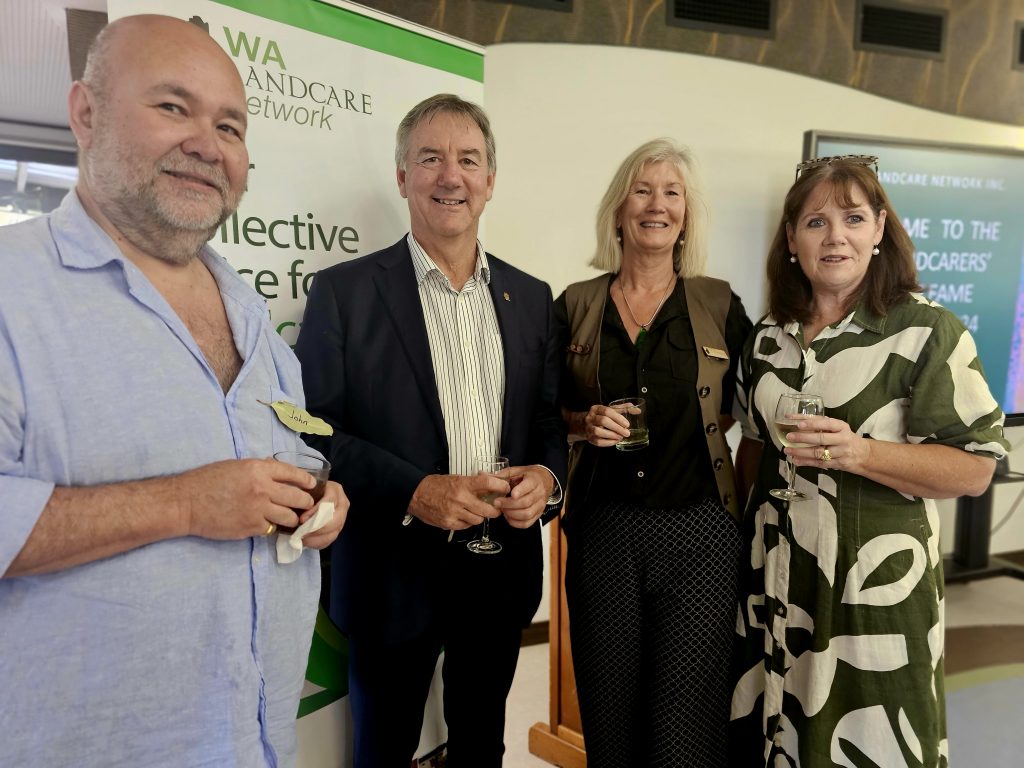
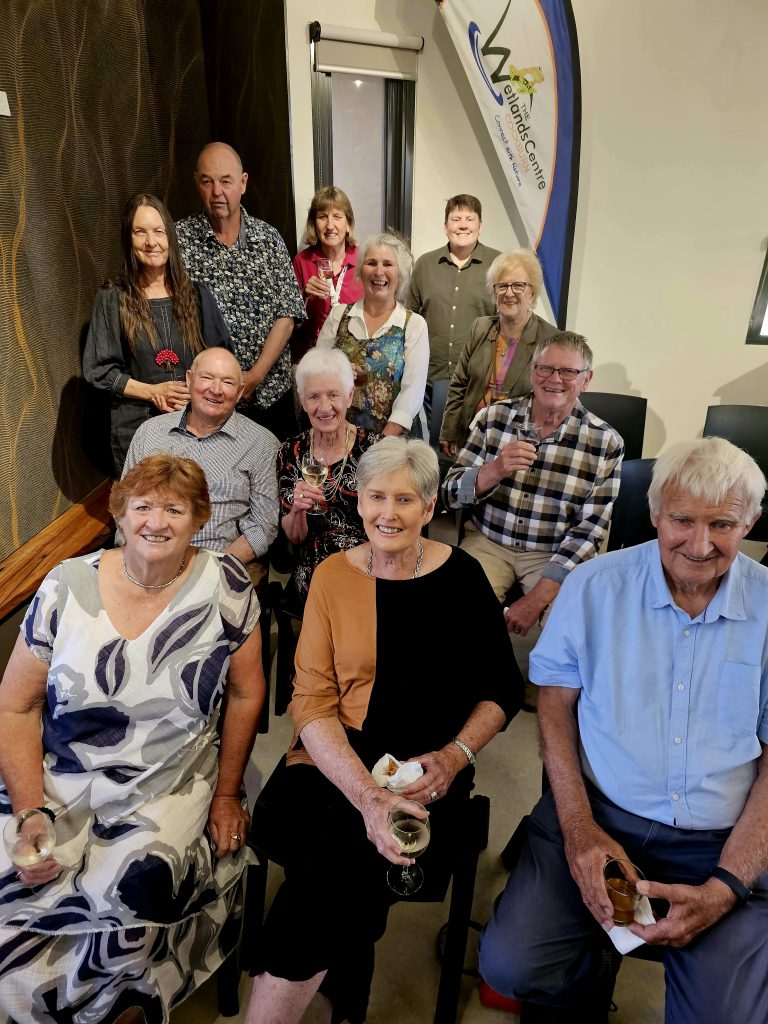
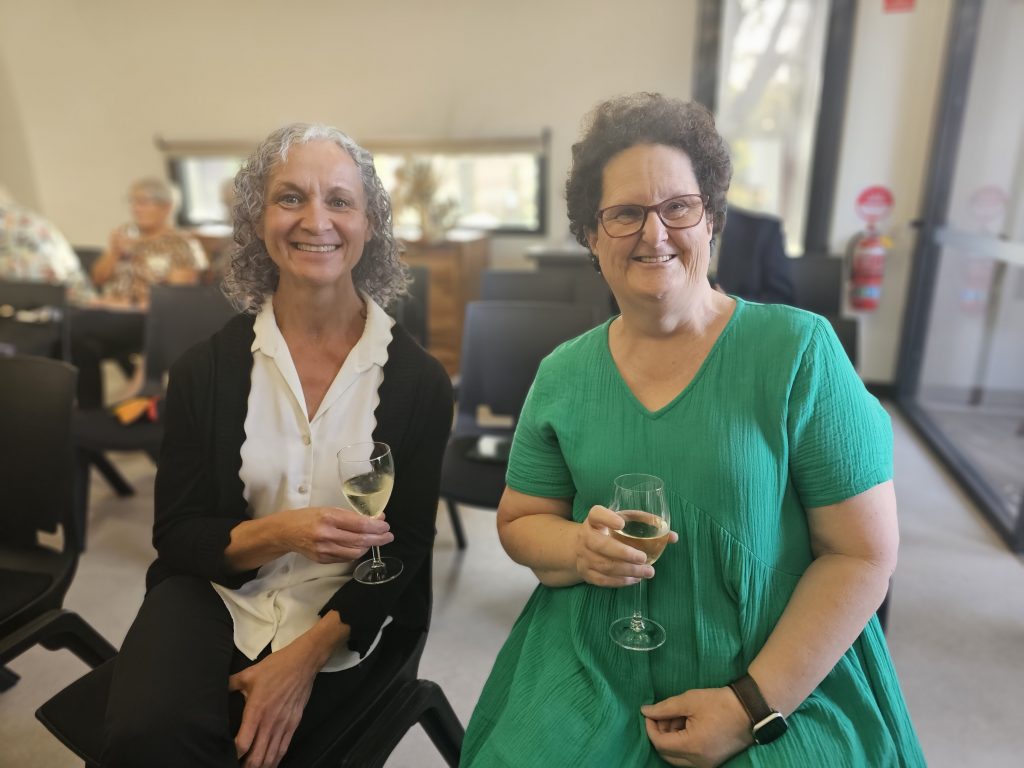
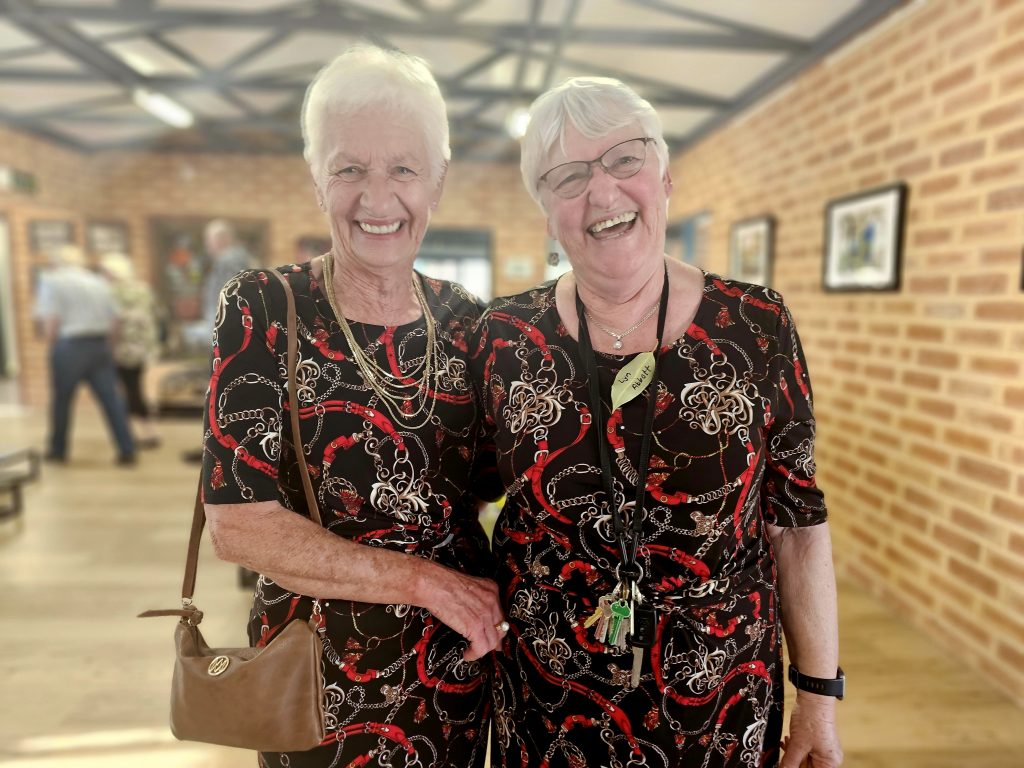
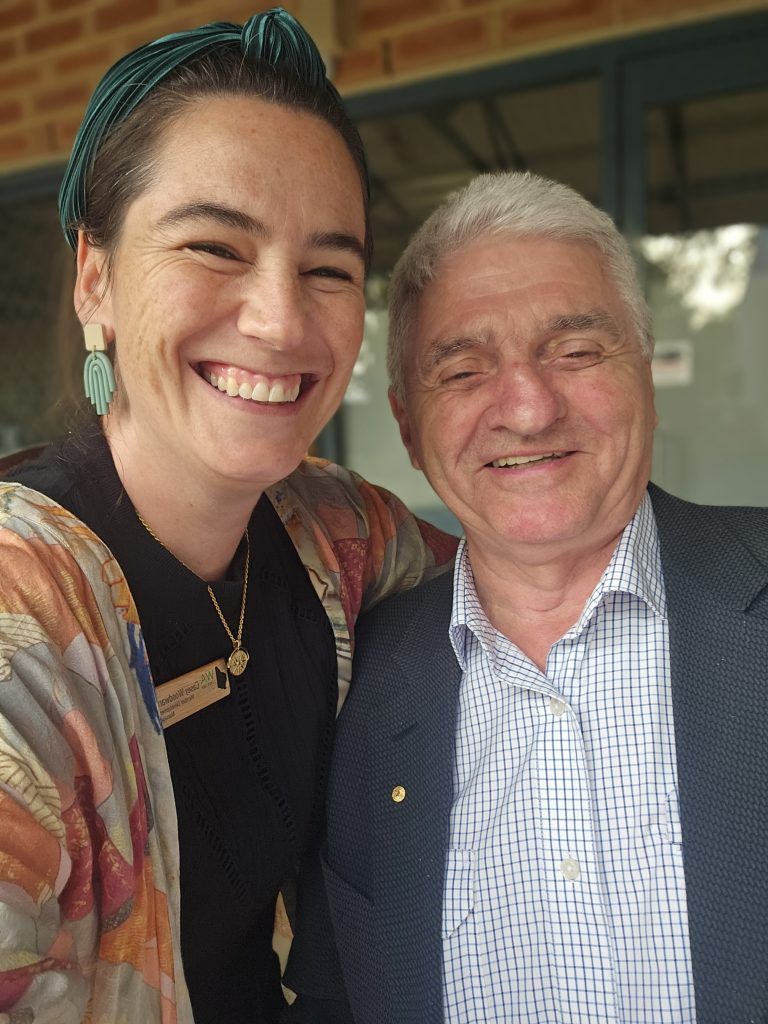
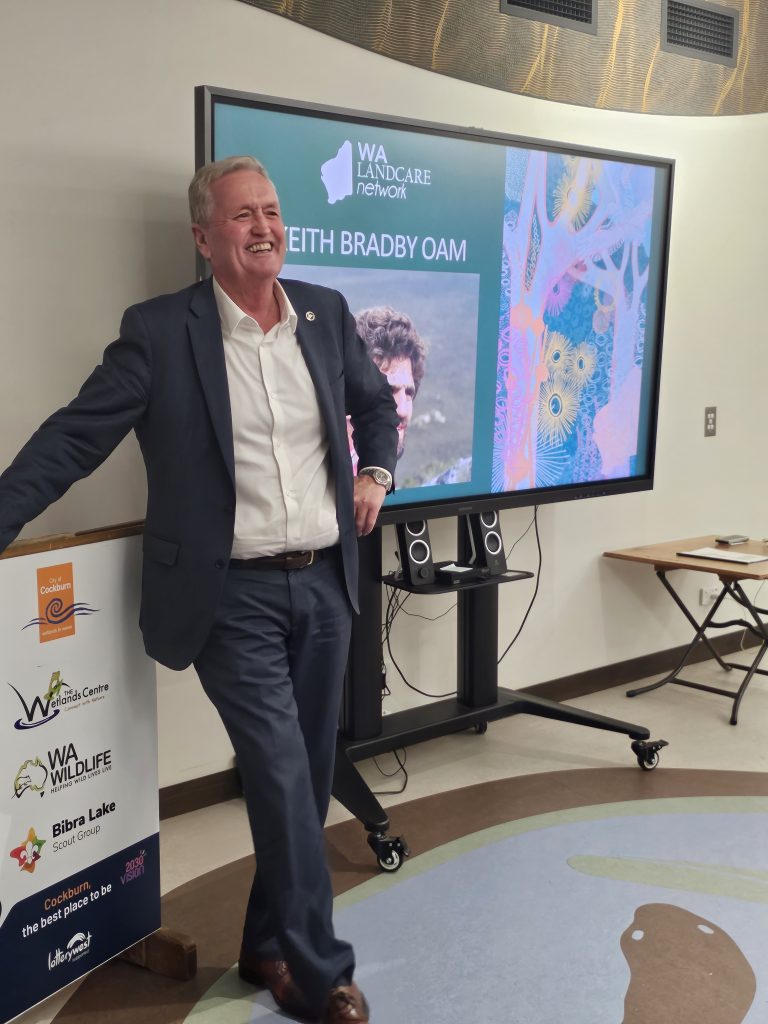
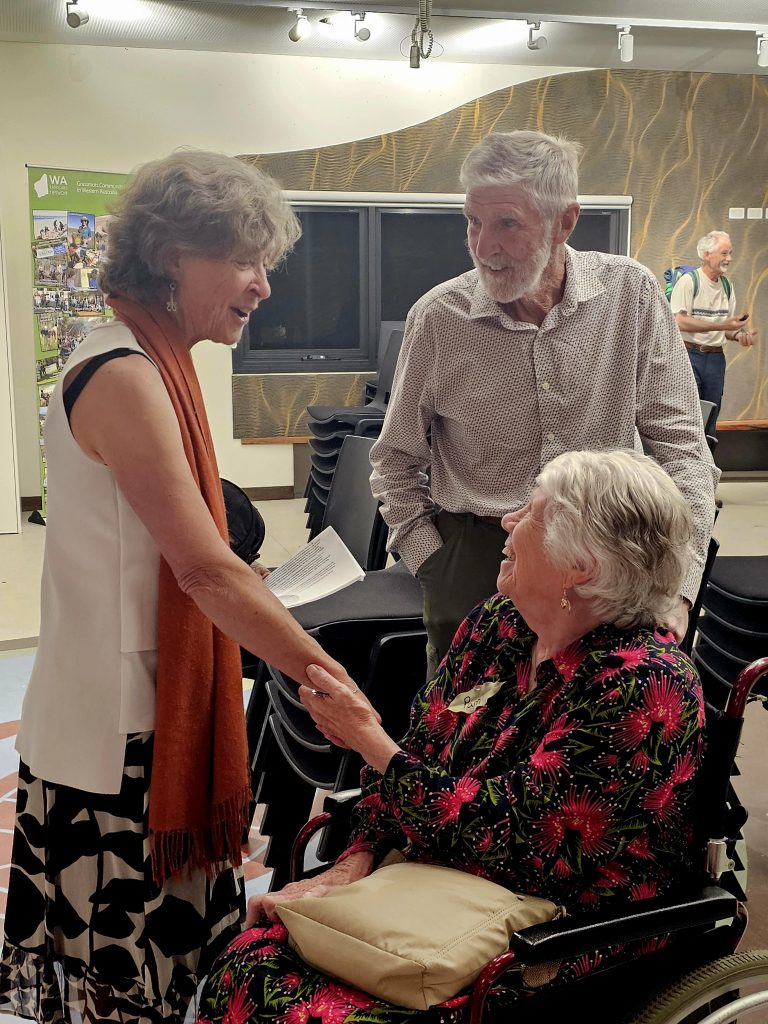
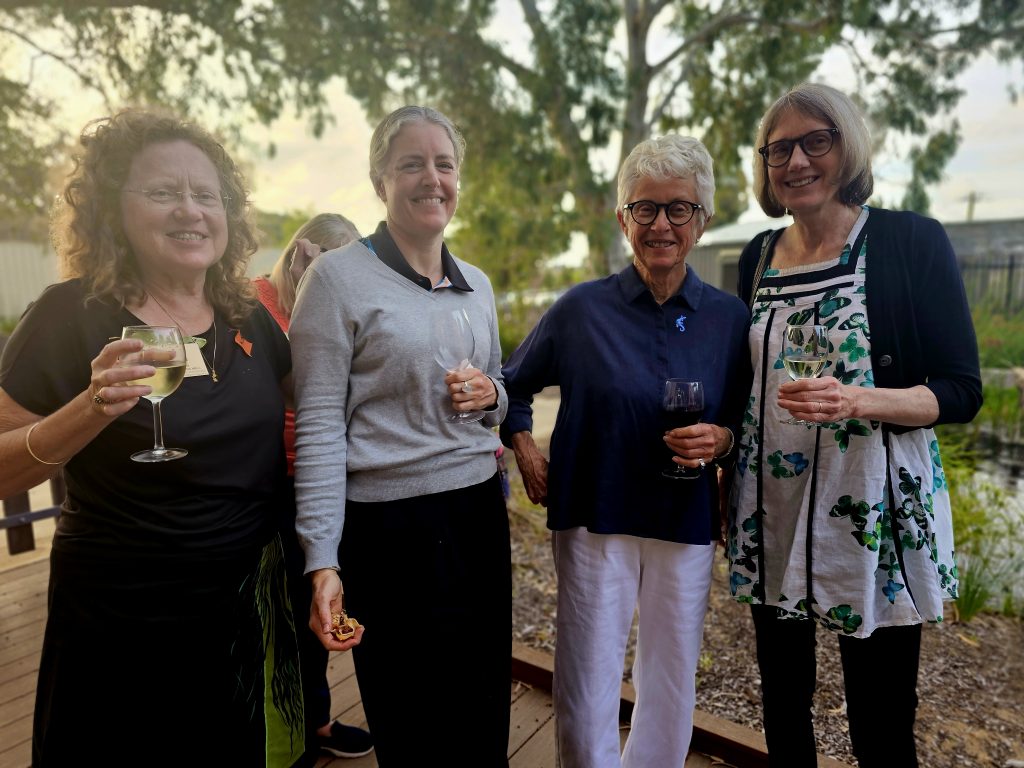
Read about the achievements of the 2024 WA Landcarer’s Hall of Fame Inductees below.
Les Schultz
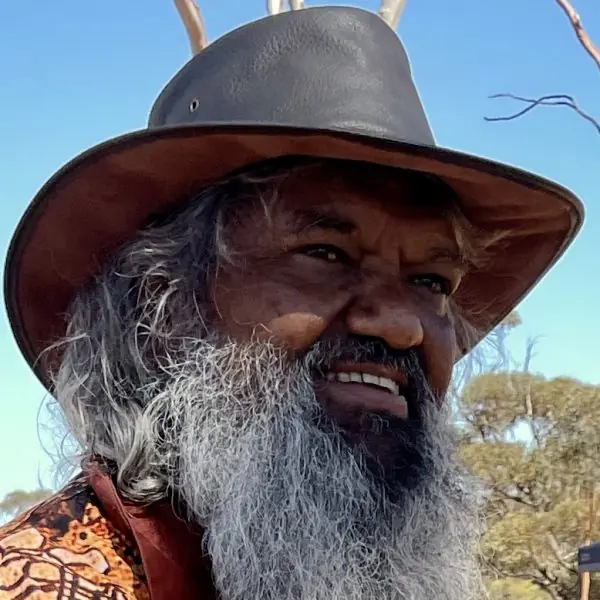
Les Schultz is a Ngadju traditional custodian, native title holder, and Founder and Chair of Ngadju Conservation Aboriginal Corporation.
Les pioneered the Indigenous Ranger Program in Ngadju country to help keep his country, culture, and language strong. He is passionate about building a Ngadju Conservation System to represent Ngadju Traditional Owners on all conservation land management matters, including planning, training, and the development of ‘On Country’ employment and economic development opportunities.
Les has been instrumental in establishing the first Indigenous Protected Area in south-western Australia, and in developing fire management programs across the Great Western Woodlands He has co-authored several publications on Ngajdu Kala, including Ngadju Kala: Ngadju fire knowledge and contemporary fire management in the Great Western Woodlands, as well as a Ngajumaya field guide currently in development with the Goldfields Aboriginal Language Centre.
In May 2023 Les, as Chair of Ngadju Conservation Aboriginal Corporation, was one of more than 1000 First Nations delegates at the 22nd session of the United Nations Permanent Forum on Indigenous Issues, the largest international gathering of Indigenous peoples. He has been a strong First Nations voice at a number of national and international gatherings, and in a few days will be flying to the COP29 on Climate Change in Azerbaijan.
Barbara Morrell
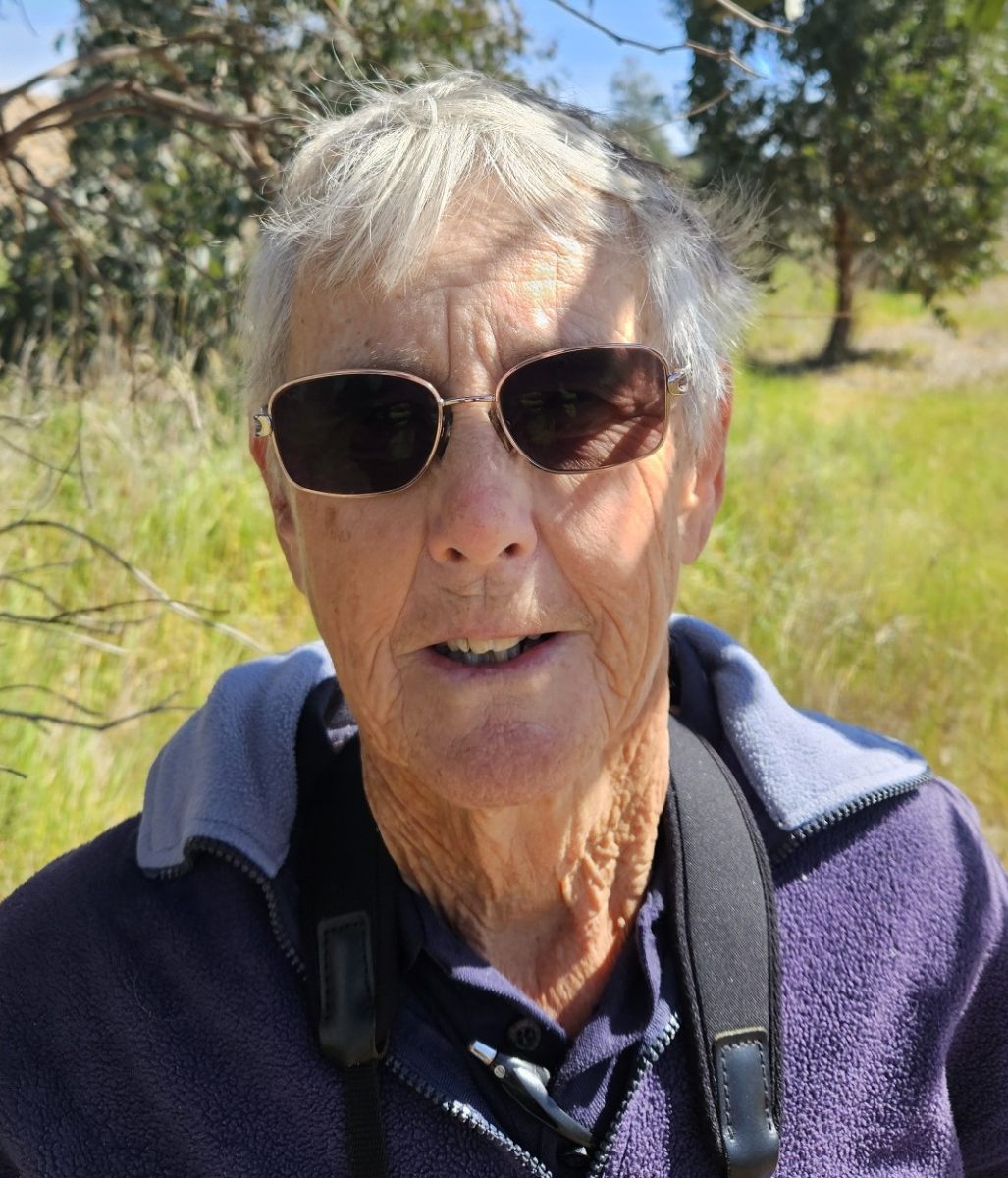
Barbara is a highly motivated landcare farmer with her husband at Pingrup who began looking at landcare issues in 1985, when they attempted to stop water flow from their heavy clay property onto a family member’s highly saline property over the road. The couple collected seed from their remnant bush and direct seeded large swathes back to native vegetation.
Undertaking the work on their property led Barbara to start the Range Road Catchment Group who planted and fenced over 300,000 trees and thousands of saltbush. In the mid to late 1990’s as a local shire councillor Barbara led development of extensive research and landcare effort into the Lake Chinocup catchment. She was instrumental in unifying the community from a divisive mining proposal in an A class reserve.
Barb chaired the Shire of Kent Land Conservation District Committee for many years, with a key part of her legacy being the Shire setting a rate levy to fund a shire landcare officer as state government funds were withdrawn. Barb went onto Chair the Avon Working Group and the Avon Catchment Council and was joint chair at the Swan Avon Integrated Working Group as well as overseeing the development of the first NRM Strategy for the Wheatbelt region.
She was a member of the Australian Landcare Council, the Natural Heritage Trust’s Joint Steering Committee, the State Salinity Council, the National Landcare Council and the State NRM Council. Barb worked for a number of years in the State NRM office, where she added a strong community perspective to how grants were managed and audited. Barbara was awarded a Centenary Medal in 2001 for her service to local government and community.
Mike Norman
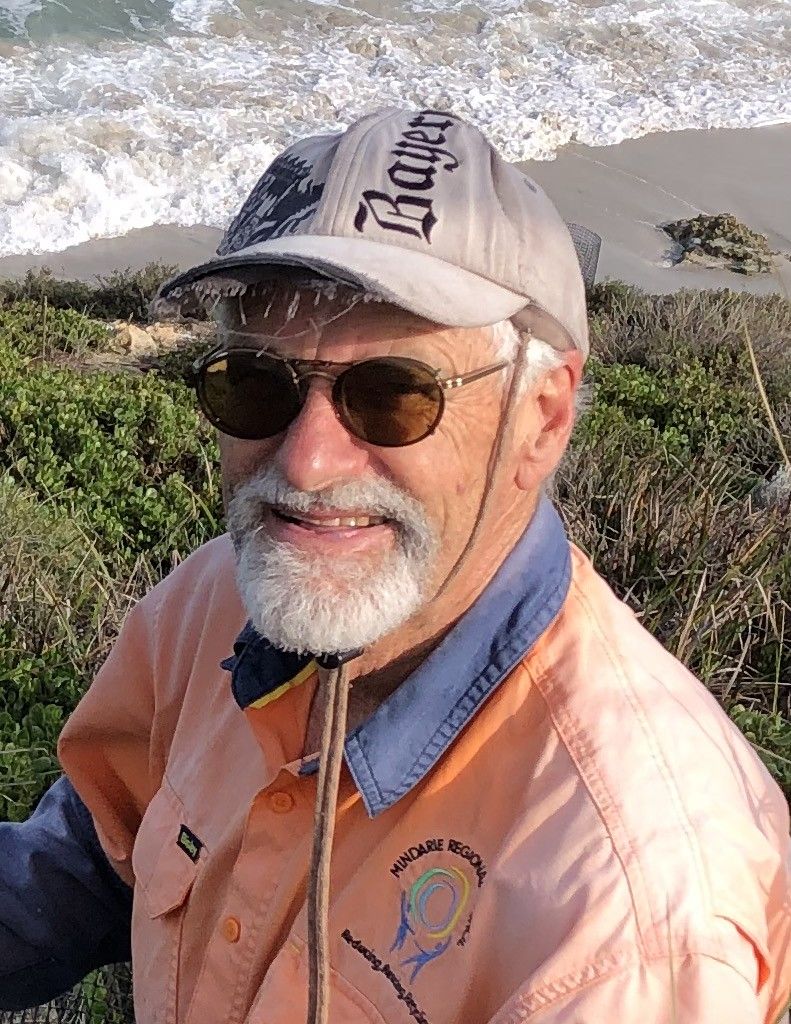
Mike Norman has dedicated over 40 years to environmental conservation, demonstrating unwavering commitment to restoring and preserving natural ecosystems in Perth’s northern suburbs and beyond.
Mike was a founding member of the Men of the Trees (Inc) which is now known as Trillion Trees Australia. The WA branch grew to over 1000 members and planted millions of trees. In 1992, Mike was presented with an Australia Day medallion by the Australia Day Council for his efforts. During 1988 to 1995 Mike co-founded and operated the “Farm Tree Help Scheme” that matched metropolitan tree growers to farmers in the wheatbelt to revegetate farms with wind breaks and trees for salinity control. His efforts were rewarded once more, receiving the prestigious national “Banksia Award” for the scheme.
As the Treasurer of the Joondalup Community Coast Care Forum and a coordinator for multiple Friends groups, including Friends of Sorrento Beach and Marmion Foreshore and Friends of Porteous Park, Mike has been a pivotal force in promoting community involvement in coastal and bushland care since the early 2000s. His leadership in these volunteer groups has facilitated significant ecological restoration efforts, transforming degraded coastal areas into thriving habitats for native flora and fauna.
Under his guidance, volunteers have successfully planted approximately 35,000 seedlings across 2.5 kilometers of coastal reserves, effectively reducing invasive weed species and enhancing local biodiversity.
Mike’s work transcends hands-on restoration; he actively engages in policy advocacy to influence local government practices regarding environmental management. His pragmatic approach fosters cooperation between community members, local councils, and developers, creating a collaborative atmosphere for conservation. Beyond immediate restoration efforts, Mike emphasizes the importance of educating younger generations about local biodiversity, highlighting the need for environmental education in schools. His commitment to involving Indigenous knowledge in conservation practices further enriches his initiatives. Mike Norman’s tireless efforts not only benefit local ecosystems but also strengthen community ties.
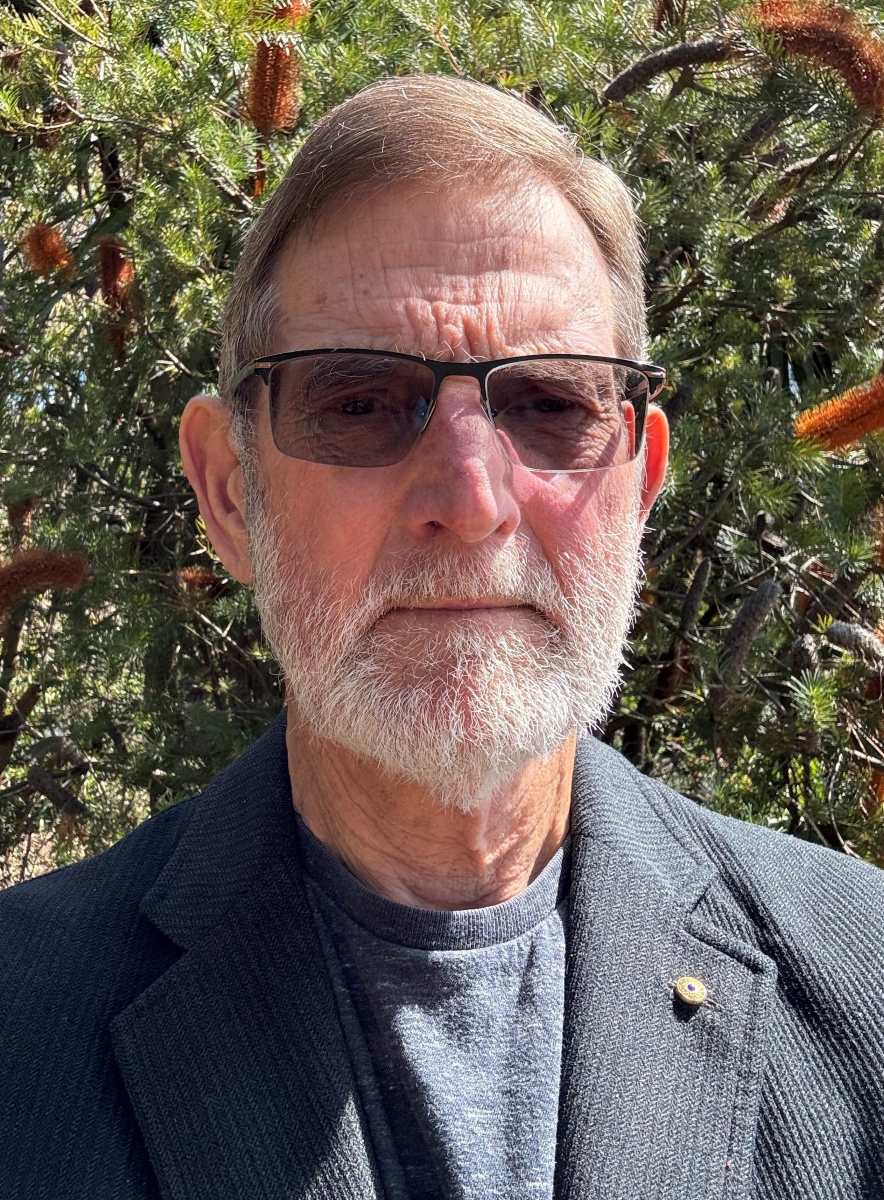
Dr Denis Saunders AM
Denis is a distinguished conservation biologist whose dedication to the preservation of Australia’s unique fauna and ecosystems has significantly shaped environmental practices in Western Australia and beyond. With a career spanning over half a century, Denis was a research scientist with CSIRO Division of Wildlife Research in WA from 1968 to 1997, and then in Canberra until he resigned as Chief Research Scientist from CSIRO in 2002. He was then an honorary research fellow at CSIRO Land and Water until 2022. Since leaving employment with CSIRO in 2002, he has continued his impactful research, particularly focused on his long-term study (1969-present) of the ecology and behaviour of the endangered Carnaby’s Cockatoo.
As a founding member of the Wentworth Group of Concerned Scientists, Chair of his family’s Sara Halvedene Foundation, and membership of diverse environmental advisory groups, he combines scientific expertise with a commitment to community well-being. His leadership roles including: chair of the 1996 Federal State of the Environment Biodiversity Chapter writing group; commissioner of the Australian Heritage Commission and then a councillor with its successor, the Australian Heritage Council; and former President of WWF Australia, underscore his influence on national conservation policies.
Denis has received numerous accolades for his contributions including: the International Association for Landscape Ecology’s Distinguished Scholarship Award; the International Society for Conservation Biology’s Individual in Government Award; BirdLife Australia’s D. L. Serventy Medal for outstanding ornithological publications; the Royal Zoological Society of New South Wales’ Certificate of Commendation for service to conservation; and being made a Member of the Order of Australia for service to nature conservation. His editorial work with international journals such as Conservation Biology, Biological Conservation, Landscape and Urban Planning, and Pacific Conservation Biology, together with Surrey Beatty & Sons’ important Nature Conservation series has been instrumental in advancing conservation science.
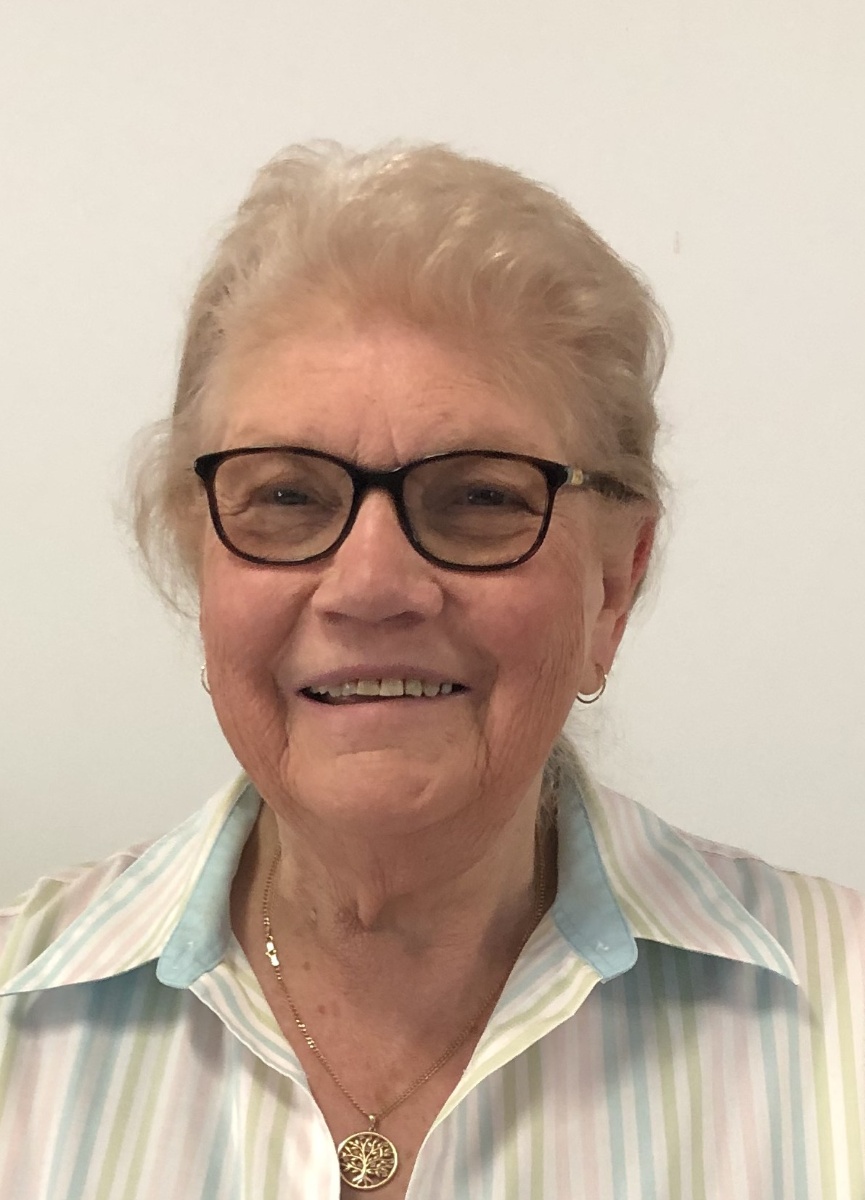
Rosanna Hindmarsh
Rosanna moved to Wannamal in 1977 after earning a Bachelor’s Degree in Biology and a Postgraduate Degree in Teaching. She began her teaching career at Salvado College in New Norcia in 1978, where she also initiated her involvement in landcare through annual tours with senior students to Tammin. After fifteen years of teaching, she pursued further studies in Environmental Management at ECU and later taught biology and ecology there for six years. In 1999, she transitioned to an environmental officer role at the Chittering Landcare Centre, marking the beginning of her dedicated career in landcare.
Celebrating twenty-five years at the Chittering Landcare Centre in August 2024, Rosanna played a pivotal role in the amalgamation of the Brockman River catchment with the Ellen Brook Integrated Catchment Group in 2005, becoming its Executive Officer in 2006. Under her leadership, the group earned accolades, including the State Landcare Group award in 2011 and the National Landcare Group award in 2012.
Throughout her career, Rosanna has actively contributed to various landcare committees and established the Wannamal Lake Catchment Group in 1998 and the Gingin Catchment Group in 2023. Her ongoing commitment to fostering collaboration among multiple catchment and landcare groups has significantly promoted community engagement in conservation and land management efforts in the North East Sub-region of Perth NRM.
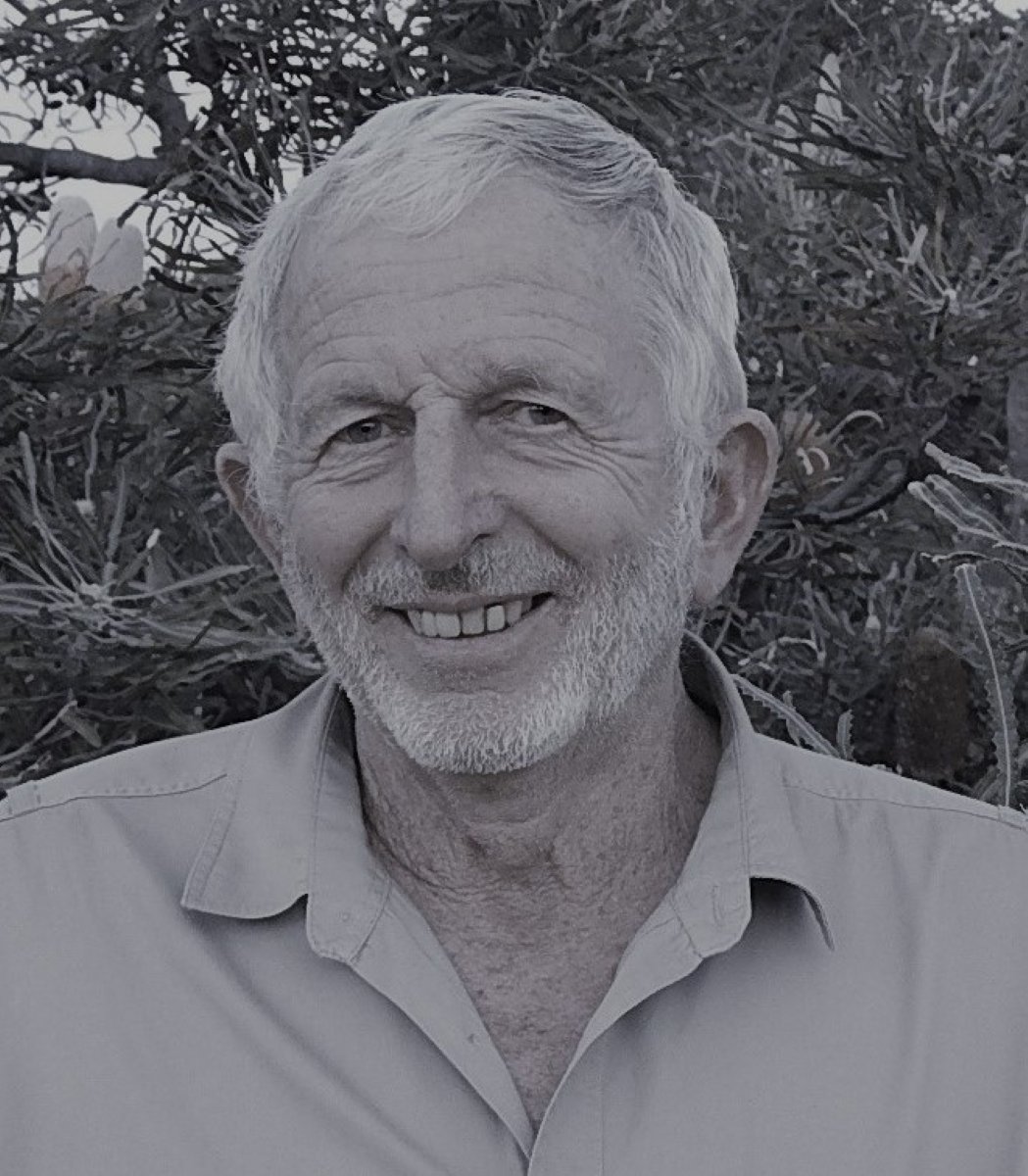
Rob Boase
Rob Boase is a farmer turned nursery co-owner with his wife Beth on their property south of Dowerin, and he has made the protection and rehabilitation of the unique, beautiful and endemic flora and fauna of the West Australian Wheatbelt Region his mission. When Rob and Beth bought the property in 1973, Rob started revegetating sections of the property that were going saline due to the surrounding land being over-cleared. They also fenced off areas of high conservation value containing rare and endangered plants. Their property exhibits an outstanding example of how best to conserve and improve fragmented vegetation complexes in the Wheatbelt.
In 1996 they opened their own commercial nursery, Arinya Plants, with a seedling capacity of 250,000. Here they propagated Wheatbelt specific plants including saline tolerant plants to help combat the devastating salinity problem.
After more than 20 years of operating the nursery Rob and his wife have now retired while Rob now follows a more consultancy and environmental protection role. Rob has worked with Wheatbelt NRM and National Trust to place a conservation covenant to protect 215ha of the natural vegetation on their property. While following his lifelong passion for the natural environment, Rob has worked with his local Landcare groups and been a member of the Central Wheatbelt Threatened Flora Recovery Team, a member of the Roadside Conservation Council, a long term volunteer with DBCA since it was known as CALM, a life member of the Toodyay Naturalists’ Club and currently a volunteer with Wheatbelt NRM.
In recognition of his tireless work to provide the Wheatbelt region with appropriate seedlings and advice for revegetation and his dedication to protect the natural environment, Rob was endowed with WA’s Individual Landcarer Award in 2017.
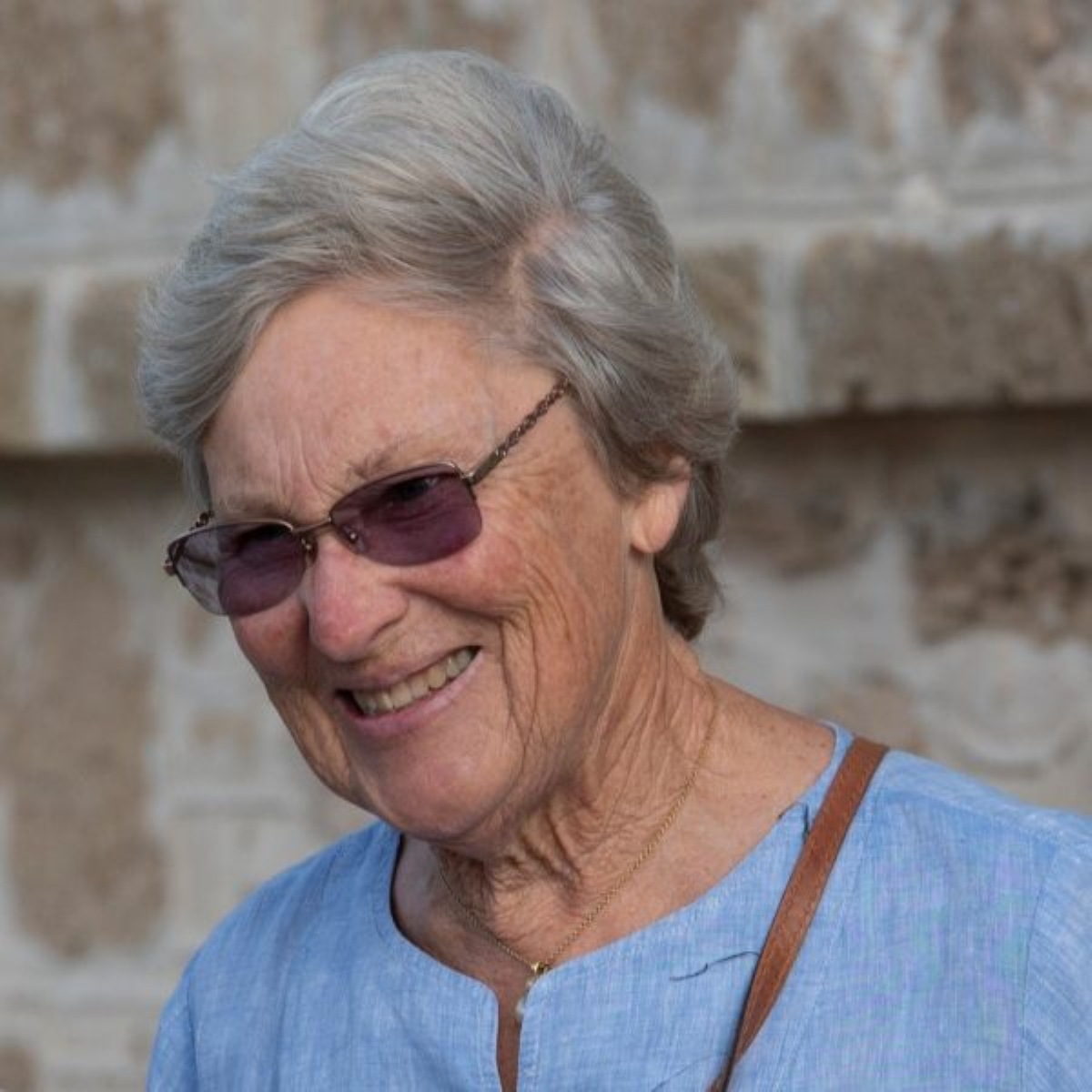
Mary Gray OAM
As an Environmental Scientist, Mary is well qualified with B.Agr.Sc. (Melb 1970); Grad. Dip. Env. Sc. (Murdoch 1990); and M.Sc. (Env.Sc.) (Murdoch 1992). Her comprehensive Masters’ Dissertation ‘Urban Bushland in Private Ownership: mechanisms for protection and management.’ has enabled Mary to be a champion for Perth and the Swan Region’s diverse flora and fauna for over 30 years. She is a founding member (since 1992) and long term leader of the Urban Bushland Council WA Inc. (UBC) which represents over 90 community groups committed to protecting urban bushland.
Mary’s significant contributions have been recognised with Honorary Life Membership of the UBC and also of the Wildflower Society of WA. She received the CCWA’s Bessie Rischbieth Conservation Award in 2014. This award is presented to an individual who shows outstanding commitment to the WA environment, and who has had the courage to challenge government and non-government decision makers. In 2022, Mary was awarded an Order of Australia Medal (OAM) Queen’s Birthday Honours, in recognition of her contribution to conservation and the environment.
Mary was Chairman of the Landscape and Conservation Committee of the National Trust WA in the early 1990s. In 1992, Mary and Bronwen Keighery drafted a discussion paper ‘Towards an Urban Bushland Policy for the National Trust of Australia’ which was accepted by the National Trust WA in May 1993. In 1993-94 Mary prepared 10 nominations of bushland sites for the Register of the National Estate: natural environment – funded under the National Estate Grant Program. One such area was Bold Park and Adjacent Bushland (System 6 areas M46 and M47) which was then under threat of a development and being assessed by the WA EPA.
Mary has continued as an active supporter of bushland conservation. She was on the Government’s inter-agency Urban Bushland Advisory Group to guide the WA Government’s comprehensively planned major conservation initiative: Perth’s Bushplan – with 10 contributing sources was open for public comment November and December 1998. It had to be implemented. She met with the then Minister for Planning, Graham Kierath MLA who promised to get Bushplan implemented ‘before Christmas 2000’ and indeed it was launched by the Government, renamed as Bush Forever in December 2000. It comprises 287 sites representing the 26 vegetation types. Mary was then on the Bush Forever Advisory Group.
In the 1990s Mary was employed in the Office of Catchment Management under the Department of Environmental Protection working on the Swan-Avon Integrated Catchment Management (ICM) program, and then in the Swan Catchment Centre as Executive Officer to the Chair of the Swan Catchment Council, Pat Hart OAM. Here Mary helped facilitate establishment of catchment groups in the Swan Region comprising community and government folk, and made a valuable contribution to development of the Swan Regional Strategy. The Swan Working Group is now Perth NRM.
Mary has continued to actively advocate for better bushland protection by engaging with agencies, politicians, local governments and by preparing many submissions on clearing proposals. Another major achievement was her preparation of the successful nomination on behalf of the UBC to list in August 2016 the Banksia Woodlands of the Swan Coastal Plain as an endangered ecological community under the Environmental Protection and Biodiversity Conservation (EPBC) Act 1999.
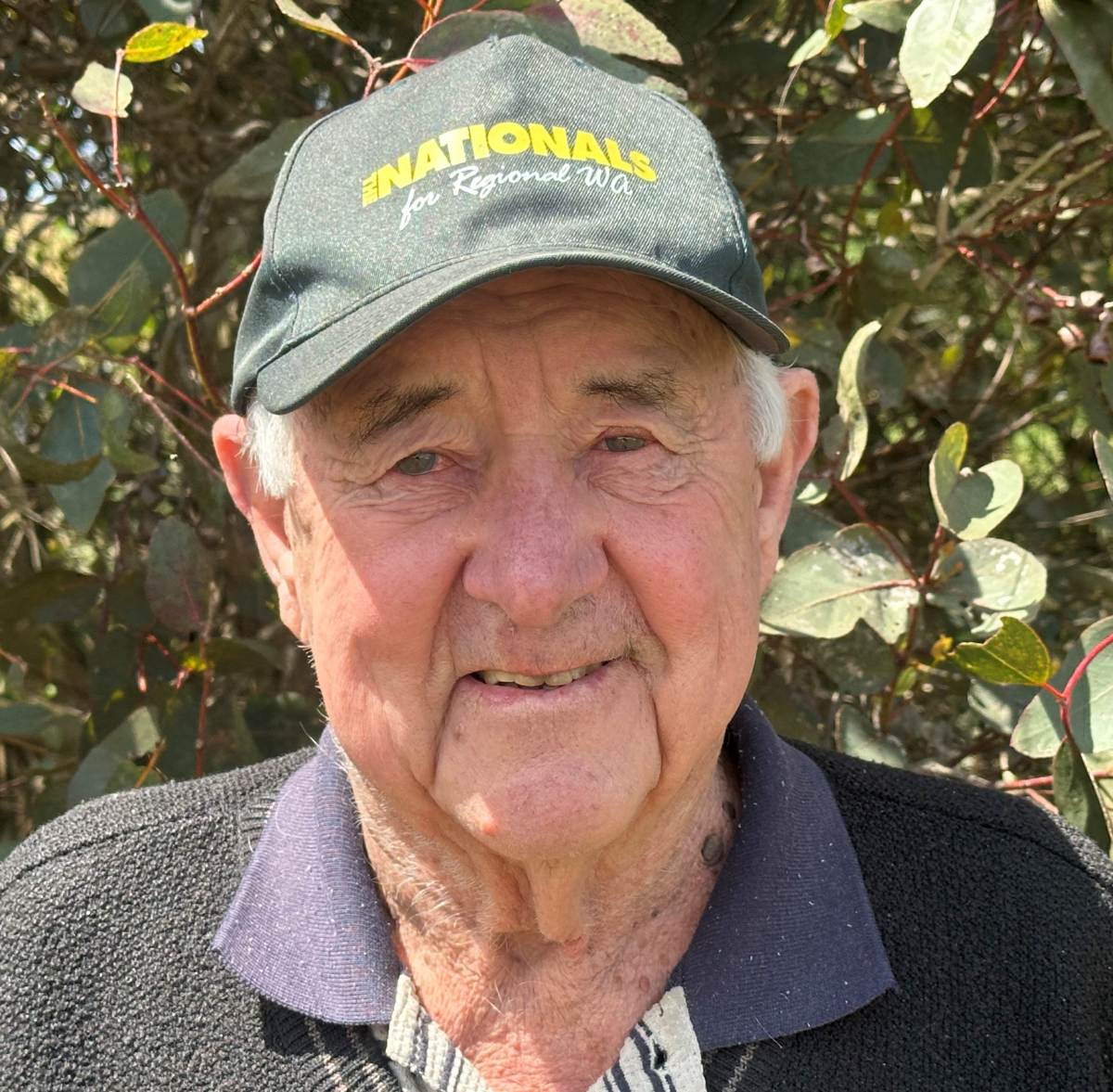
Bronte Rundle
In 1975, Bronte Rundle and his partner June took over the ‘Ucarro’ farm, located in the upper tributary of Carolup River, in Katanning, WA. Initially the stream running through the farm was becoming saline and the lower lying cropped areas of the farm would become plagued with waterlogging issues in the winter months. In response to this, a new idea was born and implemented: A whole farm plan to address waterlogging and salinity.
35km of contoured drains were constructed, and three to four rows of tree species including different eucalypts, were planted behind the drains to stablise the soil and to reduce wind erosion, water logging and salinity. At the time, Mr Rundle said there was a lot of Landcare activity in the region, resulting in them planting 50,000 trees across the property. This contouring idea was trailblazing at the time, with farmers travelling from far and wide to their place in the Great Southern, “Ucarro’, to see how it would all work. After implementing these new practices, the farm reported increased yields and increased stocking rates and lambing percentages.
Bronte’s son Peter, who is a politician for the Nationals, and his wife Andrea, still live on and maintain the ‘Ucarro’ Farm.
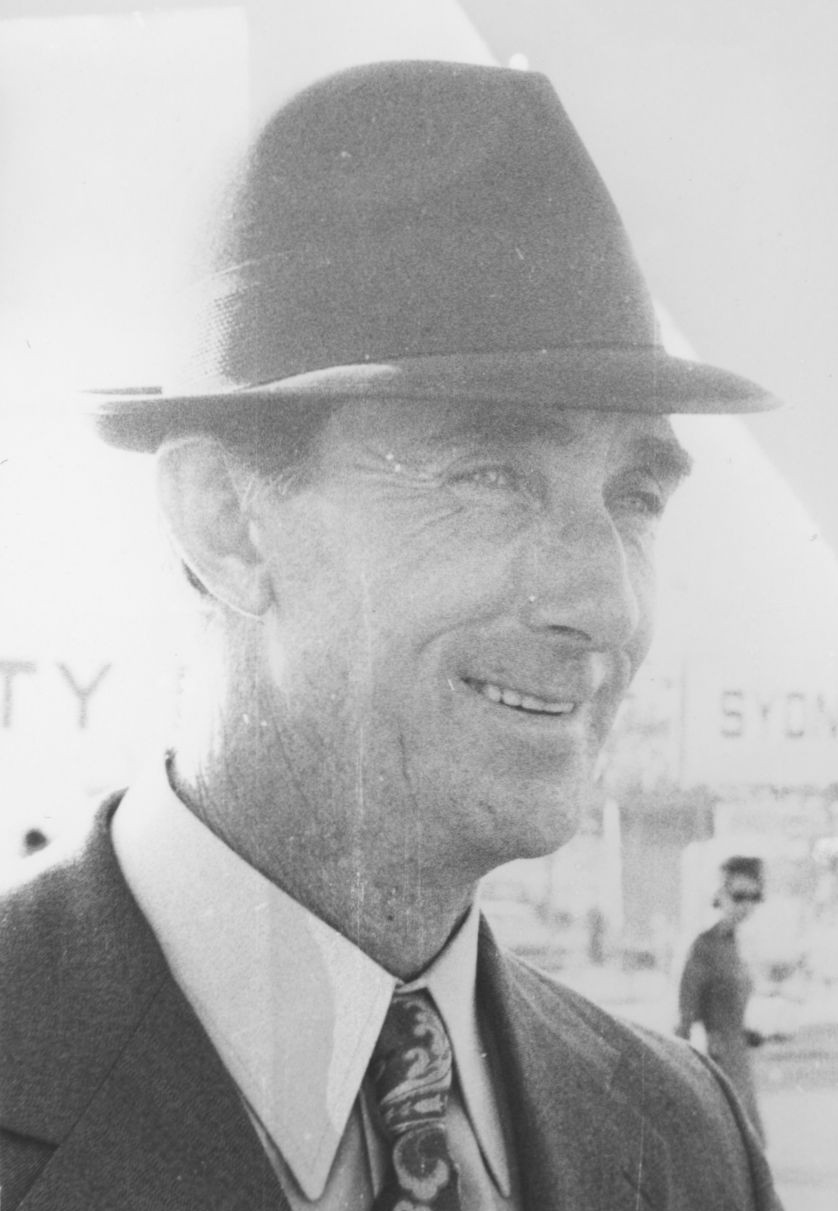
Harry Whittington OAM (Posthumous)
Harry preceded and helped build the initial growth of landcare with his deeply heartfelt appeals and efforts to tackle the increasing salinity affecting farmland. In a time when salinity was largely ignored by government, Harry pushed ahead with developing his own solutions. By 1975 he had published his first booklet on a 30-year battle against the spread of salt on the family farm of Springhill, near Brookton.
By the mid 1970s Harry was convinced the approach he developed was effective, and after various visits and field days with other farmers, he was asked by a number of other them to design systems for their properties. Enthusiasm grew rapidly, and by 1978 a meeting attended by over 270 people agreed to establish the WISALTS group (Whittington Interceptor Salt Affected Land Treatment Society). At its height there were 43 WISALTS branches, with hundreds of field days held. The organisation decided to wind-up at its AGM in February 2025 after 5 decades of community science. Part of the reason for winding up was to remove any remnants of the acrimonious tension that existed when implementation of the WISALTS system was in full flight in the 1980s. The WISALTS system should be examined on its merits. The research papers of Harry Whittington and WISALTS are now held in Murdoch University’s special collections, available for ongoing comprehensive research into combating the 21st century existential environmental crisis of fresh water and healthy soils.
While the Whittington method has never been well accepted officially, Harry’s dedication and energy was a pivotal factor in increasing both community and farmer awareness of salinity and its relentless spread. This awareness, in turn, was a key element in providing the right atmosphere for broader landcare efforts to establish. Additionally, the efforts of WISALTS and its members has been a constant reminder that there were tensions between community led approaches and the views held by researchers and government officers, many considered this to have been a healthy tension.
In 1983 Harry was also instrumental in the establishment of the Land Management Society, which played a prominent role in supporting farmer led science and monitoring well into the 1990s. He also played a prominent role in farming organisations. After holding a number of roles, he was elected Senior Vice president of the Farmers Union (now WAFF) and awarded Honorary Life Membership in 1988.
In 1992, Harry was awarded the Order of Australia Medal for his tireless work and contribution to the WA agricultural sector. As then Deputy Premier Hendy Cowan wrote in a 1996 letter to Harry: “Landcare without Harry Whittington would be like the Eagles without Mick Malthouse”
Sadly, Harry passed away in 1999.
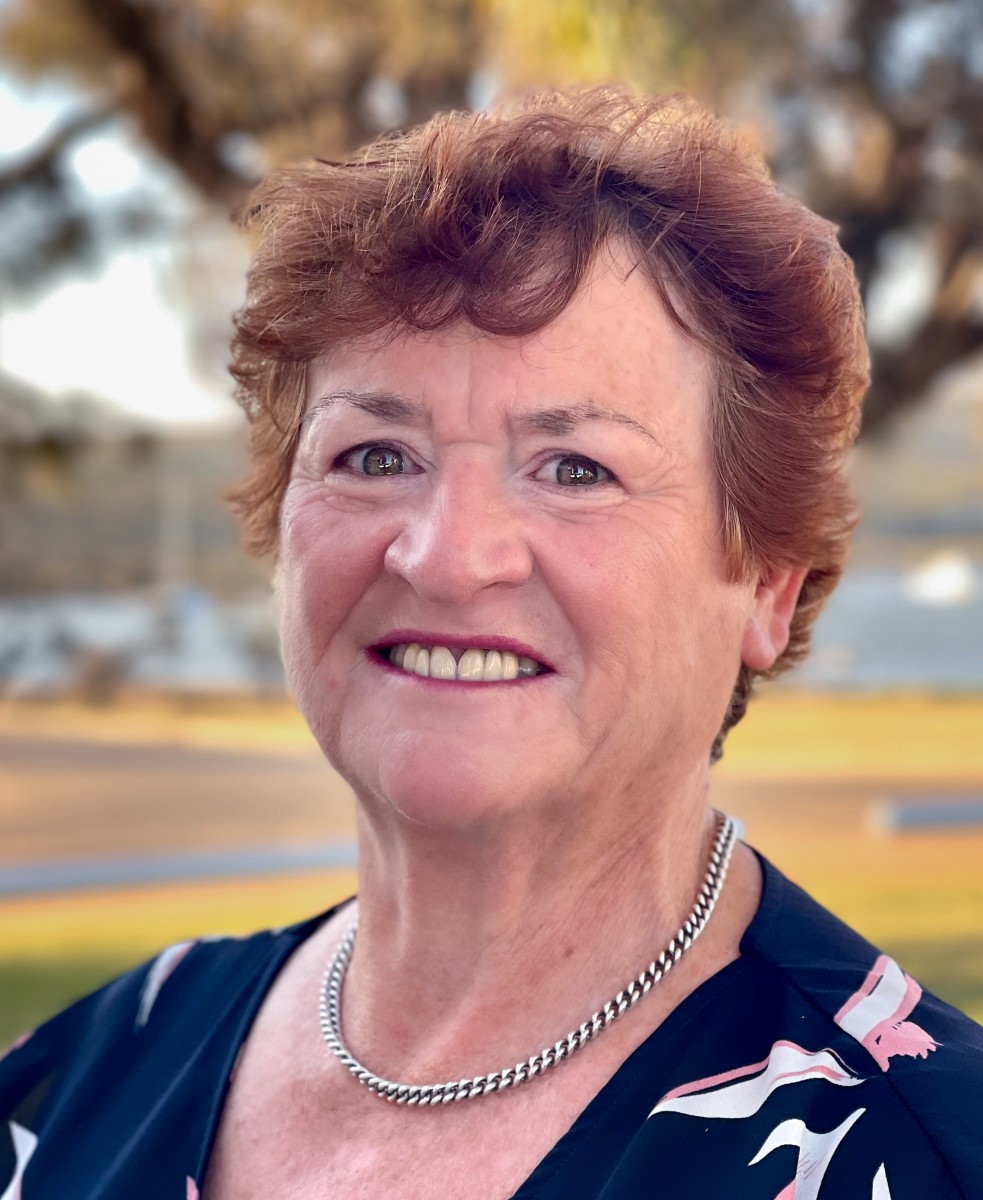
Claudia Hadlow
Claudia Hadlow is a remarkable leader in the field of landcare and environmental management, whose dedicated service in the Shire of Dumbleyung has spanned nearly three decades.
She was first employed by the Dumbleyung, Kulin & Wickepin shires in Feb1992 as a Land Conservation Officer where she worked until 2003. She returned to this role during 2007-2008 and then returned once again in 2013-2022 as a Landcare Manager where she expertly coordinated projects aimed at combating salinity and protecting biodiversity in the Wheatbelt region, including the Dumbleyung Zone Action Plan. Her efforts have significantly influenced local agricultural practices, encouraging farmers to adopt sustainable methods and enhancing the ecological health of the area.
Under her leadership, Dumbleyung Landcare Inc. has achieved impressive milestones, including extensive tree planting initiatives and successful community engagement activities that foster awareness of native flora and fauna. Claudia’s commitment to education is evident through her collaboration with local schools, where she has inspired the next generation to value and protect their environment.
Claudia’s initiatives, such as the annual fox shoot and community-driven BioBlitz events, have contributed to vital biodiversity monitoring and management in the region. Her strategic networking with farmers, research organizations, and community groups has been instrumental in creating a collaborative approach to landcare, ensuring the sustainability of local ecosystems.
Claudia’s tireless dedication to the Dumbleyung and Kukerin communities and her significant contributions to landcare exemplify the values celebrated by the WA Landcare Hall of Fame.
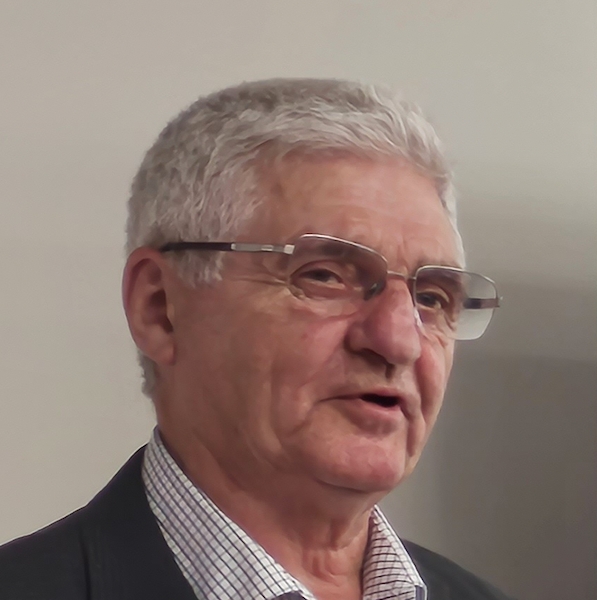
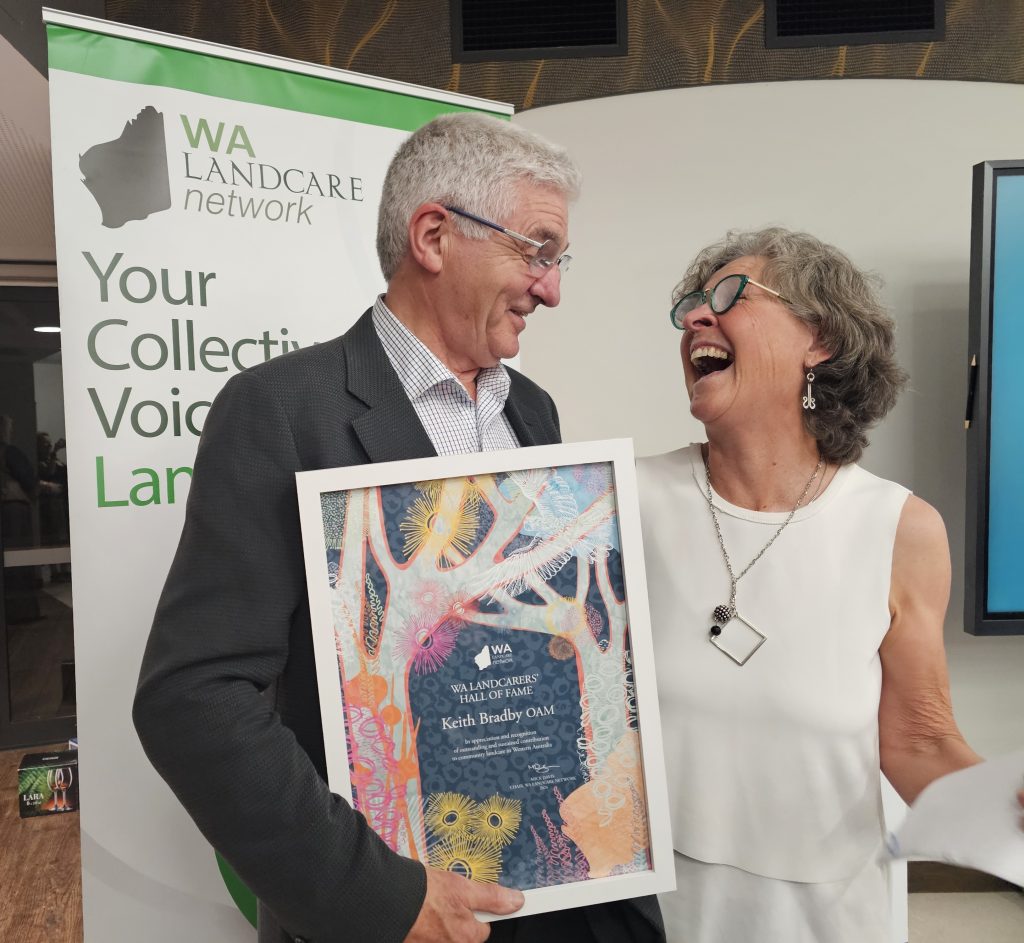
Keith Bradby OAM
Keith is a man who has demonstrated outstanding commitment and leadership to the landcare community, having given the last 40+ years of his life to it. A person of great humour, wit and intellect he has joined the invisible threads of a powerful network of people together locally, nationally and globally all in service of grassroots work…often at Landscape scale. He is a charismatic figure, noted for his fearlessness in calling out what’s wrong, supported by an amazing memory, and has never been scared of ‘sticking it to the man!”
Published in the written form and film, he is a regular speaker at events and conferences. You will be grateful this is the short form biography (you can read the full one on the website soon) as his publication list is pages long.
Described as ‘eternally curious’, ‘extremely generous with his time’, ‘open hearted’, ‘visionary’, ‘a great mentor’ and ‘truly committed to real reconciliation with First Nation’s peoples’, this landcarer has been heard often to remark that ‘landcare is people business’, and ‘lets put the care back into landcare’.
It is, of course, Keith Bradby, CEO of Gondwana Link. It has been said that everyone has at least one book in them, about their life and their learnings. Well Keith probably has half a dozen, and we hope he completes one soon! We can’t list everything he has done, and everywhere he has been to share and learn, from NZ to Mexico, and Africa to Missouri, or his very interesting journey from beekeeping to private consulting, to policy roles in government!
Keith is founder and current CEO of Gondwana Link, the largest landscape scale restoration project in Australia. Collective effort has seen tens of thousands of hectares secured by covenants and purchased, thousands of hectares restored to high ecological standards, dozens of projects underway across the main focus areas, Traditional Owners supported back on their Country, and the 16-million-hectare Great Western Woodlands recognized for its ecological values. Gondwana Link pioneered large landscape approaches in Australia and continues to grow with a diversity of investment – and happily and determinedly, NO GOVERNMENT FUNDS!
Keith has been a Board Member and Deputy Chair of the National Landcare Network Ltd, co-founder and Chair of the WA Landcare Network a Member of the World Commission on Protected Areas – Connectivity Conservation Specialist Group Chair, Yinma Foundation, Convenor, Four Islands EcoHealth. He informally mentors many landcarer leaders and is the ‘go to’ person for so many in WA and beyond if they have a landcare question. We often hear the refrain “Ask Keith!”
In 2005 Keith was awarded the Medal for Excellence in Natural Resource Management from the Great Southern Development Commission, WA and in 2015 his work was acknowledged with an Order of Australia Medal ‘for service to conservation and the environment in Western Australia’.
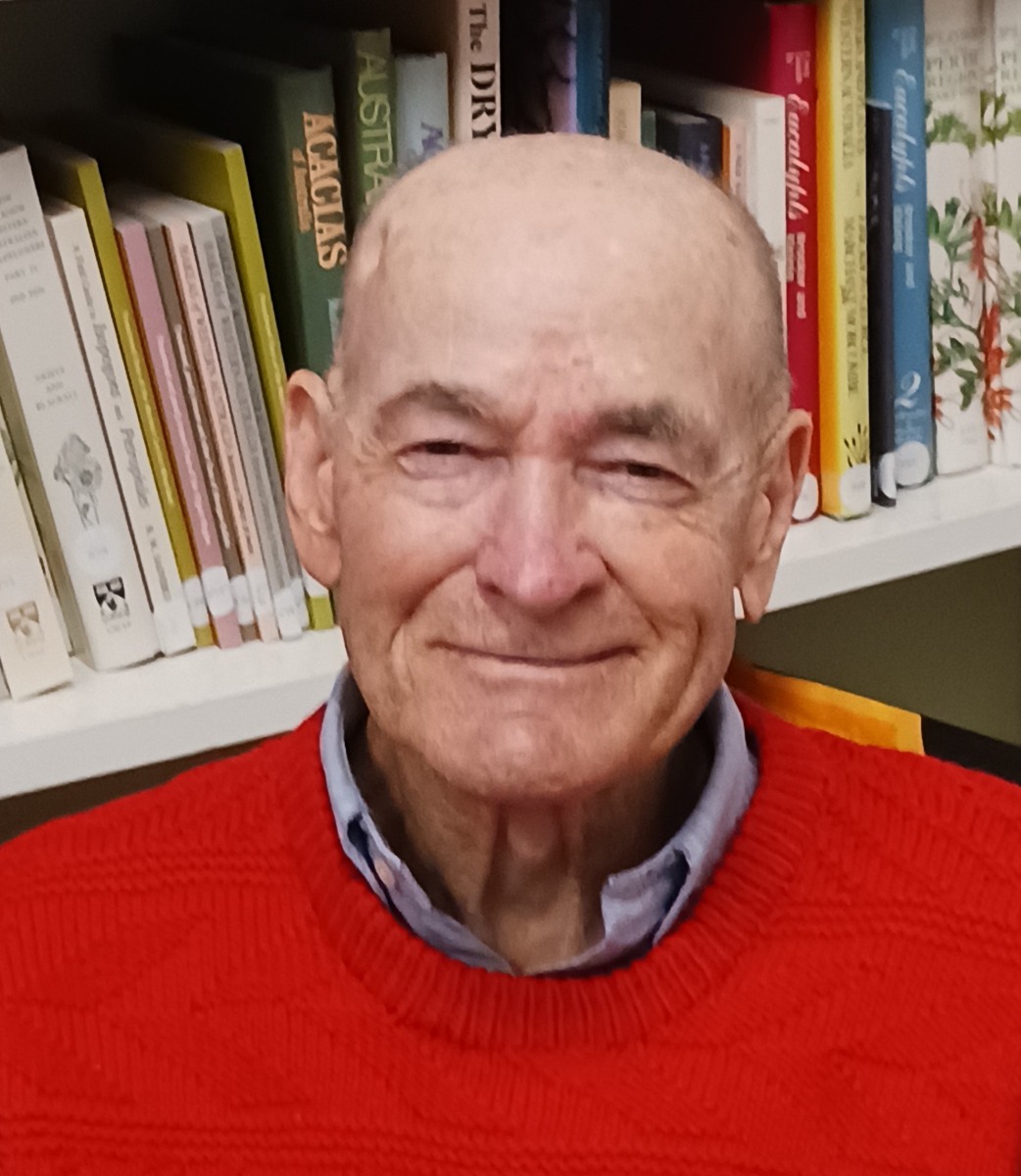
Wayne Clarke
Prior to moving to Tom Price, Western Australia in 1968, Wayne was a member of a youth organisation in Victoria. His earliest education of the word ‘conservation’ was with the well-known John Landy. John took the youths roaming in the bush and on the beaches noting the resultant erosion of beaches from the violent winter storms.
Following marriage in Perth there was a wish to leave the city and Toodyay bushland was purchased to move to live in 1989. Despite not living in Toodyay he joined the Toodyay Naturalists’ Club (TNC) following leaving the WA Wildflower Society having been General Secretary. Over the subsequent years he has held all TNC executive positions and awarded TNC Honorary Life Membership (HLM) 2009 and Co-Patron 2023.
In 1991, Wayne was appointed to the Toodyay Land Conservation District Committee (LCDC) holding positions of Secretary/Treasurer till its demise in 2014. He attracted funding for a Community Landcare Officer, mentoring the position and managing all financial requirements, voluntarily. In 1993 he represented LCDC on the Avon Nature Conservation Advisory Committee, the Avon River Management Authority and several others.
Wayne founded the Toodyay Friends of the River (TFOR) in 1994 (Incorporated in 1998), with the express purpose of providing community assistance to resolve degradation of the Avon River.
From 2000-2004, Wayne was elected to the Avon Catchment Council (ACC) as Deputy Chair, then Chair 2004 till 2006 to steer the ACC through to the development of the Regional NRM Strategy and Investment Plan. Wayne has received the nomination of co-patron of TFOR at the November 2024 Annual General Meeting.
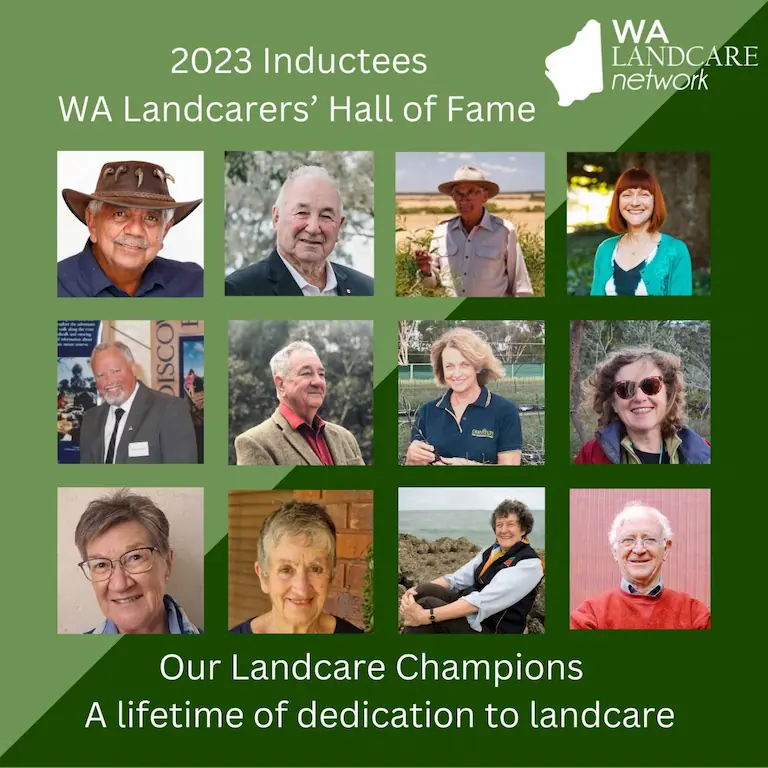
2023 WA Landcarers’ Hall of Fame Inductees
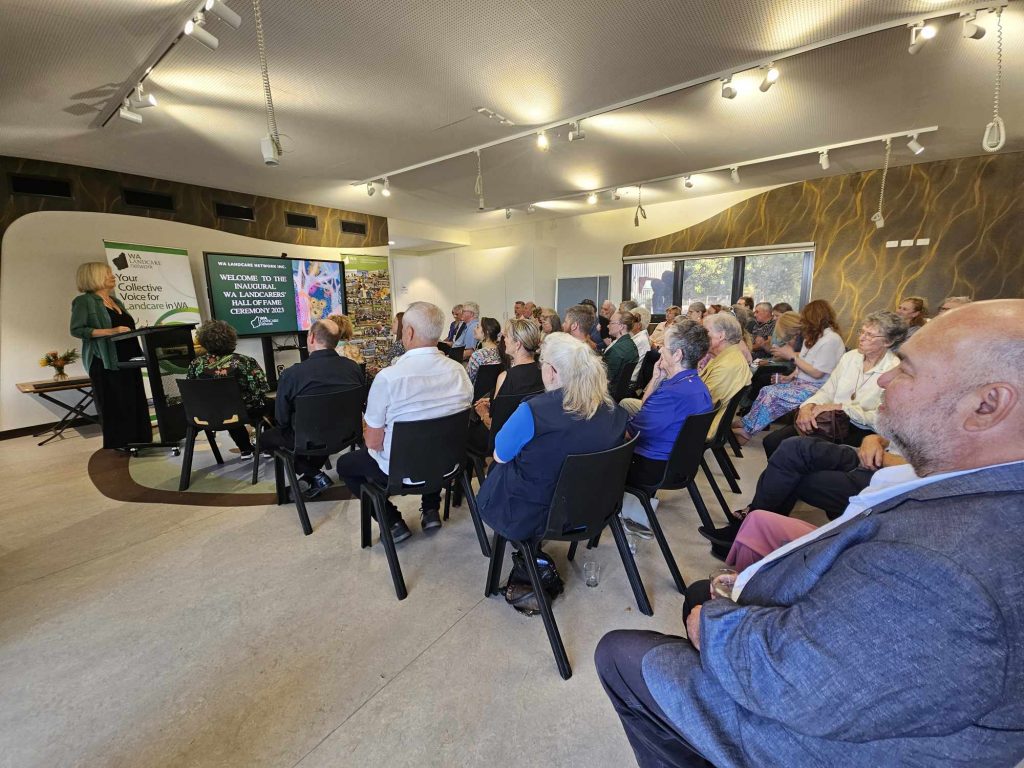
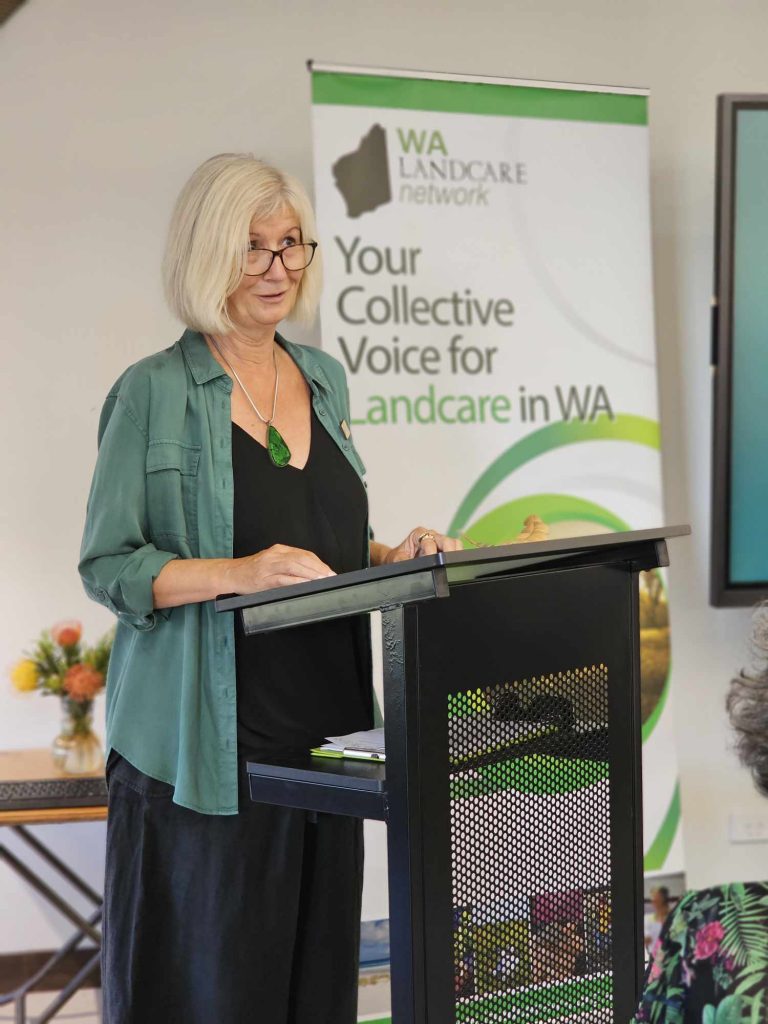
On 8 December 2023 twelve wonderful individuals were recognised and celebrated as the 2023 inductees of the Inaugural WA Landcarers Hall of Fame at a presentation ceremony at the Cockburn Wetlands Centre.
The 2023 inductees include:
- Doc Reynolds
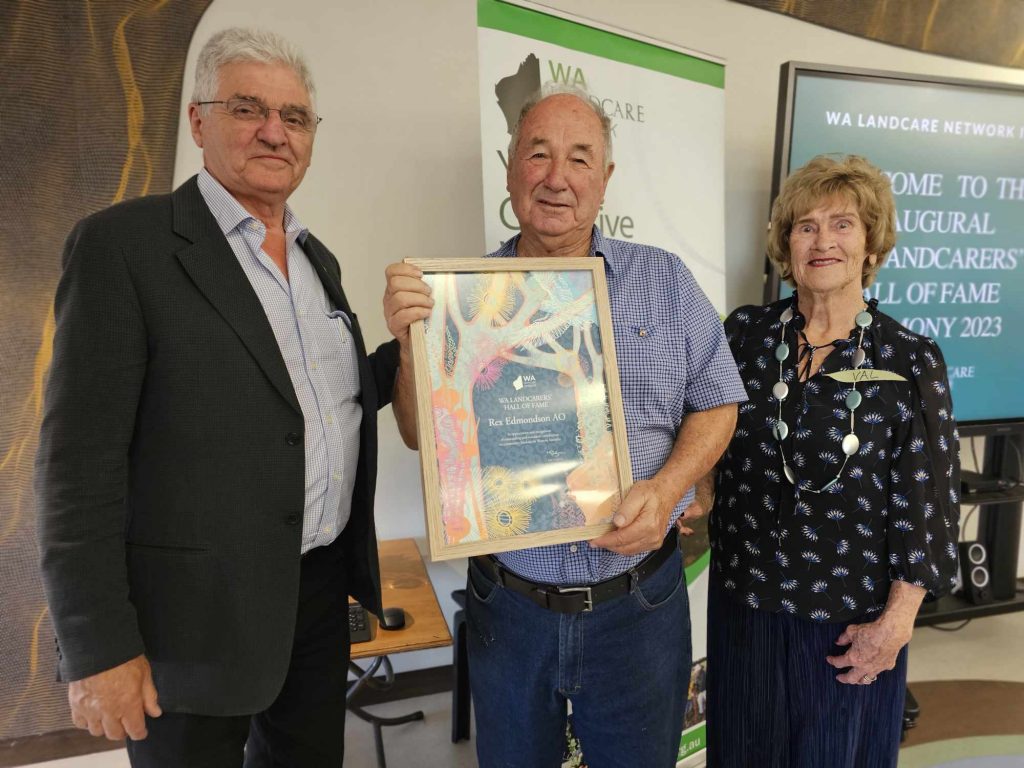
- Rex Edmondson AO
- Don Stanley (Posthumous)
- Rachel Siewert
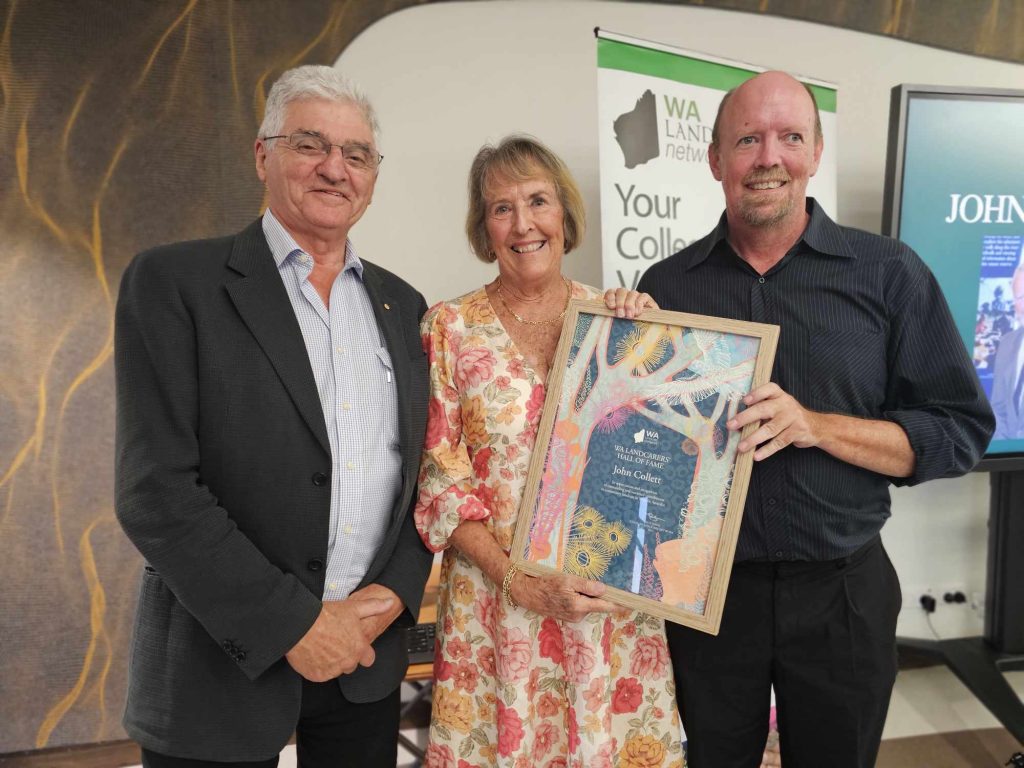
- John Collett (Posthumous)
- Ted Rowley
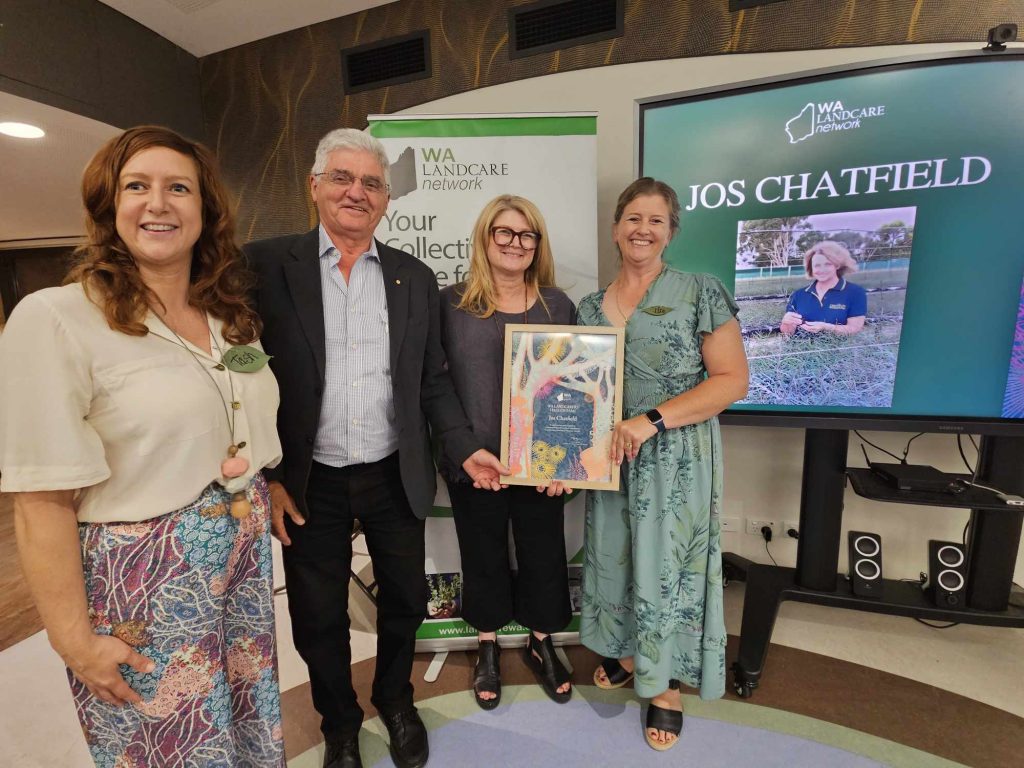
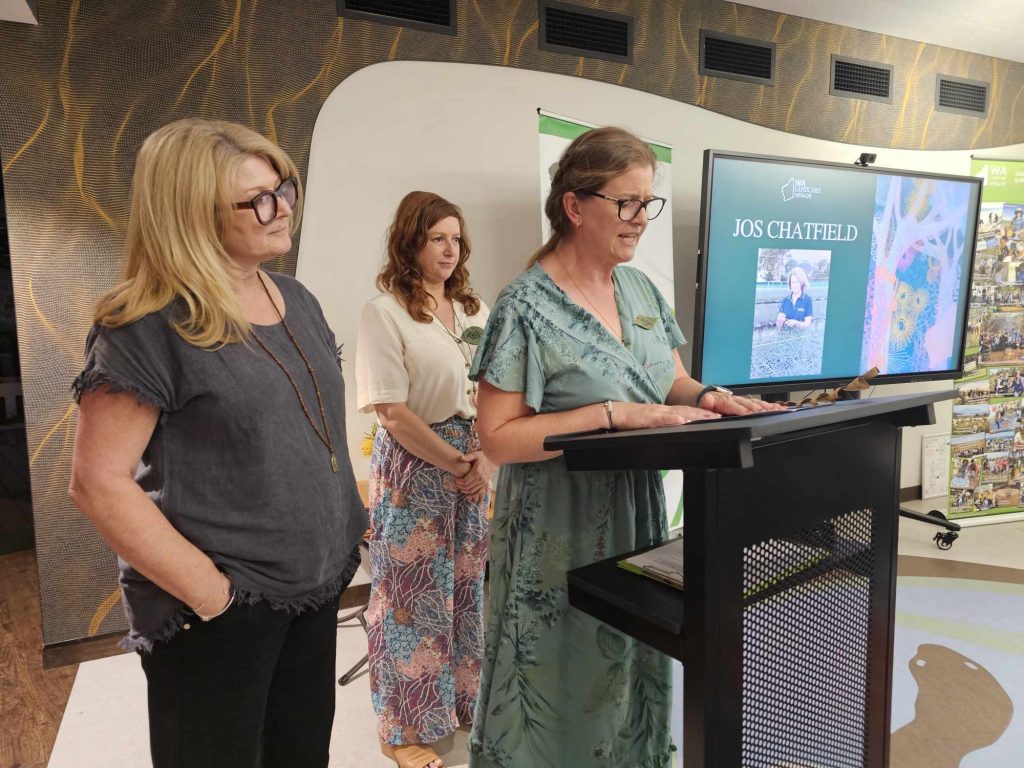
- Jos Chatfield (Posthumous)
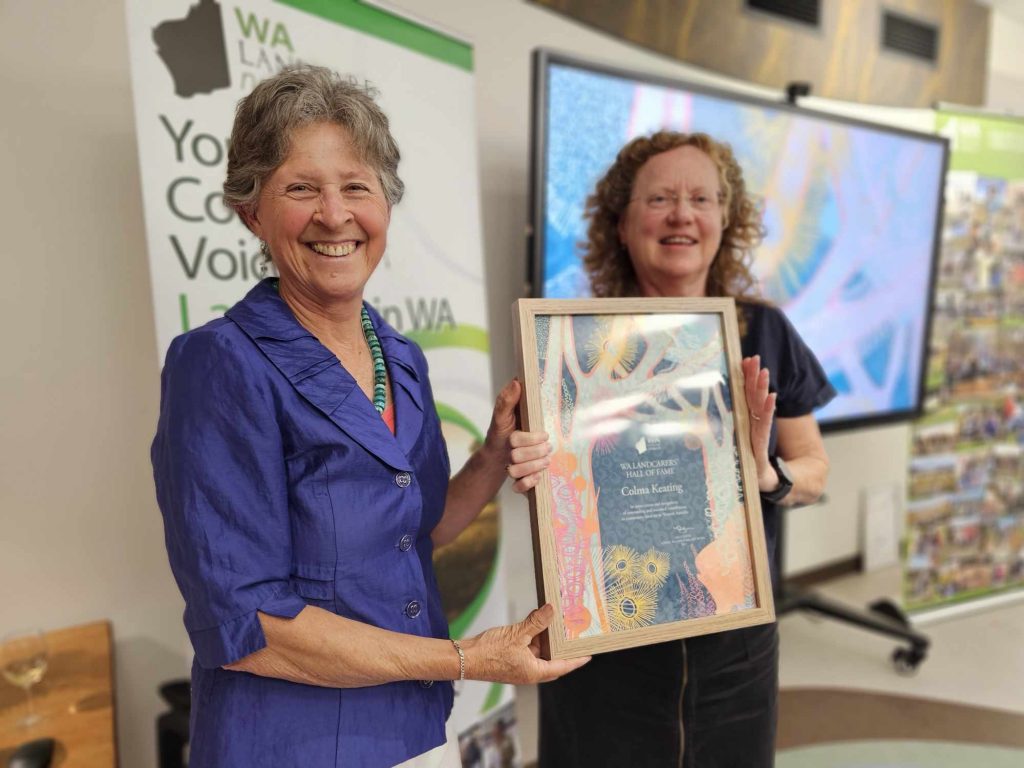
- Colma Keating
- Jill Richardson
- Patricia Hart OAM
- Jan Star OAM
- Clive Malcolm (Posthumous)
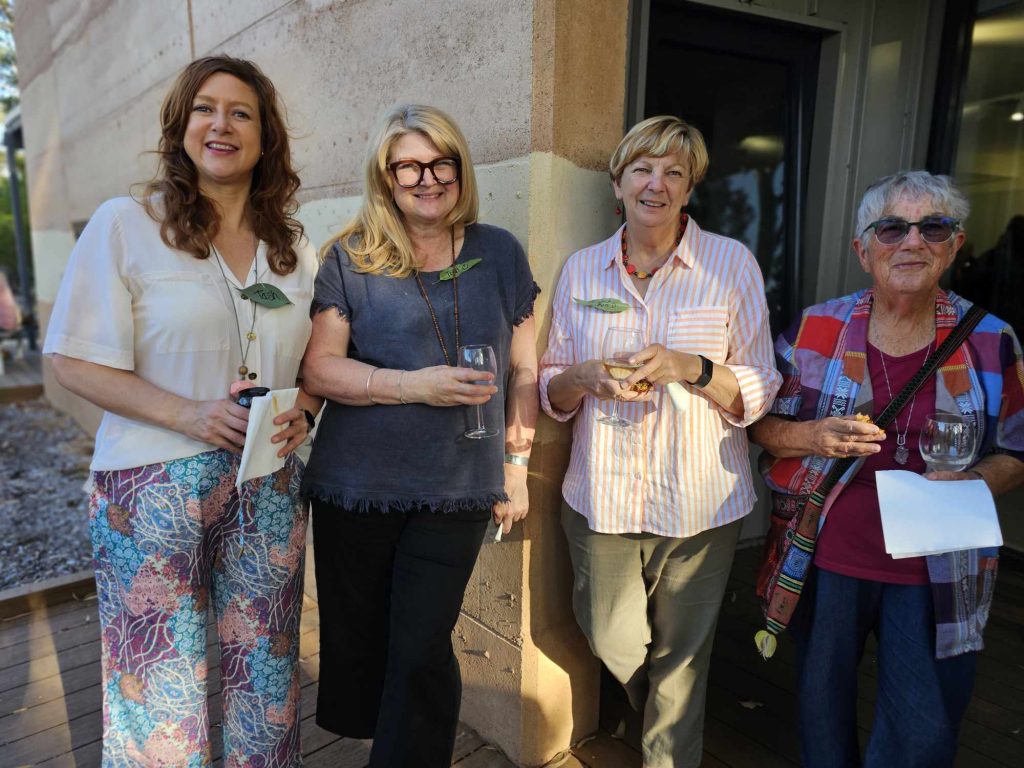
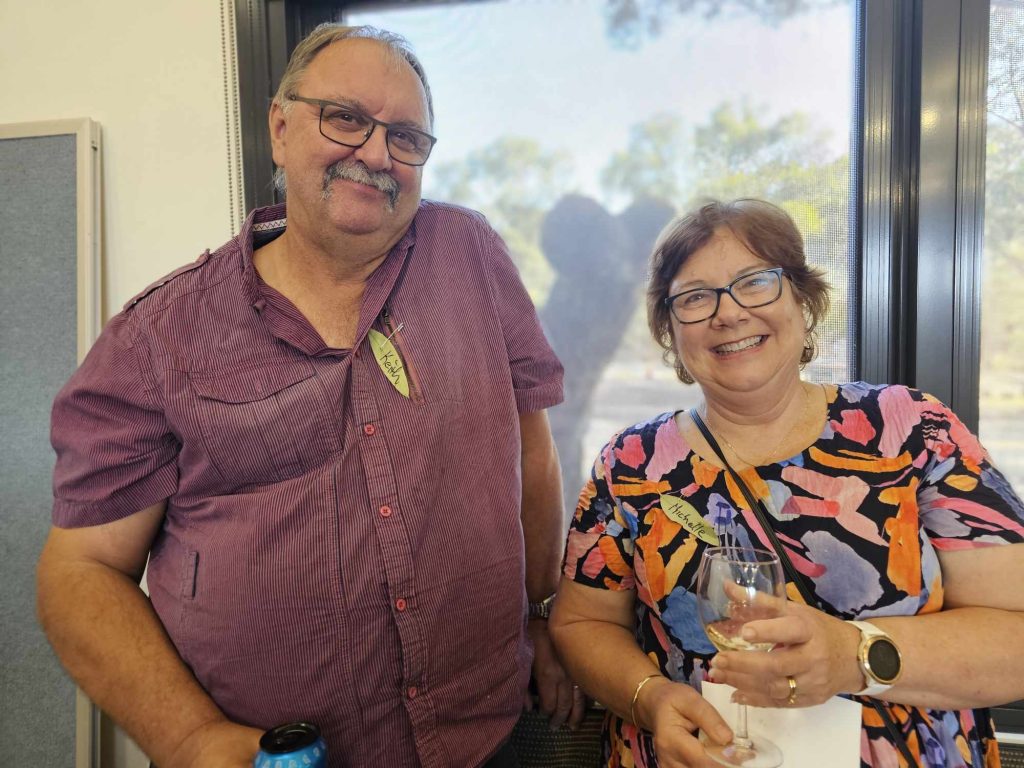
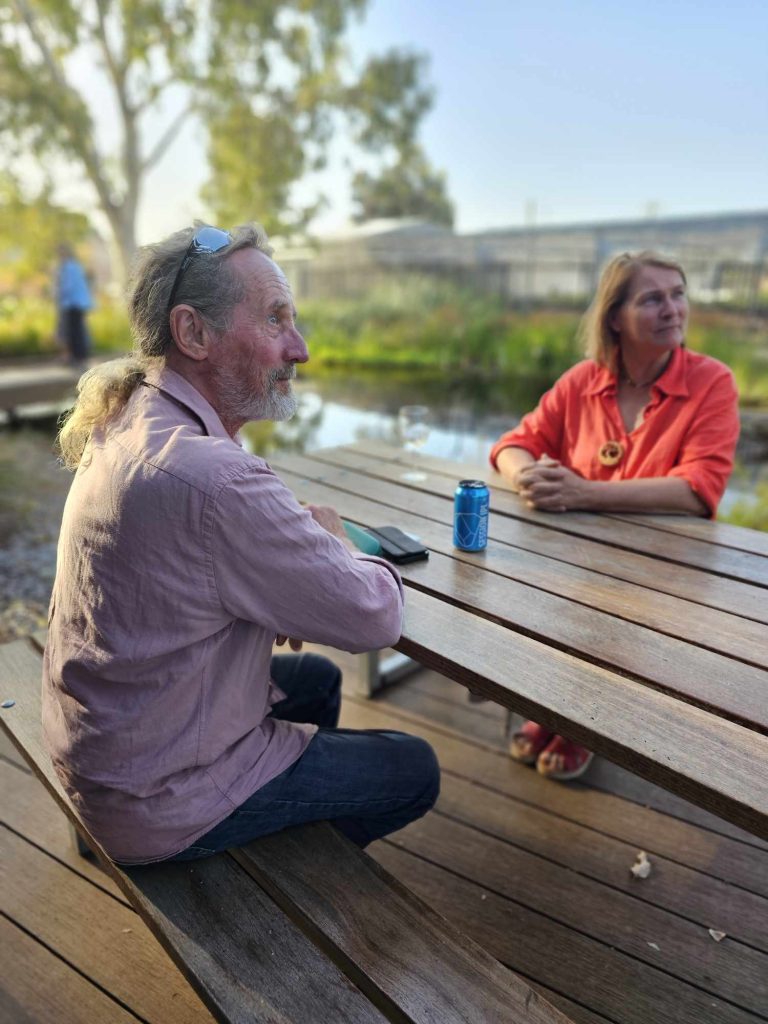
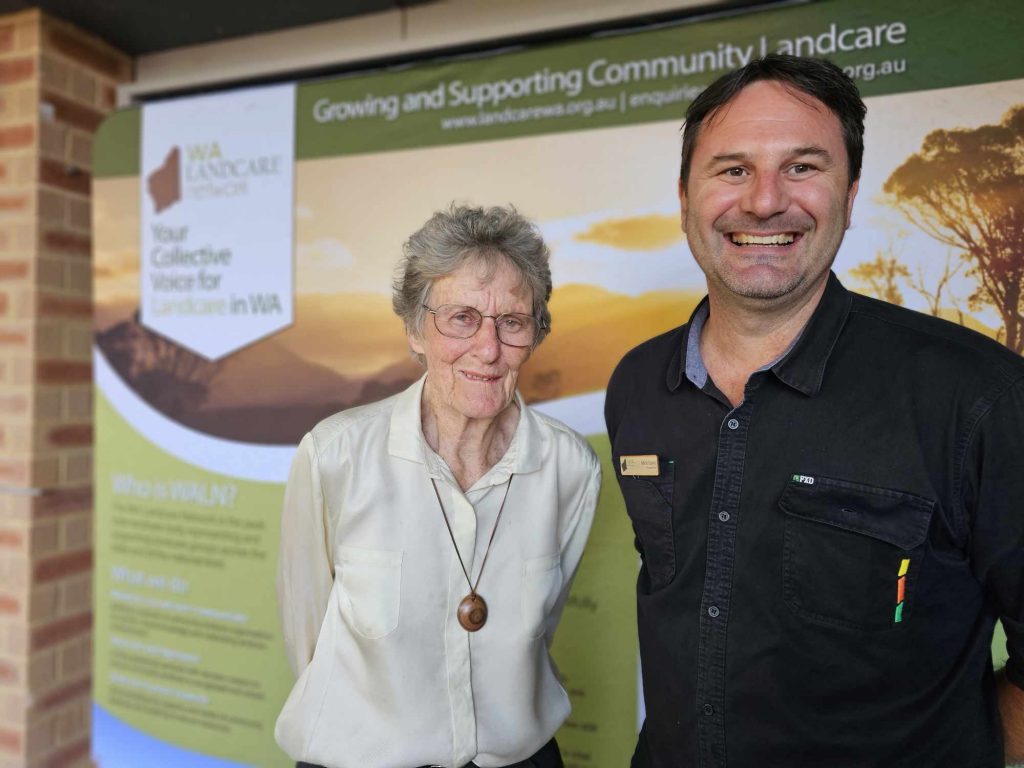
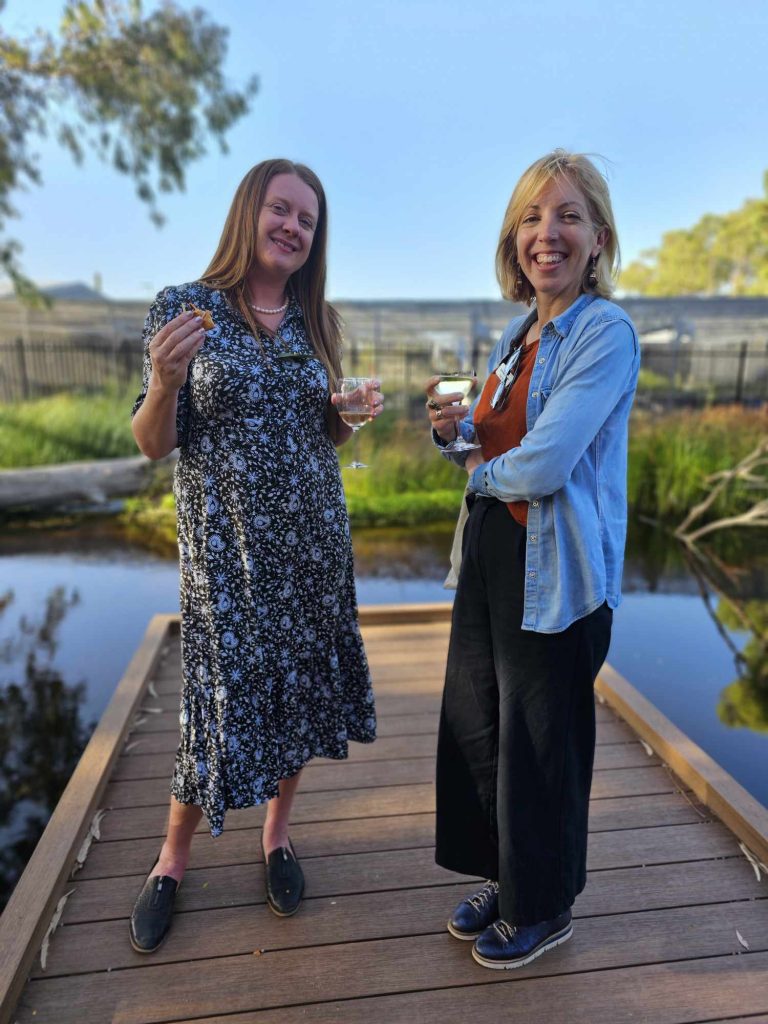
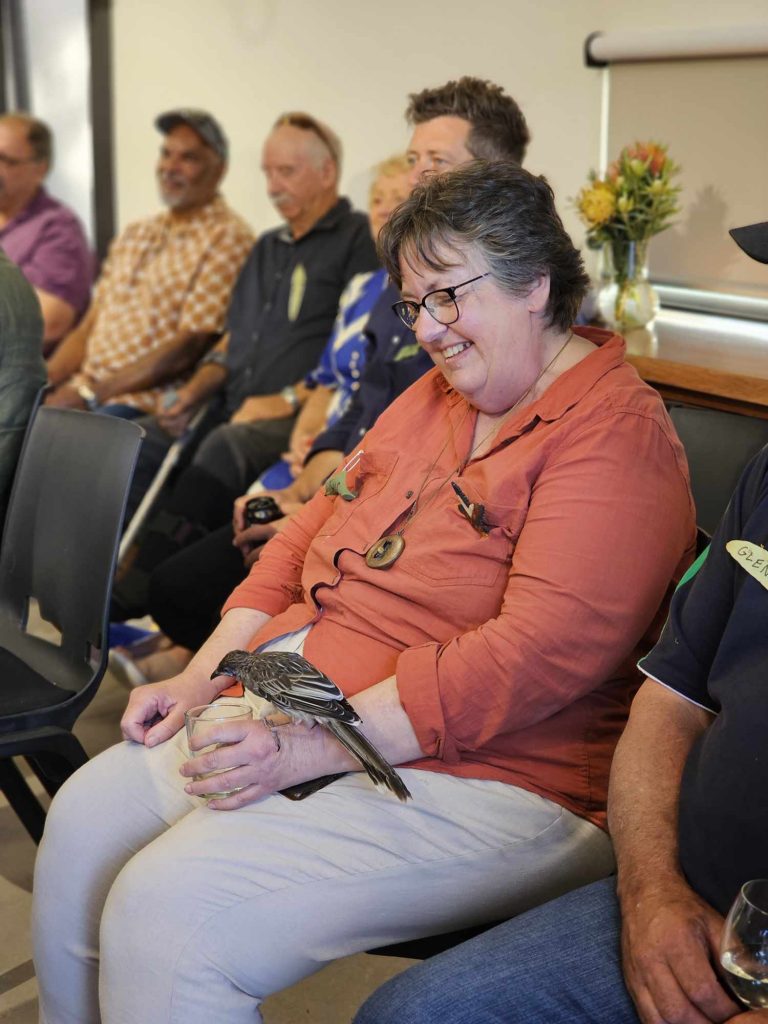
Photo Gallery: 2023 Inaugural WA Landcarers’ Hall of Fame Presentations
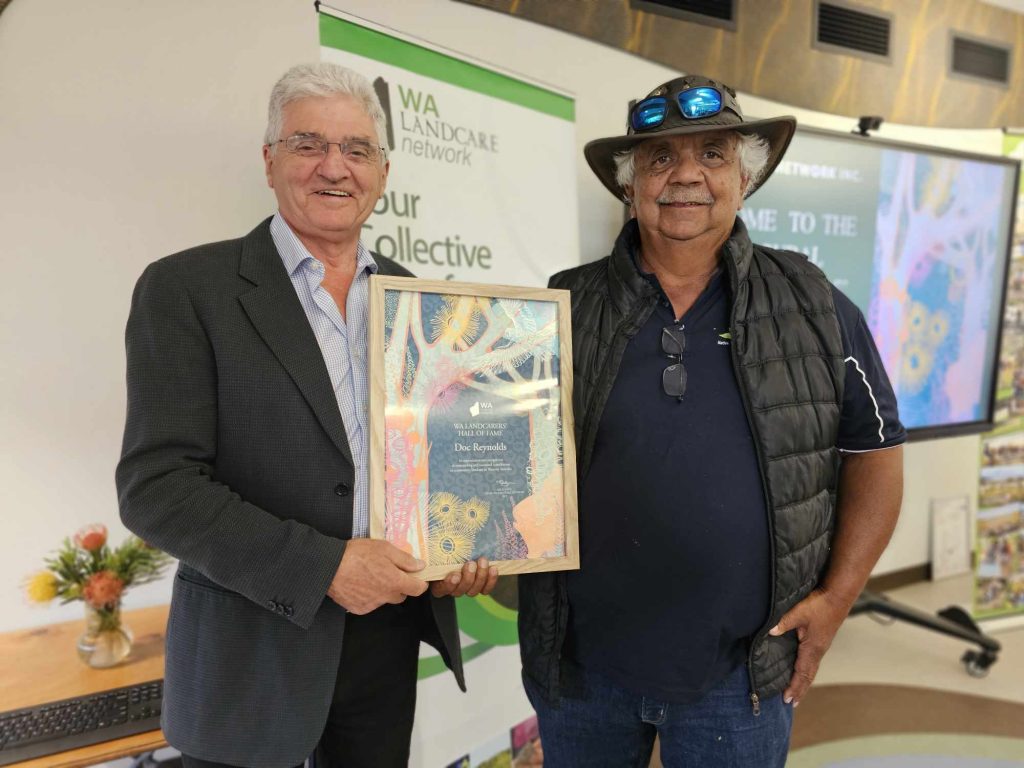
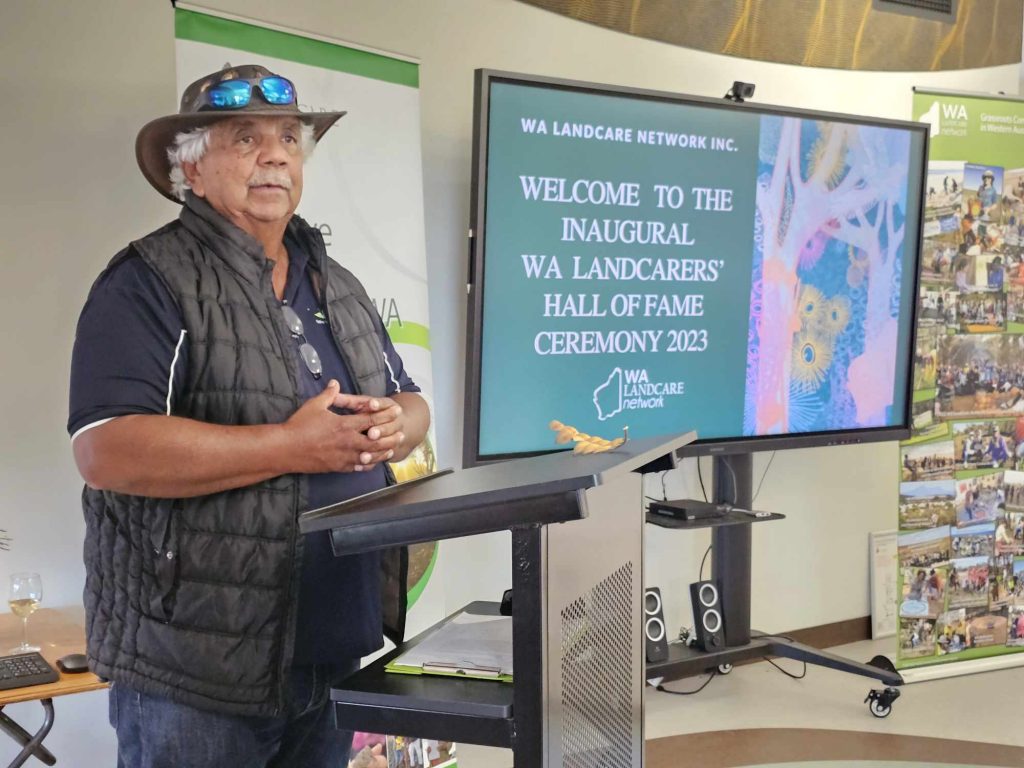
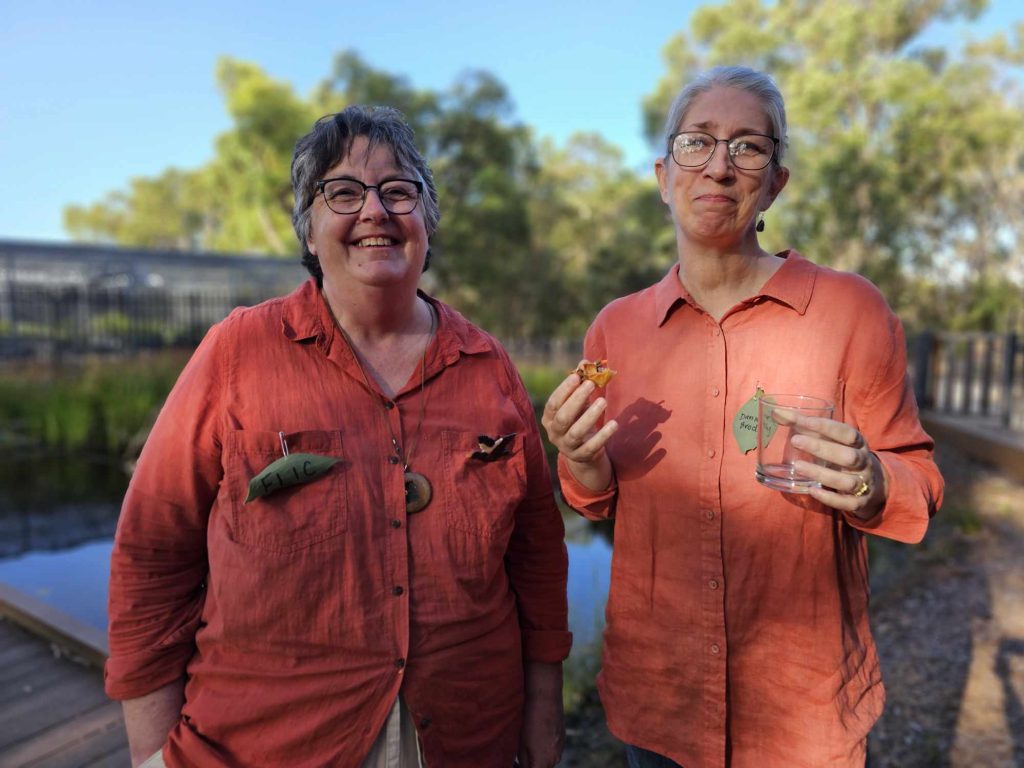
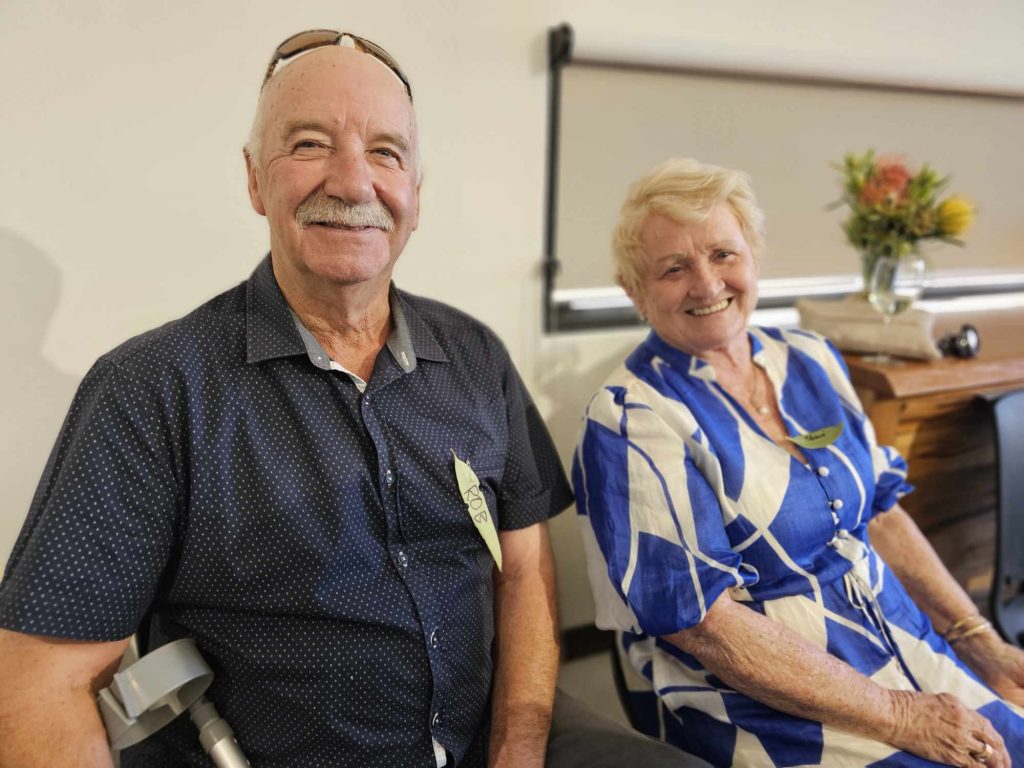
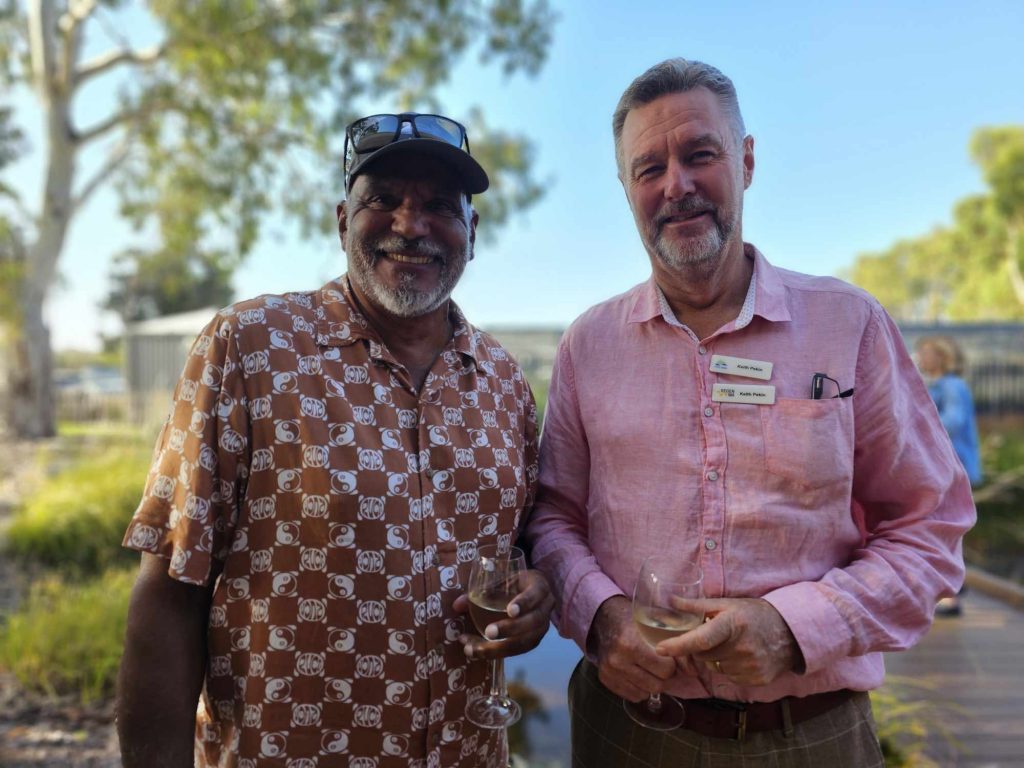
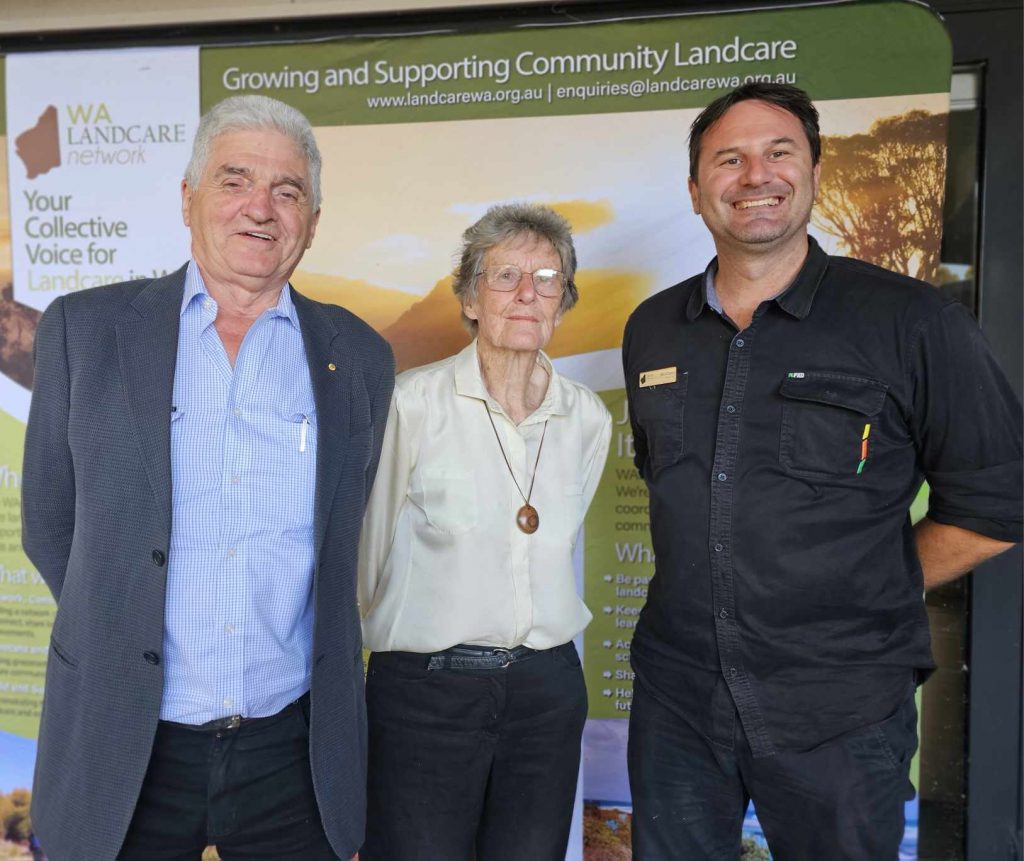
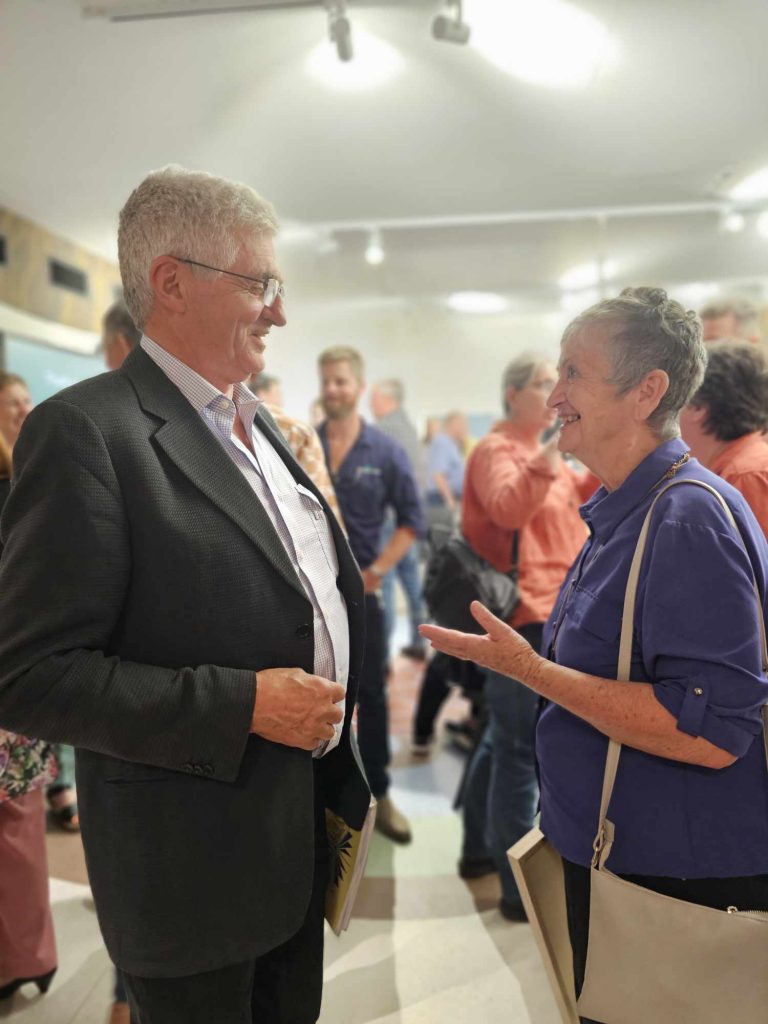
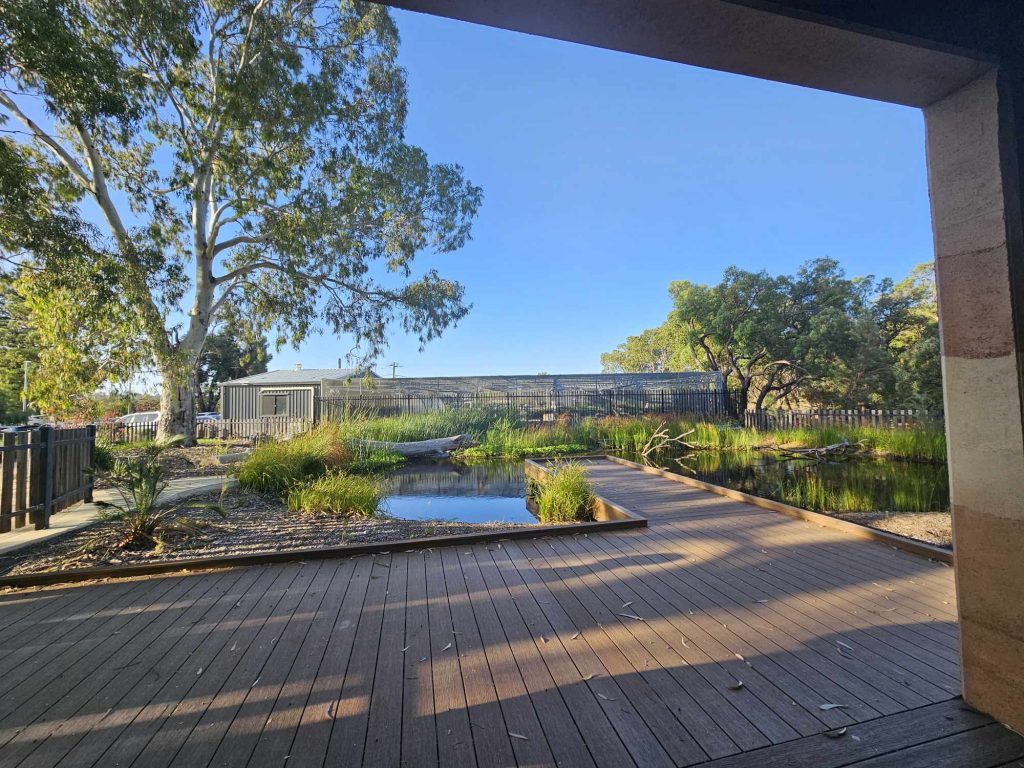
Read about the achievements of the 2023 WA Landcarer’s Hall of Fame Inductees below.
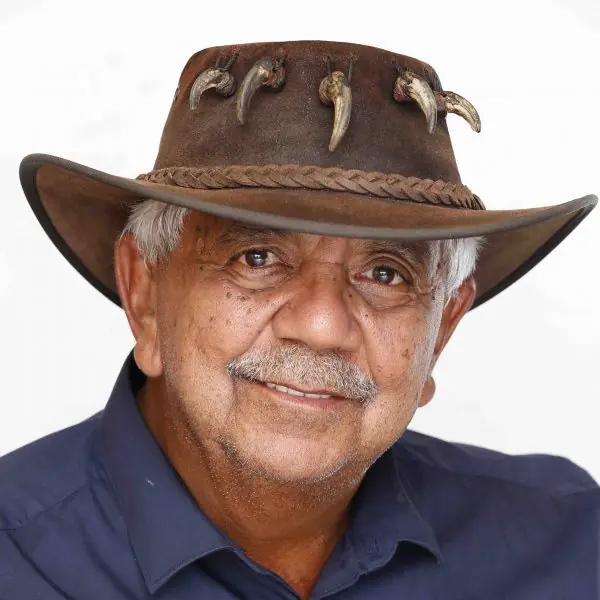
Doc Reynolds
Doc Reynolds is a respected Wudjari Nyungar Elder with 40 years active work in Aboriginal affairs at local, regional, national, and international levels.
Doc has been involved in cultural land care practices for most of his life learning to look after country from the old people he grew up with in Esperance. In the 90’s Doc managed the Bay of Isles Aboriginal Community Inc, ramping up and sharing his knowledge with his people around the Wudjari country. Doing cultural protection work in conjunction with CALM and other numerous land care bodies on the south coast, including Goldfields Land and Sea Council, SCRIPT/SCNRM, Applied Archeology Australia etc. He along with Dave Guilfoyle, set up the Gabbie Kylie Foundation set up under the auspices of the National Trust, taking their directives from the 6 Wudjari Elders, to better document the cultural and environmental richness of the Wudjari Country and use that to underpin improved cultural and mainstream land management practices.
His family business “Kepa Kurl Enterprises Pty Ltd” has operated for many years, and among many achievements Doc established a successful environmental and cultural tourism business operating out of Esperance.
Doc lodged the Tjaltjraak Native Title Claim on behalf of all the old “fullas” in 1994 to connect Wudjari people back to country and sea country, to continue to protect our Sacred and Significant sites scattered across ‘boodja’. He is now a Director and Senior Cultural Advisor of Esperance Tjaltjraak Native Title Aboriginal Corporation (ETNTAC) and has been on their Board representing the Reynolds family since November 2021.
Doc was the first Aboriginal person to be elected to the Esperance Shire Council and served on many local committees as a Councillor. He has also sat on many State Ministerial Councils including chairing the Aboriginal Lands Trust, which is the largest landholder in Western Australia.
He is a past President of the Aboriginal Legal Service of WA and held many tourism related positions including, Australia’s Golden Outback board, Tourism Esperance, Tourism Council of WA, World Indigenous Network Tourism Alliance (WINTA) and currently the longest serving Chair of Western Australian Indigenous Tourism Operators Council (WAITOC) and providing advice in WAITOC’s infancy, 20 year ago.
Don Stanley (Posthumous)
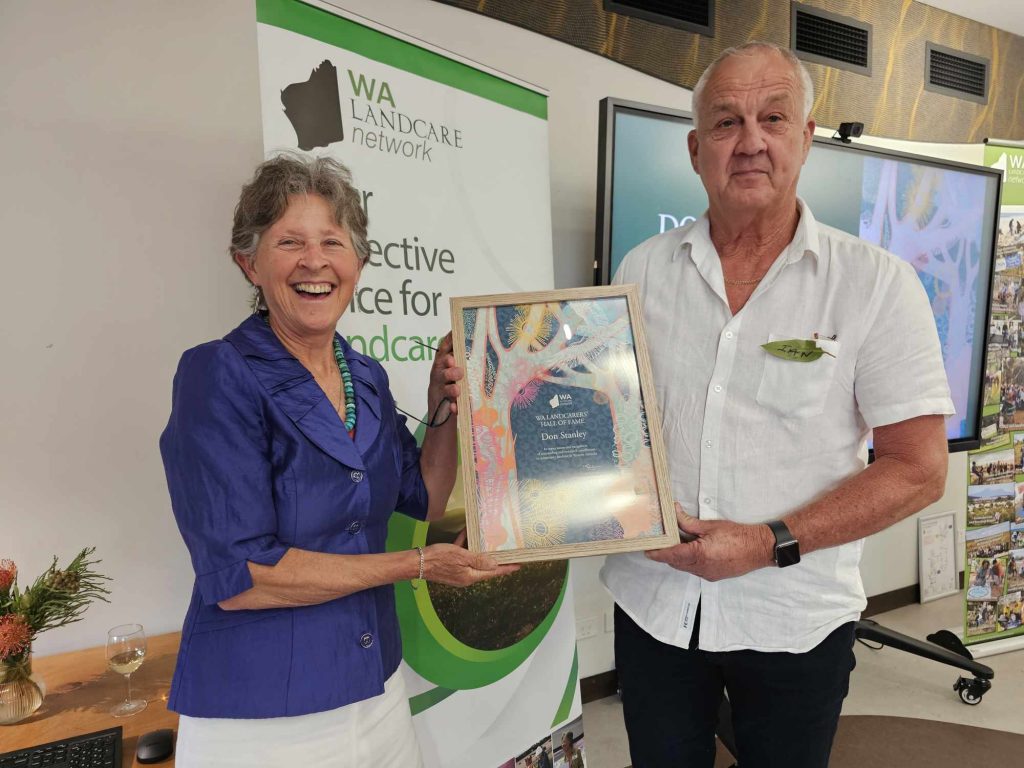
The late Don Stanley was a second-generation farmer, whose family still owns and operates a 25,000ha wheat farm in Kalannie in the Central Wheatbelt of Western Australia. Don is regarded as the founder of the oil mallee industry in Australia, which included introducing Eucalyptus kochii into farming enterprises.
Don was educated at Perth Modern School where he met his lifelong partner, Allison. They both enrolled at the University of WA in 1946. After two years at UWA Don transferred to the Australian Forestry School in Canberra for 1948 and 1949.
Following that period of study, Don returned to Kalannie to manage the farm and with his father Ed expanded their property during the 1950’s. In the 1990s, Don commenced a program of oil mallee plantings in conjunction with founding the WA Oil Mallee Association, which encouraged farmers to plant an estimated 15,000 hectares of Mallee Eucalyptus trees across the State. The Stanley family has planted over a million trees on their property The farm continues to be run by Don’s Grandson Travis Stanley.
Don was enthused by the prospect of tree planting as a potential moderator for salinity. He could see that if we aimed to build a serious industry around mallee, that we should make it a whole wheatbelt project. Hence, together with enthusiastic support from CALM (Department of Conservation and Land Management), interested parties were identified in six centres: Kalannie, Canna, Bruce Rock, Narrogin, Woodanilling and Esperance. Key land-care positive people were identified in each of the districts invited to a meeting with Don and John Bartle of CALM.
During this period there was state and commonwealth programs and funds available for salinity and landcare programs. The mallee initiative was seen to be a very sound and attractive and it was anticipated that it might be possible to secure substantial funds to support a major project. The Oil Mallee Association of WA (OMA) was formed with a representatives selected from each location. Regular meetings were arranged with Don as President. About $2 million was raised for mallee research and development over the 1990s. CALM, with Dr Syd Shae at the helm, made a strong contribution to this development of a Wheatbelt program and the six centres of activity contributed significantly. Don Stanley was a very sound leader and reportedly any issues in the organisation were readily resolved.
Some aspects of Don’s background were a significant factor in his motivation to make change and to advocate so vociferously for tree growing action on farms. Don remained a member of the Australian Forestry Institute and in the obituary created by the AFI, his profession is listed as a forester. The knowledge acquired at a world class program at ANU served him well in his future leadership of agroforestry activity
throughout the WA Wheatbelt.
Don was also Chair and driver on Kalannie LCDC and was solidly committed to the organisation and the greater community. organisations. He continued to Chair the OMA for the decade after its creation and secured funding and government backing for the objectives of this organisation which had a membership of 1000 farmers, around 25% of the total number of farmers in the WA Wheatbelt at the time.
It is worth noting also that Ian, Don’s son, was awarded the 2005 Australian Government Landcare Program National Individual Landcarer Award and has continued a strong interest in mallee eucalypts including helping create the Kalannie Eucalyptus Oil Distillery (now Kochii Oil) and Rainbow BeaEater, a biogas producing company with successful projects in South Australia using feedstocks such as waste timber and straw to heat large glasshouses. Ian is currently the Chair of the Oil Mallee Association.
In recognition of Don’s significant contribution to landcare within the Kalannie region an Acacia has been names after him: Acacia stanleyi commonly known as Stanley’s
Rock Wattle.
Don died in 1999 at the age of 71, after a successful farming career and engagement in a wide range of agricultural and community organisations.
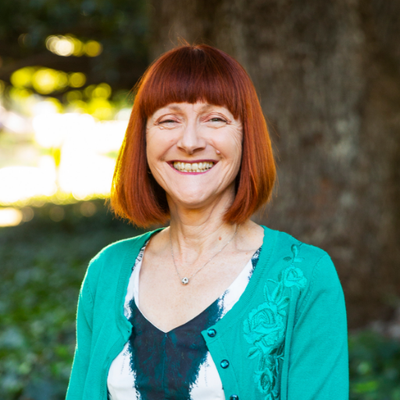
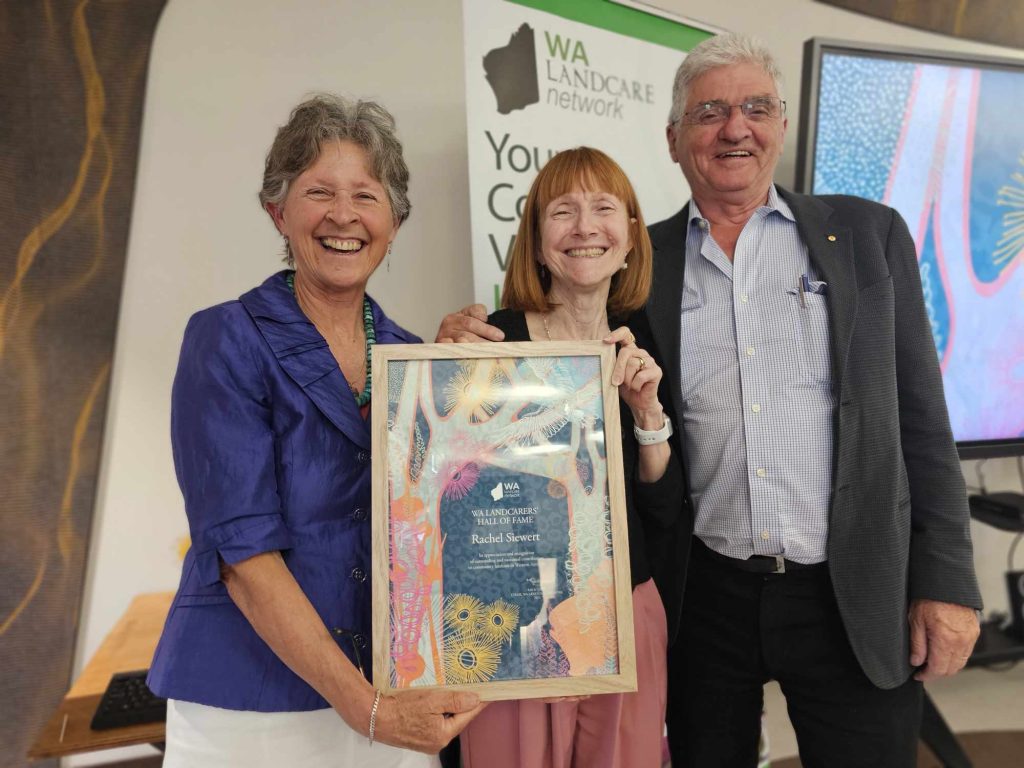
Rachel Siewert
Rachel was Sydney born and moved with her family to Perth when she was 13. She went on to study agriculture at the University of Western Australia.
Her first role after graduating was also the first WA position funded through the new National Soil Conservation Program. In 1983 Rachel researched salinity with the newly formed Jerramungup Soil Conservation District and the Department of Agriculture.
The understanding and bonds built through this pioneering early landcare work never left Rachel. She went onto work, for an impressive 16 years, as Coordinator of the Conservation Council of WA and remained a strong voice for landcare amongst the environment movement.
Rachel was an active member of the Soil and Land Conservation Council, the Natural Heritage Trust’s Joint Steering Committee, the State Salinity Council and the State NRM Council.
She carried her advocacy for landcare into Federal Parliament when she became a Senator, for the Australian Greens, in 2005, and was a strong national voice for community landcare and in Western Australia until she retired from the Senate in 2021.
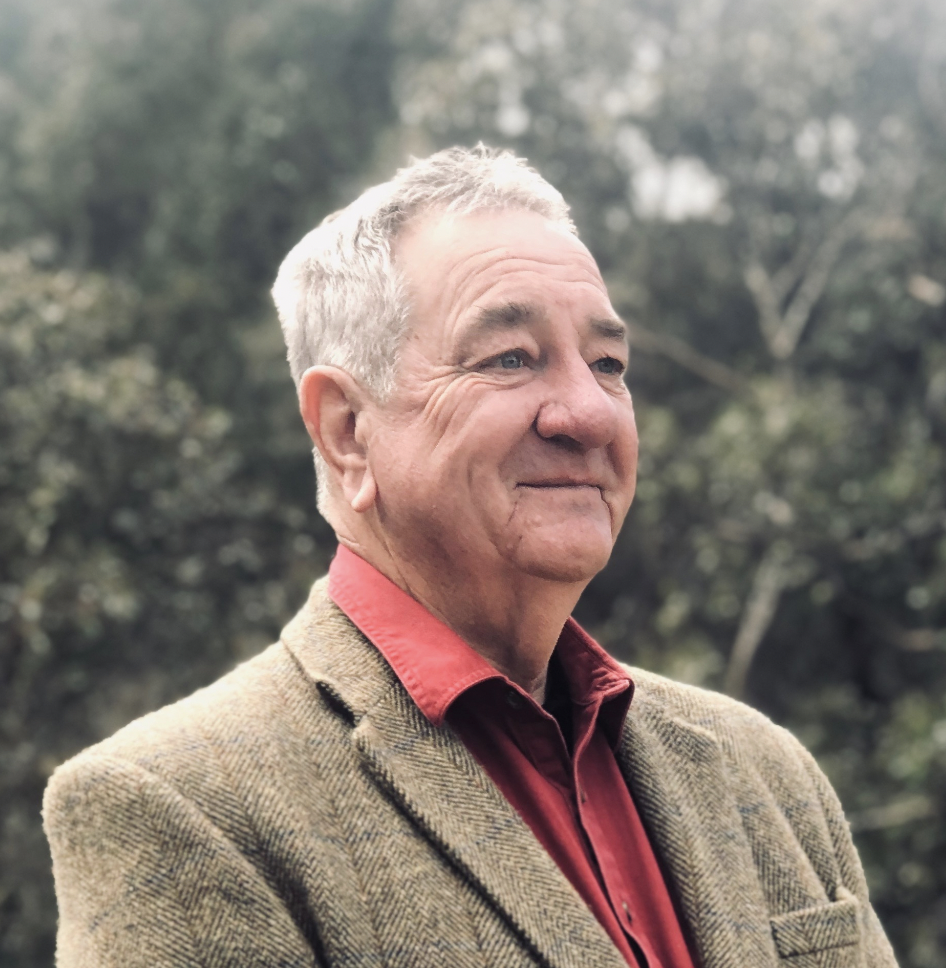
Ted Rowley
Ted Rowley was appointed as a wheat and sheep adviser in the WA Department of Agriculture in 1975. As Officer in Charge of the Agriculture Department at Jerramungup in 1976 through to 1983, low rainfall years coupled with developmental farming systems lead to unprecedented levels of wind erosion on the areas of newly cleared lands of the central south coast.
Teds was the strong voice that helped the South Coast farmers face the realities of what was happening, and how to take positive steps. He encouraged and supported establishment of early Soil Conservation Districts and then the landcare ethos, and then ‘landcare’ and other ‘care’ groups. This experience led him to form a ‘resilience’ view of land use and how agriculture could be more productive, be better market
linked and be more sustainable with better protection of the natural resources it depended upon.
Ted became a champion of farmer self help groups and worked to help groups such as the Corrigin Farm Improvement Group and landcare groups achieve more caring
and sustainable farming systems.
In 1988 Ted was appointed as the Department’s Regional Manager for the Wheatbelt Region and supported an exponential growth in landcare and other NRM Care groups. Together with John Collett (Alcoa World Alumina Australia) he conceptualised and established the Alcoa Landcare Program and Avon Catchment Program, particularly its support for farmer managed and led salinity demonstration catchments. These were based on cross boundary commitments and collaboration between neighbours for salinity management, natural resource protection and economic sustainability outcomes. Many of these are still in operation today in different forms and have achieved positive outcomes for the natural assets and the farming businesses involved. Ted was also a key initiator for the establishment of regional natural resource management groups, which still operate today in various forms in WA, and across Australia (54 regions in total).
After leaving the Department of Agriculture in 1996, Ted continued working directly for the Alcoa Landcare Program across Australia and supported the Victorian and WA Landcare Programs with adoption of cross boundary actions by farmers and more resilient approaches to supporting landcare and landscape-scale natural resource management (NRM) outcomes. This included becoming a member of the Woady Yaloak Catchment Group in Victoria. He was a Director for Greening Australia WA and in his Alcoa consultancy role helped Greening Australia develop and establish the Living Landscapes Project in the wheatbelt area of WA, which engaged farmers in appreciating and protecting their natural ecology.
Ted was also a specialist policy consultant for landcare, salinity, NRM and sustainable agriculture with both coalition and labour government ministers in Western Australia for ten years from 1996. He continued to support community landcare and NRM groups become more resilient and better able to report on their successes.
Ted was appointed National Landcare facilitator for South Africa in 2003 through Australian Government funding applying his Western Australian experience to similar but different challenges across the provinces of South Africa. He then took his experience and desire for wider change to Canberra in 2006 when he was appointed Director, Monitoring and Evaluation for the Natural Heritage Trust (NHT) with the Australian Government NRM team – 450 people across two agencies. With his new team Ted initiated the design of the NHT and NRM, monitoring, evaluation, reporting and improvement (MERI) approach for this very significant Australian Government investment made bilaterally with all states and territories. Ted and his team worked with state and territory governments and 56 regional NRM community organisations to adopt and sustain the use of program logic (outcomes mapping) and MERI plans based around the logic. This directly supported landcare groups across Australia to be better able to tell their story of change – social, environmental and economic.
Based on the MERI landcare experiences Ted went on to practice and share the NRM MERI principles with people from and in over 26 countries, helping program teams design and implement programs and monitoring, evaluation, reporting and learning (MERL) systems for national economic development policy/planning, agricultural value chain program development, strategy and policy for NRM and multiple agricultural research and development programs (such as those delivered by the Australian Centre for International Agricultural Research – ACIAR).
Countries in which Ted has shared his experiences include Mozambique, Pakistan, India for Afghanistan, China, Tibet, Bangladesh, Vanuatu, Nepal, Cambodia, Solomon Islands, Indonesia, Northern Indigenous Australia, South Africa, Malaysia, Laos, China and Singapore – with longer term NRM resilience and landcare activities in Samoa, Papua New Guinea, Republic Guinea in West Africa, and South Africa.
Since 2013 Ted has lived in the Snowy Mountains of southeast NSW, running a high country beef cattle enterprise in the wilderness. This endeavour led to Ted building partnerships to bring about two significant policy changes by the NSW Government towards protecting natural assets through better control of large populations of feral animals, particularly feral deer and feral horses. (Ted now lives in Western Australia
and Central Victoria.)
Currently Ted is:
• Member Australian Institute Agriculture (MAIA)
• Governor World Wildlife Fund Australia (30 + years)
• Chair, New South Wales, National Parks Wildlife Services Southern Ranges Regional Advisory Committee (encompasses the amazing Kosciuszko National Park)
• Deputy Chair, New South Wales, National Parks Wildlife Services Advisory Council
• Chair, Australia Government National Feral Deer Action Plan Working Group
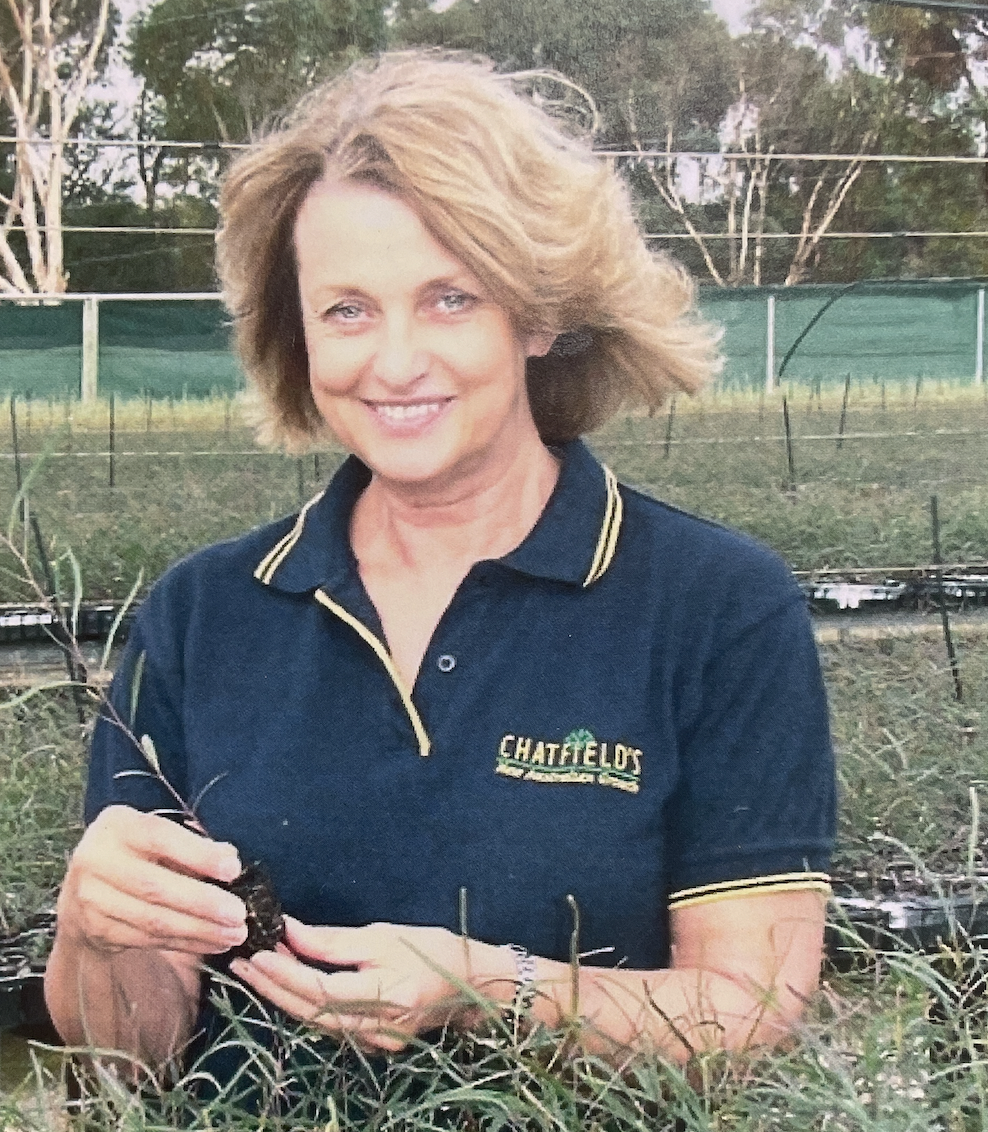
Jos Chatfield (Posthumous)
Jos Chatfield, known to many as the “Tree Lady of Tammin” was one of the key drivers of Landcare in her local area, Tammin and across Australia for over four decades.
At the beginning there was a need for rehabilitation on the family farm and in the local catchment, due to saltland and waterlogging issues; this enabled Jos and her husband Dennis to establish an on-farm tree nursery in 1979. Chatfield’s Tree Nursery, passed down to the next generation, continuing the legacy and passion of providing over 2 million seedlings per year of weather hardened, quality trees for farmers, landcare groups and industry.
The Chatfield’s Tree Planter which was designed and developed on the farm during the 1980s is still available and used across Australia by many farmers and groups today, enabling thousands of seedlings to be planted per day.
Jos and Dennis were often the “grass roots” connection for many projects in the landcare world, collaborating with state, national and international community, beginning the seeds of change. Jos’s exuberance, energy and knowledge, being a key element in attracting support for landcare efforts.
Jos was a strong community voice. She gave presentations at many of the landcare conferences and gatherings, authored and co-authored a number of papers setting out acknowledgment and recommendations which underpinned the rapid growth of landcare during the 1980s and 1990s and is still relevant today.
She was a Committee member of the Tammin Landcare District Committee, National Landcare Assessment Panel, Soil Conservation Advisory Body for the Federal Minister, Trustee of the Gorden Reid Foundation, Chairman for the Tammin LCDC and State Water Reform Council, Executive to the State Salinity Council, Commissioner of the Australian Heritage Council, Deputy Chairman of Water and Rivers Commission and the Recipient of a Commonwealth Centenary Medal for service to natural resource management, landcare and and conservation…. Not to mention a much-loved mum to three girls and adored grandma of four grandchildren!
She was truly an inspiration to the Landcare movement. Sadly, Jos passed away in 2023.
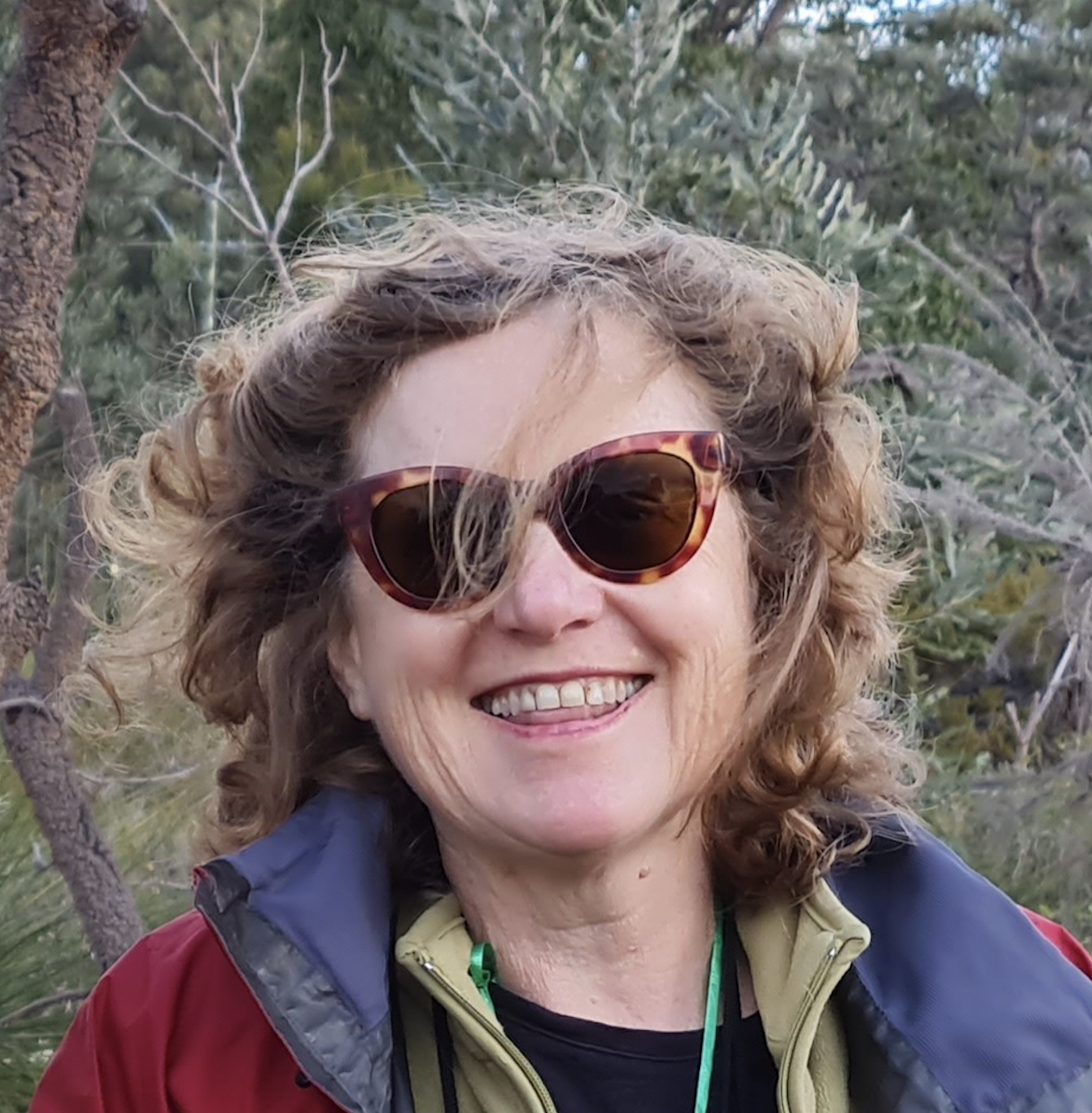
Colma Keating
After growing up in WA’s wheatbelt and Pilbara regions, Colma studied Science at UWA in the late 1970s, early 1980s, with majors in Botany and Geography and became involved in environmental groups. This included honorary secretary of the WA Conservation Council and Councillor for the Australian Conservation Foundation. Early campaigns included Shark Bay World Heritage, Lesueur National Park, Trigg Dunes.
In 1988, by day Colma began working for the WA Department of Agriculture on landcare and coastal programs, by night she started taking on roles representing environment interests on government committees.
After a ‘Landcare Liaison’ stint in Minister Ernie Bridge’s office and a secondment to Canberra to work on Landcare Australia’s business plan, Colma returned to Perth in 1993. She focused her volunteer efforts on government liaison and skills development activities that were needed in the Conservation Council, playing a pivotal role in establishing “Environment Matters” that this year celebrates its 21st Birthday of sharing and extending knowledge and understanding – whilst networking.
She has worked for government agencies and Not For Profits (including Greening WA, Landcare Australia and the WA Wildflower Society) conducting botanical surveys, community engagement, facilitation, sponsorship and training and continues to have an unwavering commitment to environmental organisations.
Colma is a very active contributor to the Urban Bushland Council, served on the WA Landcare Network Committee 2014-2016 and for over 30 years has been an energetic member of her local urban landcare group, Canning River Residents Environment Protection Association.
The tag ‘a walking, talking, sharing mind-map’ still captures Colma’s driving passion and contribution to supporting and connecting people and knowledge – in community led conservation and rehabilitation.
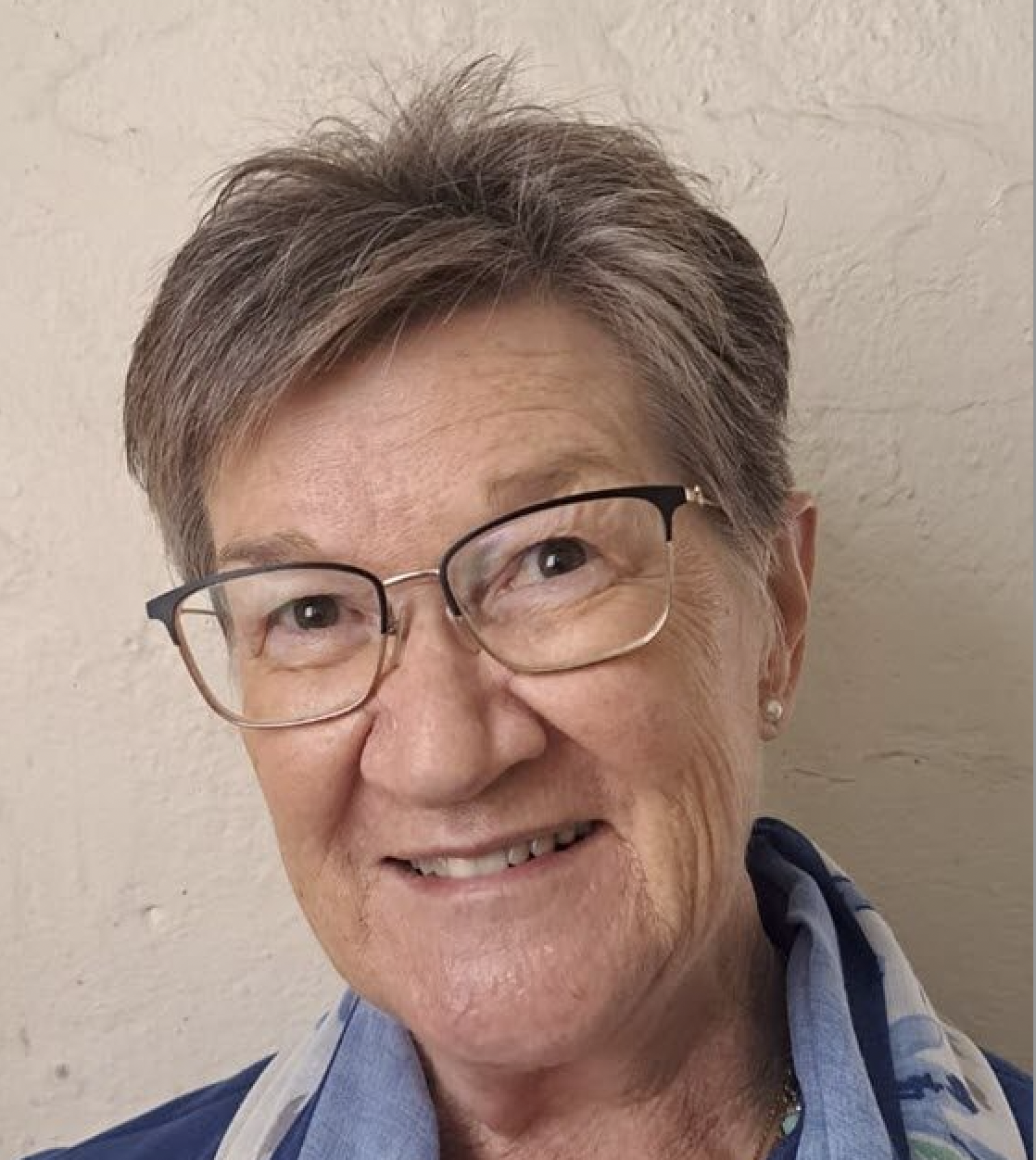
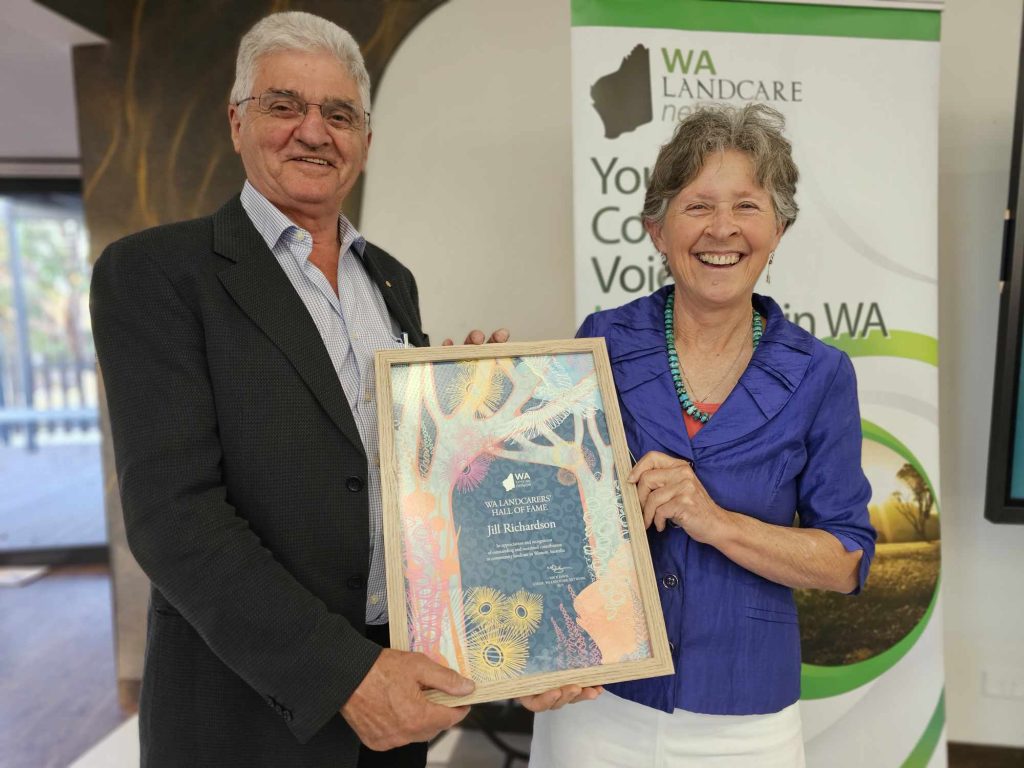
Jill Richardson
Jill and her husband moved to Katanning as “urban refugees” and became involved in landcare initiatives in the Katanning region over 30 years ago. As a passionate advocate for the importance of maintaining diversity and sustainable natural environments to ensure long-term agricultural productivity Jill involved herself in the landcare movement; first as a volunteer and then as an employee of the Katanning Land Conservation Committee, managing the Landcare Centre through the highs and lows of Landcare.
Jill spent 25 years dedicated to furthering Landcare in Western Australia. As a Member of the Katanning Land Conservation District Committee and leading significant on-ground environmental works and behavioural change in sustainable agriculture and biodiversity conservation. Jill was also a member of the then Blackwood Basin Group and the then South West Catchments Council.
Jill’s role as a connector, mentor, devil’s advocate, do-er, friend and “Landcare Mum” for large networks of natural resource management people cannot be underestimated. She was passionate about community-driven Landcare, sitting as a member of the National Landcare Network for 5 years. As a volunteer, Jill drove the formation of the WA Landcare Network and served as the inaugural Chairperson.
In 2016 Jill was awarded the Australian Government Facilitator/Coordinator Award at the National Landcare Awards, and their property was published as a case study in Bill Bunbury’s book Invisible Country. The same year Jill and her husband Adrian were nominated for the 2016 Great Southern Development Commission Medal for their commitment to natural resource management on their land and the educative role they play in the district.
When the Richardson’s bought their farm 40 years ago there was very little native vegetation, 30 percent of the property was waterlogged, salt-affected, or bare salt scald. After initial saltbush seeding and small revegetation plots, they began implementing a landscape-scale water harvesting and revegetation plan which has changed the environmental conditions on the property. Approximately 120,000 have
been planted on 12 to 15 of the farmland, giving increased agricultural productivity from sheep flocks.
Establishment of plots timber and broombush species has already provided a financial return and will continue to do so in the future, with biodiversity habitat and shelter along the way.
Jill and Adrian have continued to share their knowledge and passion for the natural environment through the LCDC, farm tours, conferences, and roles in State and National Landcare, encouraging others to build skills and act to make better land management decisions. Their most recent visitors were an urban ecological design class from Notre Dame University, and a Farm Forestry group.
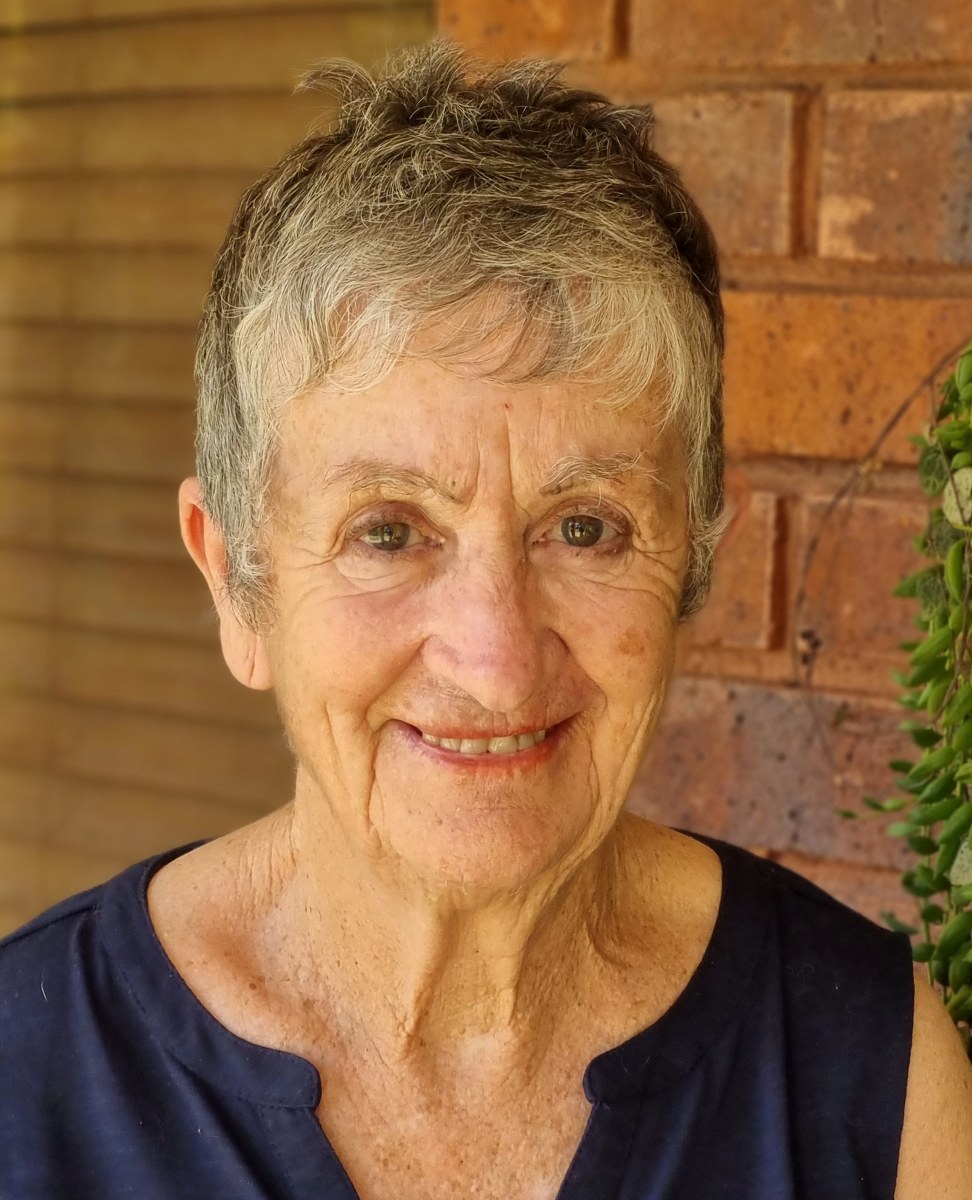
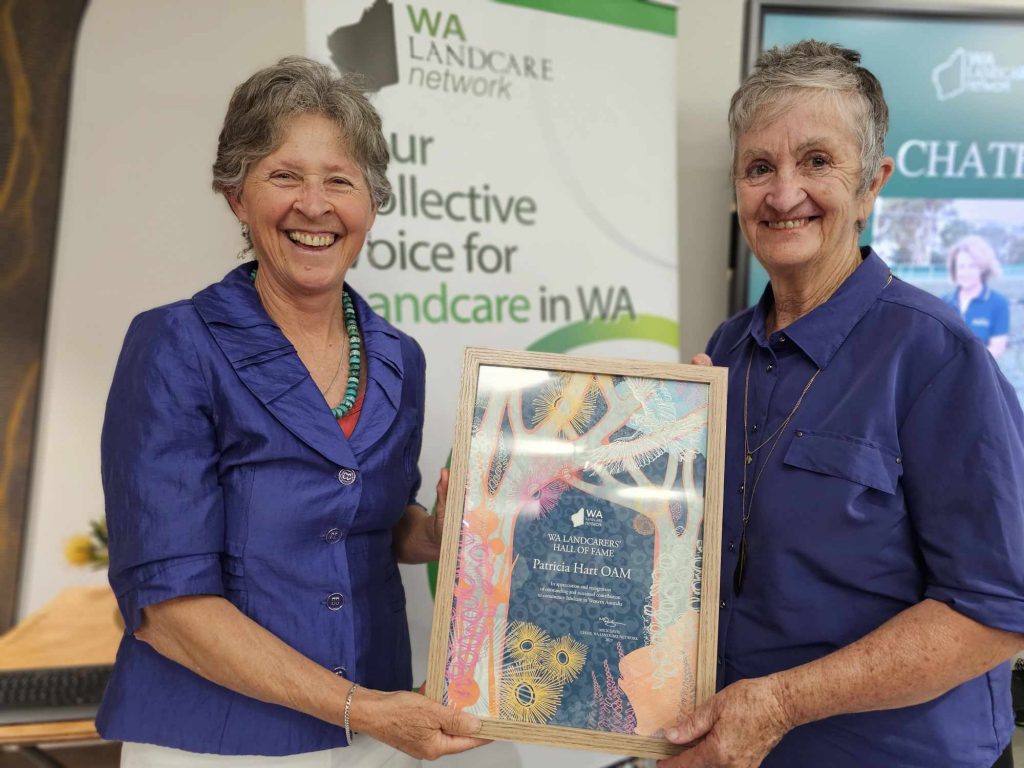
Patricia Hart OAM
Pat Hart is a tireless environmental and community advocate with an impressive environmental resume with a lifelong commitment to community Landcare. She has held an impressive number of positions throughout her long career and was a driving force behind establishment of the WA Landcare Network, serving as an inaugural deputy Chair and Committee Member of the WA Landcare Network from 2013 to 2018.
She was a Councillor and deputy Mayor for the City of Armadale, founder of the Armadale Rivercare Group, the Armadale Gosnells Landcare Group, Canning Catchment Group, co-founder Roleystone Dieback Group and facilitated setting up Armadale Environment Centre.
In 2002 Pat played a pivotal role in establishment of the South East Region Centre for Urban Landcare -SERCUL -and was its Chair for 18 years – retiring 2020 – now life member.
Pat was a deputy chair of the Swan Avon Working Integrated Catchment Group and the inaugural Chair of the Swan Working Group – now Perth NRM. She was a member of the Natural Heritage Trust’s Joint Steering Committee and the State NRM Council.
Director of the Swan River Trust and Botanic Park & Garden Authority.
Currently Chair Armadale Gosnells Landcare Group, chair City Armadale Bushcare Environment Working Group and Secretary Armadale Environment Centre.
Pat has been a strong advocate for community led urban Landcare in local government and has often used her formidable lobbying skills to great advantage, particularly to ensure urban groups can access the funds available.
In 2022, Pat was awarded the Medal of the Order of Australia for her unwavering service to the community of Armadale.
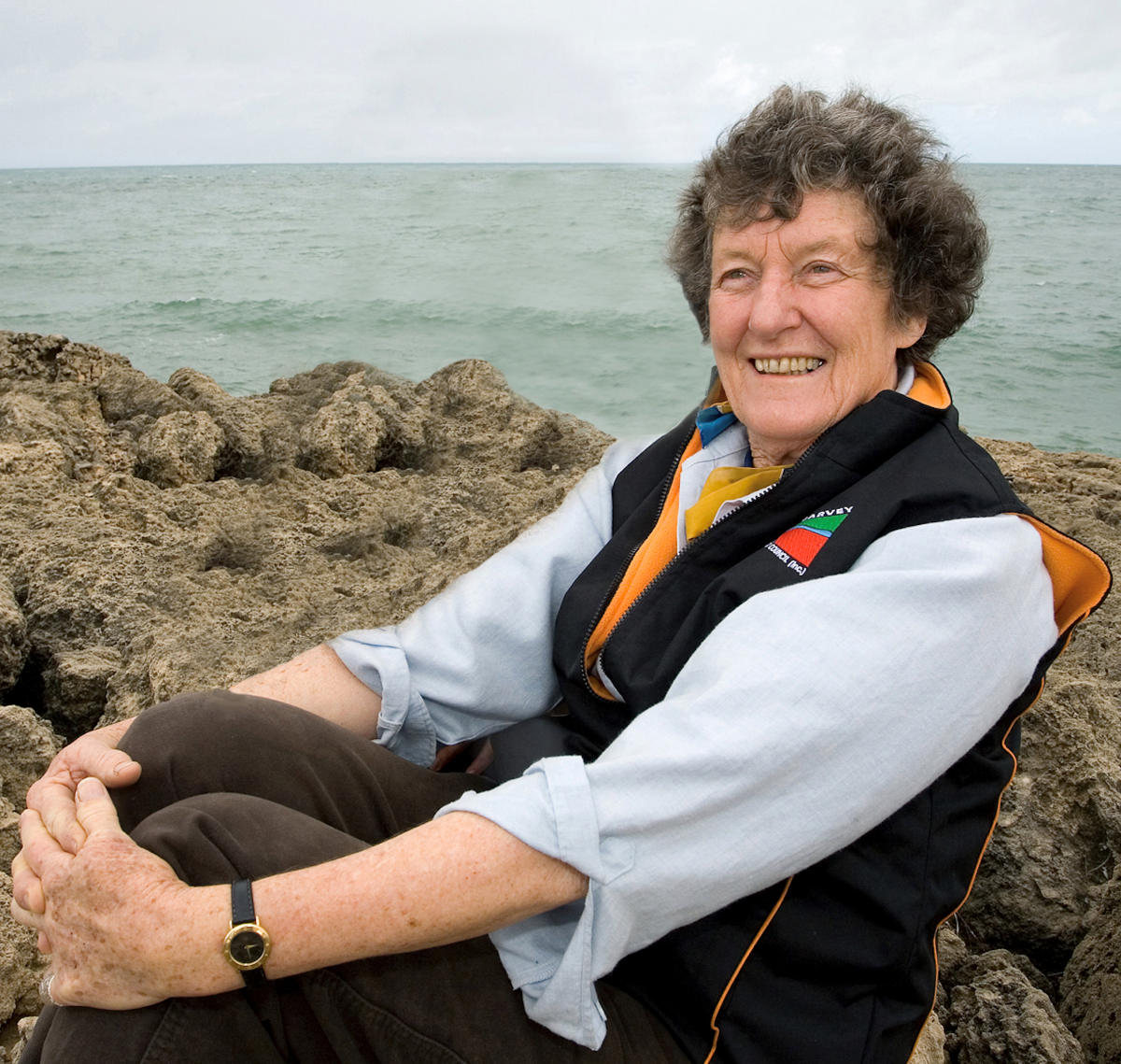
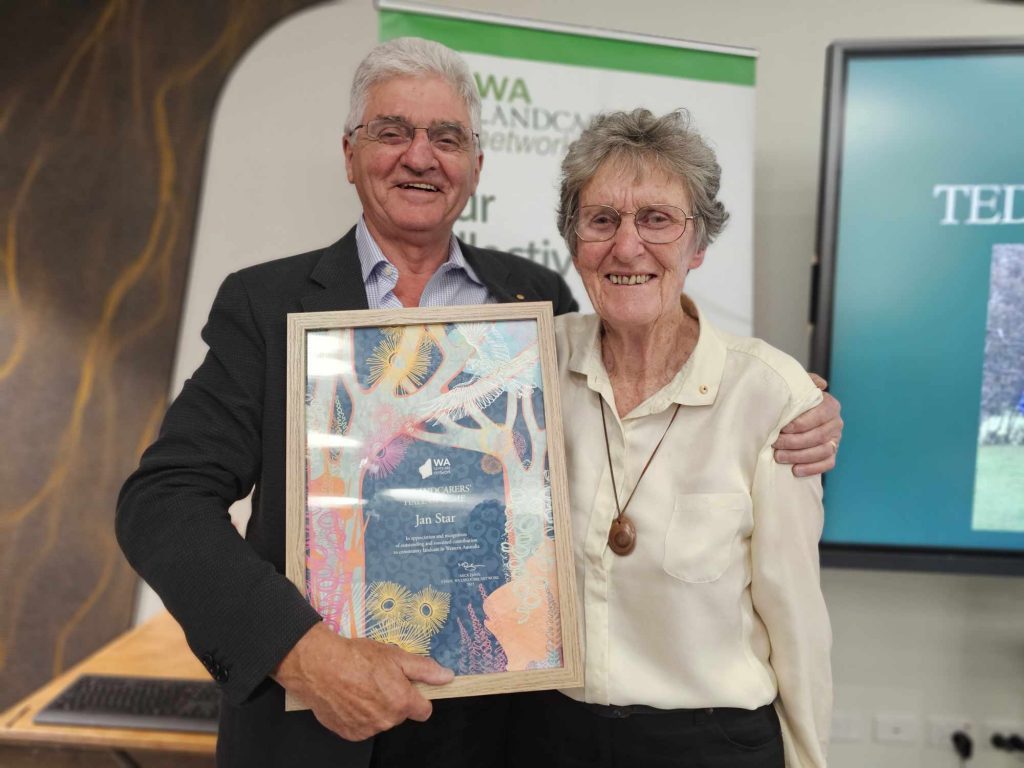
Jan Star OAM
Jan Star farms near Jarradale and has had an exemplary life working for the environment in landcare, local government and other roles.
Jan was a member of the Serpentine-Jarrahdale LCDC and a founding member of Landcare SJ and during the same period, as a Councillor, Jan was instrumental in Council’s decision to base it’s Rural Planning Strategy on land capability mapping. This was a breakthrough moment for locally led management of the sensitive Peel-Harvey catchment.
Jan was also a key person in the establishment of the Serpentine-Jarrahdale Water Watchers, a local group whose monitoring program significantly altered the scientific understanding of nutrient loss from the catchment.
During her time as a Councillor Jan was a strong advocate for landcare and the environment in the WA Local Government Association.
Jan was founding Chair of the Peel-Harvey Catchment Council (PHCC) when it was established in 2000 and led an impressive 13-year campaign to achieve having the Peel-Harvey recognised as an independent Natural Resource Management Region, the 55th NRM region in Australia.
Jan also instigated the Ramsar Management Plan to protect the Peel-Yalgorup’s Ramsar-listed natural heritage and was a member of the Natural Heritage Trust’s Joint Steering Committee, the Soil and Land Conservation Commission, the State Salinity Council and the State NRM Council.
Jan was made a Member of the Order of Australia in 2002 for service to local government, particularly through environmental, water management and planning related matters, and to the community.
Jan has recently retired from Landcare SJ and remains active in the Serpentine Jarrahdale Food and Farming Group and in the protection of the Northern Jarrah Forest.
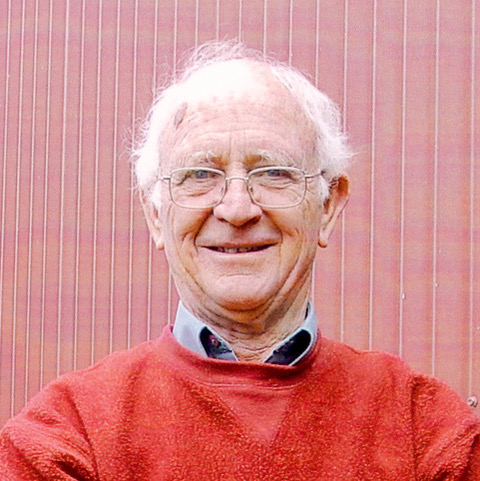
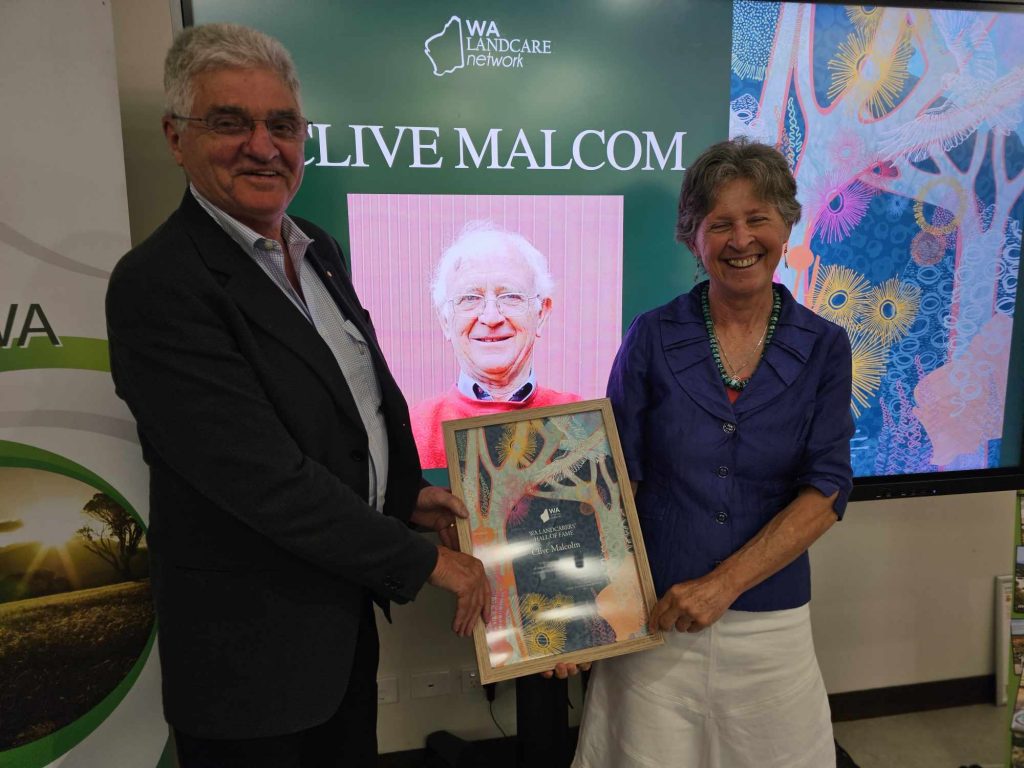
Clive Malcolm (Posthumous)
Clive achieved world-wide recognition as a salt land agronomist and had a significant role in a project to revegetate a million hectares of salt affected land. He worked for 36 years in the Department of Agriculture and his reputation as the “father of saline agriculture in Australia” grew as the problem of salinity relentlessly increased with time. His efforts in fighting salinity brought hope to many WA farmers.
Clive’s work also became well known overseas and he worked and lectured in Africa, North America, South Asia and the Middle East. He offered hope to desperate farmers facing the spread of salinity into their land by demonstrating that salt tolerant plants can thrive and be productive on salt-affected land.
Clive was elected inaugural vice-president of the Saltland Pastures Association in 1997 and such was the esteem in which he was held by the members he remained in that office until his sudden death in 2006.
Clive was a gifted communicator equally at home at an international conference as he was discussing issues with farmers on their properties. He inspired others to carry on his work and turned it into a mainstream activity from being a minor part of the whole saltland management issue. Clive was inducted into the Royal Agricultural Society’s Hall of Fame for his work.
In retirement and as a Denmark resident Clive became a sustainability advocate initiating the Shire of Denmark Greening Plan and was instrumental in the development of the Denmark Centre for Sustainable Living. The Clive Malcolm Memorial Sustainability Scholarship at UWA honours Clive’s work with UWA and his commitment to a sustainable environment, community, and economy. In 2004 Clive was recognised for his 50-year commitment to preserving the environment with the Great Southern Natural Resource Management Medal.
