


Frances and David Pollock
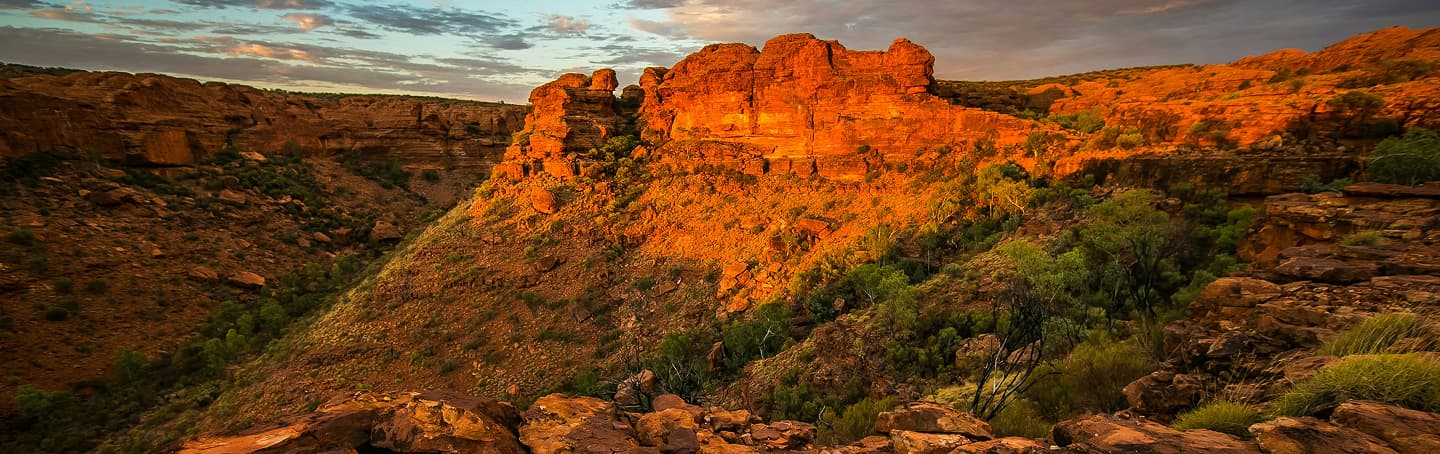
Wooleen Station stands as a beacon of heritage and ecological resilience in the heart of the Australian outback. Spanning vast landscapes imbued with raw beauty, it exemplifies the symbiotic relationship between nature and human stewardship. The station's story is one of challenge and triumph, a testament to the vision and effort of those who dared to dream of harmony between grazing and conservation.
The Pollock family has owned and operated Wooleen Station since 1990, with Helen and Brett Pollock establishing a reputation for friendly, traditional Australian outback hospitality. Their vision was to make accessible an experience where anyone could begin to understand the pastoral way of life.
David Pollock and Frances Pollock continued this legacy, balancing pastoralism, conservation, and regenerative tourism to ensure Wooleen remains a thriving ecosystem for future generations.
David has dedicated his life to restoring and protecting Wooleen’s fragile landscape. His passion for land conservation led him to study Environmental Science at Edith Cowan University and travel within Australia and overseas to observe pastoral management techniques used in other arid regions.
His work focuses on reversing decades of overgrazing, through both destocking to allow the landscape to heal itself, and by pioneering techniques for broad scale landscape rehabilitation and pastoral land management. He has served as; President of the Murchison Land Care Committee; On the Board of Rangelands NRM; And on the WA assessment panel for Caring for Country funds. He wrote a memoir focusing on pastoral history and management in the Southern Rangelands, helped develop a cultural awareness program for schools visiting Wooleen; and has taken thousands of people on tour since 2003.
He has been particularly dedicated to dispelling the myths surrounding dingoes, advocating for their recognition as a keystone species vital to the health of arid landscapes. David sees dingoes not as pests, but as ecological allies—natural top-order predators that help restore balance by keeping populations of herbivores and invasive species in check. His work aims to shift public perception and policy, so dingoes can be embraced as an essential tool for landscape management and the regeneration of degraded rangelands.
Frances Pollock is a passionate advocate for regenerative tourism and land stewardship, combining a strong background in ecotourism, marketing, and storytelling to create immersive visitor experiences at Wooleen Station in Western Australia’s Murchison region. With a Diploma in Social Media Marketing, Frances ensures that guests connect deeply with place, leaving not only with a memory but with a renewed sense of responsibility for the land.
Frances believes that tourism is a powerful tool for education and transformation. By inviting visitors to experience landscapes under pressure, and to witness firsthand the challenges and possibilities of land restoration, she creates a deeper understanding of ecological systems, cultural histories, and the role individuals can play in conservation. Through this lens, tourism becomes more than hospitality, it becomes a catalyst for change.
She has played a pivotal role in shaping regional tourism, having served as Chair of Gascoyne Murchison Tourism Inc. and represented the Gascoyne-Murchison sub-region on the Board of Australia’s Golden Outback. She currently contributes her expertise as a Board Member of TrailsWA and the Mid West Food Industries Alliance, Station Stays WA and championing sustainable tourism and regional innovation. At the heart of Frances’s work is a belief that meaningful experiences on-country can shift perspectives, inspire stewardship, and contribute to the future of landcare in Australia.
David’s and Frances pioneering approach to regenerative pastoralism has been widely recognised, including a Lancare Award for work in the Roderick River catchment, multiple features on ABC’s Australian Story (2012, 2014, and 2017) and Landline (2024). In 2023 and 2024 they were awarded Bronze for eco-tourism at the state tourism awards
