

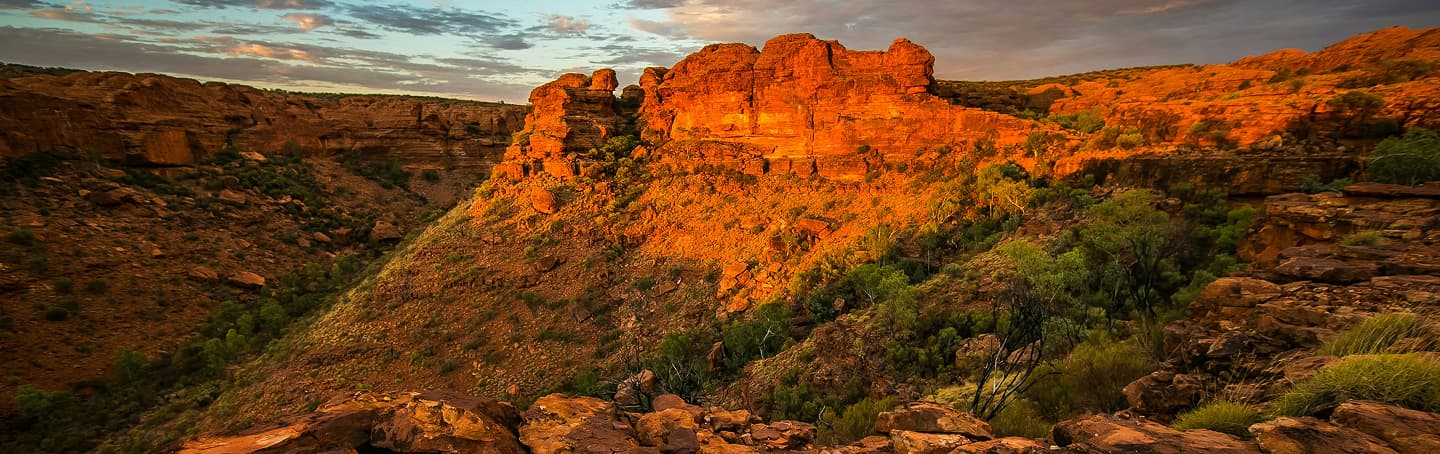

Goldfields - Esperance Region

Figure 1. Goldfields-Esperance Region of Western Australia. Source: Government of Western Australia. 2025.
Travelling though the Goldfields-Esperance region, you will find yourself encountering breathtaking landscapes that range from the red dirt and mulga of the ore bearing country, famous for its gold, through to the arid woodlands with its stately trees and granite rocks, and on to the white sand beaches fringing the marine blue of the Southern Ocean.
The Goldfields-Esperance Region of Western Australia stretches east from Ravensthorpe to the South Australian border, and north beyond Wiluna and Warburton, covering an area of 955,276km2. Most of the 58,000 people who call this region home live in the City of Kalgoorlie-Boulder (29,300 residents), but close to 14,000 people choose to live in Esperance and surrounds, closer to the ocean.
The region’s climate varies from cold winters and hot, dry summers in northern areas, to a relatively mild Mediterranean climate along the coast near Esperance and Ravensthorpe, with warm summers and cool winters. The annual rainfall in Wiluna is 258mm, while in Esperance, locals expect to receive about 600mm of rain during the year.
The Goldfields and Esperance are connected not just by the natural landscapes, but by people. Esperance has long been a refuge for Goldfields residents, keen to dip their toes in cool water during the hottest of months. Conversely, people from Esperance have long been connected to the Goldfields. By family, by work and by economic necessity, with the Esperance Port an exit route for some of the minerals mined further inland.
Interstate visitors often access Western Australia via the Eyre Highway and Norseman, and head south to Esperance, or north to Kalgoorlie, depending on the time of year, their travel plans and what they want to see: wildflowers, surfing spots, whales…You can get an idea of what brings people to the Golden Outback by visiting the Tourism WA website, and checking in with local visitor centres as you explore.
This region contains three biodiversity hotspots, places where there are a large number of unique plants, species endemic to a particular area and under threat from human activities, like mining. The Fitzgerald River National Park, Bandalup Hill (in the Ravensthorpe Ranges) and Ironcaps in the Lake Cronin region are precious places with unique plants that form the basis of fragile living systems.

It is the contrast between the inland, dramatic beauty of the wide spaced Goldfields, and the varied, wild, isolated nature of the Esperance region that makes this region such a delight for people who enjoy the natural world.
The area encompasses portions of the Goldfields and South Coast Bioregions, and as diverse a range of flora and fauna as would be expected within such a large area.
The Goldfields Bioregion consists of five biological subregions: Eucalypt Woodlands, Mulga Woodlands: Nullarbor Plain and surrounds, Great Victoria and Gibson Deserts and Warburton.
The Great Western Woodlands is unique in a global context: nowhere else in the world are so many tall trees to be found growing in such an arid environment. Within the Mulga Woodlands, sandalwood thrives and is harvested (under licence) for its aromatic timber. And on the Nullarbor Plain, saltbush and bluebush form the basis for a diverse ecosystem that may well be regarded as “treeless” but which in reality is dotted with taller shrubs like weeping pittosporum, and acacia (myall), mulga, eucalypts and melaleucas are also part of the landscape.
While the Great Victoria and Gibson Deserts do include open plains and sand ridges, with the distinctive red siliceous sands in some places not being conducive to plant growth due to their low nutrient level, there is still an abundance of life, with spinifex, Marble Gums, mallees and saltbush surrounded salt lakes a feature of the country.
The Warburton Region, characterised by ranges of massive quartzite and basalt, is one with a range of habitats not found in other parts of the desert regions, with distinctive vegetation including groves of Desert Oak, endemic fauna such as the Dusky Grasswren and a gecko, Gehyra montium, and some threatened mammals, including the Black-footed Rock Wallabies (Petrogale lateralis). There are also at least five threatened fauna species. This entire sub-region is contained within reserves ‘for use and benefit of Aboriginal inhabitants’ (DBCA) vested in the Aboriginal Lands Trust and known as “the lands”.
It is only a relatively short drive from the Great Western Woodlands, famed for thriving in extremes of heat and dry, to Esperance and the Southern Ocean.
And a different world. One made up of heathlands, mallee, mountain ranges and islands.
The Esperance Bioregion is made up of two subregions, the Fitzgerald and Recherché.
With almost a fifth of Western Australia’s plant species thriving in the diverse landscapes of the Fitzgerald Biosphere, which includes the Barren Ranges, and rivers that flow to the Southern Ocean, it is no wonder that this area is recognized for its botanical riches. It is listed as one of the UNESCO World Network of Biosphere reserves.
With the Fitzgerald River National Park at its center, the Biosphere covers over 300,000ha between Bremer Bay and Hopetoun, where vegetation includes scrub heath, mallee heath, coastal dune scrub, mallee and woodlands on greenstone. Yate and York gum woodlands grow on alluvial soils, and herbs and heaths cling to the granite and quartzite ranges that abruptly intersect the landscape.
The Recherché may share many of the natural characteristics of the Fitzgerald, but the Quaternary coastal sandplains and dunes overlying Proterozoic gneiss and granite, Eocene and more recent limestones, give this region its own character. The islands that make up the Recherche Archipelago are among those that are found in the near-shore area of this subregion. Heaths, coastal dune scrubs, mallees, mallee-heaths and granite heaths cover the landscape is this temperate Mediterranean region.
And there is nowhere better to immerse yourself in country and nature than the region’s parks and conservation areas.
Community landcare and environmental groups you can join:
|
Group name |
Link |
|
Cocanarup Conservation Alliance |
|
|
Culham Inlet Management Committee |
|
|
Esperance Bird Observers Group (EBOG): |
|
|
Esperance Seabird & Waterbird, Injury, Rehabilitation & Learning (SWIRL). |
|
|
Esperance Weeds Action Group (EWAG) |
|
|
Esperance Wildflower Society Incorporated |
https://www.esperancewildflowerfestival.com/esperance-wildflower-society |
|
Esperance Wildlife Rescue and Rehabilitation Inc. |
|
|
Fitzgerald Biosphere Community Collective (FBCC). |
|
|
Fitzgerald River National Park Advisory Committee |
|
|
Friends of the Fitzgerald River National Park |
|
|
Friends of the Western Ground Parrot. |
|
|
Kalgoorlie Boulder Urban Landcare Group. |
|
|
Kalgoorlie-Boulder Community Garden. |
|
|
Local Environmental Action Forum (LEAF) |
|
|
Lower Kalgan Community Association |
|
|
Ravensthorpe Agricultural Initiative Network (RAIN) |
|
|
Ravensthorpe Land Care District Committee |
https://www.ravensthorpe.wa.gov.au/environmental-and-agriculture.aspx |
|
South East Reference Group |
|
|
Swan Point SWAT (Sydney Wattle Action Team) |
|
|
Western Australian Seabird Rescue. |
Farmer and biosecurity groups
|
Group name |
Link |
|
ASHEEP & BEEF. |
|
|
Esperance Biosecurity Association |
|
|
Esperance Organised Primary Producers Cooperative |
|
|
Esperance Poultry Association. |
|
|
Esperance Working Sheepdog Club |
|
|
Esperance Zone Innovation Group. |
|
|
Goldfields Nullarbor Rangelands Biosecurity Association |
https://www.gga.org.au/group/goldfields-nullarbor-rangelands-biosecurity-association/ |
|
Jerdacuttup Top Crop and Pasture Group |
https://www.ravensthorpe.wa.gov.au/environmental-and-agriculture.aspx |
|
Ravensthorpe Agricultural Initiative Network (RAIN) |
https://www.gga.org.au/group/ravensthorpe-agricultural-initiative-network-rain/ |
|
South East Premium Wheatgrowers Association (SEPWA) |
|
|
Southern Biosecurity Group |
|
|
The Pulse Association of the South East (PASE) |
|
South Coast NRM is the overarching Natural Resource Management body for the Ravensthorpe and Esperance areas, responsible for projects that have worked to protect the environmental assets of the region including the Lake Warden and Lake Gore wetland systems, and the Fitzgerald Biosphere.
It works with groups like the Esperance Tjaltjraak Native Title Aboriginal Corporation, the Ravensthorpe and Esperance Shire Councils, Ravensthorpe Agricultural Initiative Network, the region’s schools, Wongutha CAPS and individuals to roll out programs.
Rangelands NRM was established over 20 years ago (1997) to enable ecological preservation and sustainability activity across the Western Australian rangelands. It is responsible for developing and managing ongoing relationships and partnerships with communities, businesses, schools, universities, government and industry and works to drive research and implementation of activities and programs to improve land and sea management practices and protect our natural environment.
First Nations Cultural Land Management
The Goldfields-Esperance Region encompasses vast areas of First Nations country, with local government associations, State and Federal Government bodies working with the councils and Aboriginal Corporations to deliver a range of programs to help the communities, and the indigenous people live well on their own land. The Goldfields Sea and Land Council Aboriginal Corporation is the peak body that acts a s a voice for the Aboriginal people of the region.
-
Esperance Tjaltjraak Native Title Aboriginal Corporation - Based out of Esperance and managing the Native title business for the area. The group develops programs and projects, and partnerships with a wide range of organisation working to maintain and restore the health of the environment and country.
- Facebook: https://www.facebook.com/etntac
-
Ngadju Native Title Aboriginal Corporation- based out of Norseman, the organisation manages the Ngadju Indigenous Protected Area (IPA), which includes 4.4 million hectares of the Great Western Woodland.
- Facebook: https://www.facebook.com/nntac.org.au/
-
Pila Nguru Aboriginal Corporation - manages the land, heritage and native title interest of the Spinifex TO living in Tjuntjunjarra. Pila Nguru supports the Spinefix People’s aspirations for cultural and natural heritage management.
- Tjwarl Aboriginal Corporation -The Tjwala mob are desert people with their Determination from Lienster north to just before Wiluna and west to Booyloo Springs. They host the Tjwarl rangers who help to care for country, working from the Leinster office.
- Noongar Land Enterprise Group- The Noongar Land Enterprise (NLE) Group is a community - not for profit growers’ group which aims to develop and expand the scope of business enterprises and provide more opportunities for participation of Aboriginal people in these businesses and represents six landholding groups. The aim of the group is to help the community to move from passive to active land management through business development on country.
First nations Ranger groups:
Throughout the region, land and sea management programs are being carried out by Traditional Owners through Indigenous Rangers and Indigenous Protected Area (IPA) programs. They work on various land management projects while engaging Traditional Owners with their Country, promoting a connection to the land and nurturing both people and nature.
- Esperance Tjaltjraak Cultural Rangers- Based out of Esperance, the rangers care for country by protecting and rehabilitating areas, managing invasive species, sharing knowledge, monitoring and surveying endangered species, protecting sites of significance and providing education services.
- The Western Desert Martu Ranger Programme- delivers environmental outcomes such as weed and feral animal control, fire and cultural heritage management and conservation of threatened species.
- Kiwirrkurra IPA and Rangers- Actively managing the land through burning, feral animal and week control, keeping water places healthy and keeping connections alive through passing knowledge from Elders to young people.
- Birriliburu rangers – conduct extensive land management on Country within the Birriliburu IPA, using traditional knowledge and 2-way science to inform their plans. They also invested in threatened species including the Great Desert Skink and Bilbies.
- Goldfields Land Management Rangers- based in Kalgoorlie this group works on country through activities such as biodiversity monitoring and research, fire and tourism management, knowledge transfer as well as feral animal and weed control.
- Anangu Tjutaku IPA and Spinifex Land Management Rangers,- Work to protect and manage the environmental and cultural assets across the IPA within the Great Victorian Desert.
- Ngadju ranger- program supports the people to reconnect with Country, elders, and to work on keeping Country healthy. The corporation also engaged in heritage surveys and Cultural awareness training.
- Pila Rangers -Actively manage the lands through the use of Fire, maintaining water sources, hunting for bush meat, plant foods and medicines and looking after the trees and plants as well as the threatened species and controlling the feral animals such as camels. They also actively manage weeds in their lands to ensure their native systems are maintained.
Primary Production Activity
The Goldfields-Esperance Region is diverse, with the landscape encompassing primary production not just through the mining associated with the Goldfields and Ravensthorpe regions, but also cattle, sheep for wool and fibre, and goats for meat. Cropping is extensive in the Esperance and Ravensthorpe Shires, with some farmers growing only grain and pulse crops.
Commercial fishers operate in the waters off Esperance, with rock lobsters, octopus, abalone and pilchards among the commercial catch. Honey and olives are among the gourmet foods produced. Farm stay accommodation, and eco and adventure tourism are becoming more commonplace as tourists make the most of the regions natural attractions, adding to an increasingly diverse economic base.
