

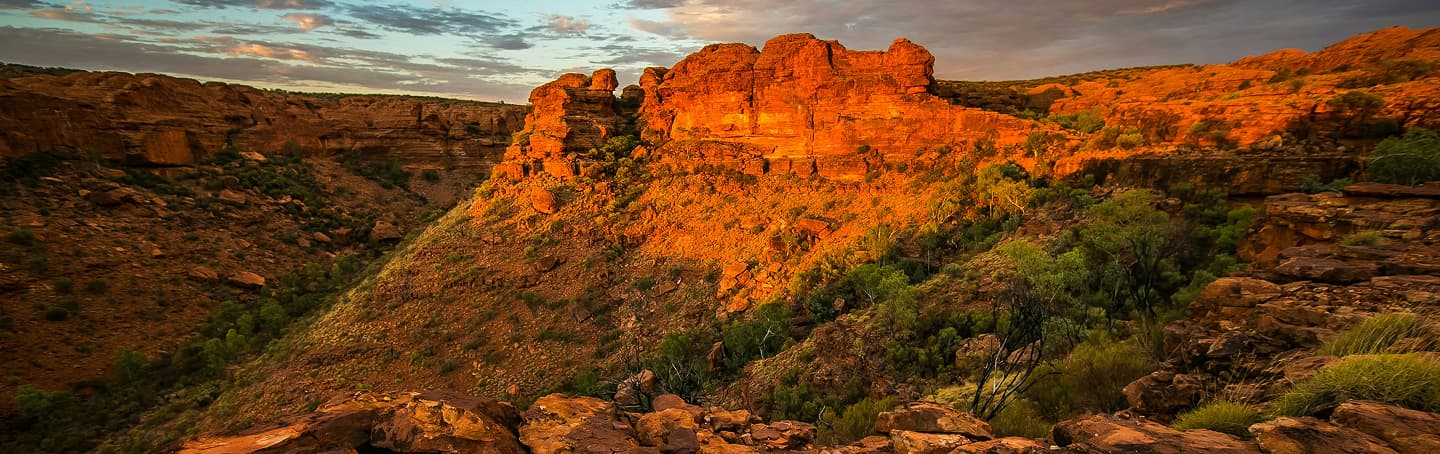

Kimberley Region
The Kimberley is renowned for its rugged and colourful sandstone ranges, vast savannahs, mangrove coastlines, and large river systems such as the Martuwarra Fitzroy, Ord, and King George. This north-west region of Western Australia spans the Indian ocean coastline in the west to the Northern Territory border in the east, as well as the Timor Sea to its north and the Great Sandy and Tanami deserts to its south.
This vast and remote region spans approximately 423,000 square kilometres and includes the Shires of Wyndham-East Kimberley, Halls Creek, Derby-West Kimberley, and Broome covering some of the most ecologically pristine and culturally significant country in Australia.
The region’s residential population makes up approximately 35,000 people, with approximately 41% identifying as Aboriginal or Torres Strait Islander, making it one of the biggest Indigenous-led regions in the country and one that also boasts a multicultural hotspot for regional WA.
The months of November to April bring the Kimberley region its wet and monsoonal season, this is contrasted dramatically by the dry and arid season that begins in May and extends into October. The number of seasons recognized by Indigenous groups in the Kimberley varies, while some groups recognize three main seasons (like the Walmajarri with Parranga, Yitilal, and Makurra), others recognize four (like the Gooniyandi with Barranga, Yidirla, Ngamari, and Girlinggoowa), or even six or seven like the Yawuru people of Broome.
The onset of the wet season is preceded by a ‘build-up’ phase, typically marking the beginning of the monsoon, the rainfall during this time is often short lived and heavy while also highly localized. During both the build-up and wet seasons thunderstorms are frequent and with increased water temperatures in the Timor Sea and Indian Ocean, high risks of cyclones to the coastal regions are prevalent.
During the wet season, the Kimberley sees both increased temperatures, humidity and rainfall which often lead to extremes in heatwaves and flooding events. It is due to these factors that both resilience and sufficiency in essential resources remains a major challenge for the rural communities that are scattered throughout the region.
Due to the high rainfall received in the wetter months, the river systems throughout Kimberley are among the last remaining free-flowing rivers in Australia and proposals for human interference remain highly contentious. Its biodiversity includes endemic plant species, monsoon rainforests and arid bushlands. Threatened wildlife like the Gouldian Finch, Northern Quoll, and Freshwater Sawfish live in this region and experience continuous threats to their population and endangered listings.
The dry season brings clear blue skies, low humidity, mild temperatures, and much less rainfall, gradually drying out the landscape. With winds mostly from the east and southeast, nights during this time are the coolest of the year, especially inland, while the days remain warm. The dry season is the easiest time to travel across the region, as roads open up and river levels drop. It is also an important period for traditional burning and land management, with burning usually starting in March and continuing through June. Many native animals breed and forage during this stable season, which also supports key community events, tourism, and cultural gatherings throughout the Kimberley.
In the face of its relative isolation, the Kimberley faces increasing pressure from changing climates, invasive species, land clearing, industrial development, and a growing push for resource extraction. Despite these significant changes, the region remains a global leader in Indigenous-led land and sea management, with traditional owners and ranger groups actively restoring cultural burning practices, protecting biodiversity, and leading community-based carbon and fire projects. Without the immense work from these Aboriginal corporations and environmental, NRM and Landcare groups the Kimberley would have seen a far greater industrialization than it has currently faced.
Community landcare and environmental groups you can join:
|
Group name |
Link |
|
Broome Bird observatory |
|
|
Dampier Peninsula Fire Working Group (Aarnja) |
https://www.rangelandswa.com.au/project/dampier-peninsula-fire-working-group/ |
|
Derby Landcare Group |
|
|
Environs Kimberley (EK) |
|
|
Friends of the Fitzroy |
|
|
Island Care Christmas Island |
|
|
Kimberley Land Council (KLC) |
|
|
Kimberley Rangelands Biosecurity Association |
|
|
Kimberley Toad Busters |
|
|
Kununurra Community Garden Kitchen |
|
|
Martuwarra Fitzroy River Council |
|
|
Roebuck Bay Working Group |
|
|
Society for Kimberley Indigenous Plants and Animals |
|
|
Society for Kimberley Indigenous Plants and Animals - SKIPA |
|
|
Western Kimberley Land Conservation District |
|
|
Wyndham Wildlife Gardens |
Rangelands NRM: Oversees land and sea management across the Kimberley and broader rangelands, supporting projects like the Kimberley Nature Project and the Dampier Peninsula Fire Working Group.
First Nations cultural land management
The Kimberley is home to more than 30 Traditional Owner groups, each with deep cultural, ecological, and linguistic ties to country. Native Title has been determined over most of the region, with many groups operating through Aboriginal Corporations and managing Country via ranger programs.
The Kimberley Land Council (KLC)- is the peak indigenous body for the Kimberley region, works with 25 native title groups and facilitates the Kimberley Ranger network, which includes 18 ranger teams looking after and managing country.
- MG Corporation- Yawoorroong Miriuwung Gajerrong Yirrgeb Noong Dawang Aboriginal Corporation- As one of the leading indigenous organisations in the East Kimberley, the group represents and supports the people and country through the protection and enhancement of culture and heritage.
- Karajarri Traditional Lands Association- managing the land and waters along the southwest Kimberley Coast.
- Madjulla Inc- Located along the Fitzroy River and partnering with multiple universities to work on country to protect the boab trees and its habitat and preserve culture on country.
- Walalakoo Aboriginal Corporation- Based in Derby, is involved in the management of country through active management of the land and involvement in the mining and pastoral interests of the land.
- Yawuru Native Title Holders Aboriginal Corporation: Responsible for Broome township and IPA’s, managing land and sea through cultural and scientific knowledge.
- Dambimangari Aboriginal Corporation: Manages coastal and inland country northeast of Derby, blending traditional knowledge with modern conservation to protect their land and sea.
- Balanggarra Aboriginal Corporation: Located in the East Kimberley; manages land in one of Australia’s oldest cultural landscapes, including rock art galleries and threatened species habitat.
- Bardi Jawi Niimidiman Aboriginal Corporation: Based in the northern Dampier Peninsula, combining traditional marine knowledge with scientific monitoring. A joint management agreement is in place with DBCA for managing the Bardi and Jawi Conservation Estate.
- Yanunijarra Aboriginal Corporation- Based in Fitzroy Crossing this corporation manages the Ngurrara Country in the Kimberley through working on country with their people.
- Wilinggin Aboriginal Corporation | Derby| Land Management – Promoting the interests of the Ngarinyin people and their Country in the Kimberley.
Many of these groups are also connected to The Keeping Place - a geospatial cultural heritage management system supporting Traditional Owners in managing and storing cultural knowledge.
First Nations Ranger groups:
- Dambimangari Aboriginal Corporation: has a ranger program that helps to manages coastal and inland country northeast of Derby.
- Balanggarra Rangers: Based in the northeast Kimberley, focusing on land and sea management within the Balanggarra Indigenous Protected Area (IPA).
- Bardi Jawi Rangers: in the northern Dampier Peninsula out of Djaridjin, managing coastal and marine environments.
- Yawuru Rangers: Based around Broome, caring for both land and sea Country through activities like cultural burning, coastal monitoring, biodiversity surveys
- Ngurrara Rangers: Operate across Great Sandy Desert Country in the east Kimberley using cultural knowledge and land management practices like fire, feral animal control, and ecological monitoring.
- Wunggurr Rangers: Working across Wilinggin Country, they focus on protecting cultural sites, biodiversity, and managing fire and invasive species.
- Gooniyandi Rangers: Operate around Fitzroy Crossing, focusing on fire management, water monitoring, and preserving sacred sites.
- Uunguu Rangers – Wunambal Gaambera: Based in the remote north Kimberley, they manage Country using traditional ecological knowledge and Healthy Country Plans.
- Bunuba Rangers: Work around the King Leopold Ranges and Fitzroy Valley, focusing on fire, weeds, ferals and cultural heritage.
- Nyikina Mangala Rangers- Focussed on the Fitzroy River they are charged with managing this significant water source.
- Karajarri Rangers | Karajarri Traditional Lands Association– managing the land and waters surrounding the Bidyadanga community and associated IPA and National Park.
- Yoorrooyang Dawang Regional Parks Rangers – Working with DBCA to manage nine conservation areas within the Kununurra area. Our Country – MG Corporation
Agriculture, growing regions and aquaculture
Agriculture in the Kimberley is concentrated in two main areas:
-
The Ord River Irrigation Area (ORIA) in the east, where irrigated crops include mangoes, melons, chia, cotton, and sandalwood.
- Bothkamp Australia Farm: based in the ORIA, spans 1,200 hectares and grows melons, pumpkins, legumes, and specialty crops. It focuses on sustainable farming, using fertile soils and irrigation to supply fresh produce locally and globally.sk
- Environs Kimberley Smart Farms: Environs Kimberley, in partnership with the Karajarri community, has established irrigated Gubinge and bush-food orchards using Savannah Enrichment techniques. Supported by a National Landcare Smart Farms grant, the project promotes sustainable land management and native food cultivation.
- Pastoral leases across the region, supporting extensive cattle grazing. The Kimberley Pilbara Cattlemen’s Association represents the interests of the pastoral sector.
- Aquaculture in the Kimberley has seen recent development, while still dominated by the pearling industry there has been an establishment of barramundi farming. The primary operator of barramundi aquaculture in the Kimberley region is Tassal Group Limited, Australia's largest vertically integrated seafood producer. In August 2023, Tassal acquired MPA Fish Farms Pty Ltd and MPA Marketing Pty Ltd, which operated Australia's only ocean-based barramundi farm at Cone Bay in the Buccaneer Archipelago.
- Tassal's operations are supported by a $5 million grant from the Western Australian Government's Investment Attraction Fund, aimed at modernizing the Cone Bay barramundi farm and increasing production to meet domestic market demands. However, its effects on the ecosystem are still yet to be thoroughly scrutinized and has recently been awarded an expansion from 2,500 tonnes per annum to 20,000 leaving a number of Kimberley residents apprehensive around the project.
