

Project PanGaia


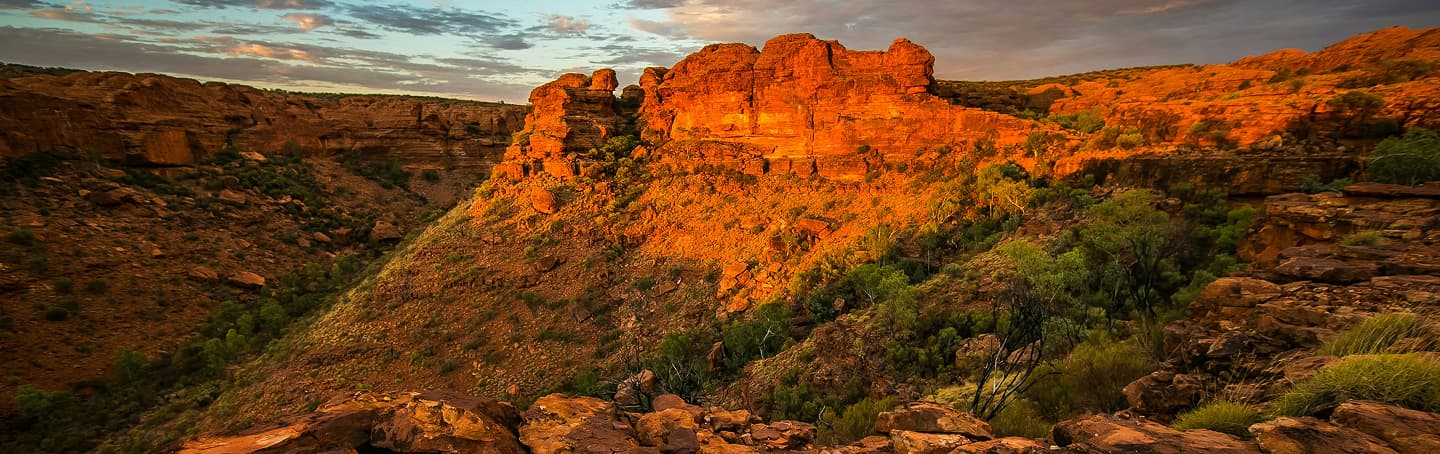

Project PanGaia is a long-term rewilding initiative on the Ngaanyatjarra Lands of Western Australia, delivered in genuine partnership with the Pira-Kata Aboriginal Group, the Traditional Custodians and in collaboration with Curtin University's Soil and Landscape Science Faculty. Our goal is to restore degraded arid land at scale by combining Indigenous ecological knowledge with emerging restoration technology and Western science.
Methods
Australia's native burrowing marsupials once maintained soil health across our arid landscapes through bioturbation, digging activity that allowed rainfall to penetrate compacted earth and created conditions for seeds to germinate and ecosystems to function. With these animals largely extinct or absent, that process has stopped. Project PanGaia uses lightweight, solar-powered autonomous rovers to replicate it, creating thousands of small micropits across degraded soil. Site selection, timing and land management decisions are guided by Pira-Kata Elders and knowledge holders, with soil science methodology co-designed and validated by Curtin University.
Expected Outcomes
Restored soil hydration and improved water infiltration across degraded arid landscapes. Increased organic matter capture, seed germination and native vegetation establishment. Measurable progress toward carbon sequestration and biodiversity stabilisation. Meaningful employment and capacity building for the Pira-Kata community on Country. A published, open-source PanGaia Methodology available for uptake by Aboriginal Ranger groups, land managers and government agencies across comparable arid regions.
Camera monitoring at trial sites has documented species including bilbies, spinifex hopping mice, dunnart, bats and antechinus, with some not previously recorded in the area for decades.
Funding Required
Project PanGaia is seeking co-investment to progress from proof-of-concept to scale.
Year One is proudly supported by Lotterywest
Year Two requires co-funding of $600,000 to expand trial sites, formalise the scientific baseline, deepen the Curtin University research partnership and grow on-Country employment and capacity.
Years Three to Five require $1.2 million a year to deliver landscape-scale implementation, publish the PanGaia Methodology and position the project for long-term financial sustainability through Australian carbon and biodiversity credit frameworks and other Aboriginal enterprise opportunities.
This is an ongoing investment in a generational project, one that will take 10 to 20 years to fully realise, but whose early returns, scientific, cultural and ecological, are already visible in the soil.
Contact
Donalea Patman for more information on how you can help us help the earth.
Email- [email protected]
Instagram -https://www.instagram.com/fortheloveofwildlife/
Facebook- FLOWildlife
We’re here to support you to find what you’re looking for.